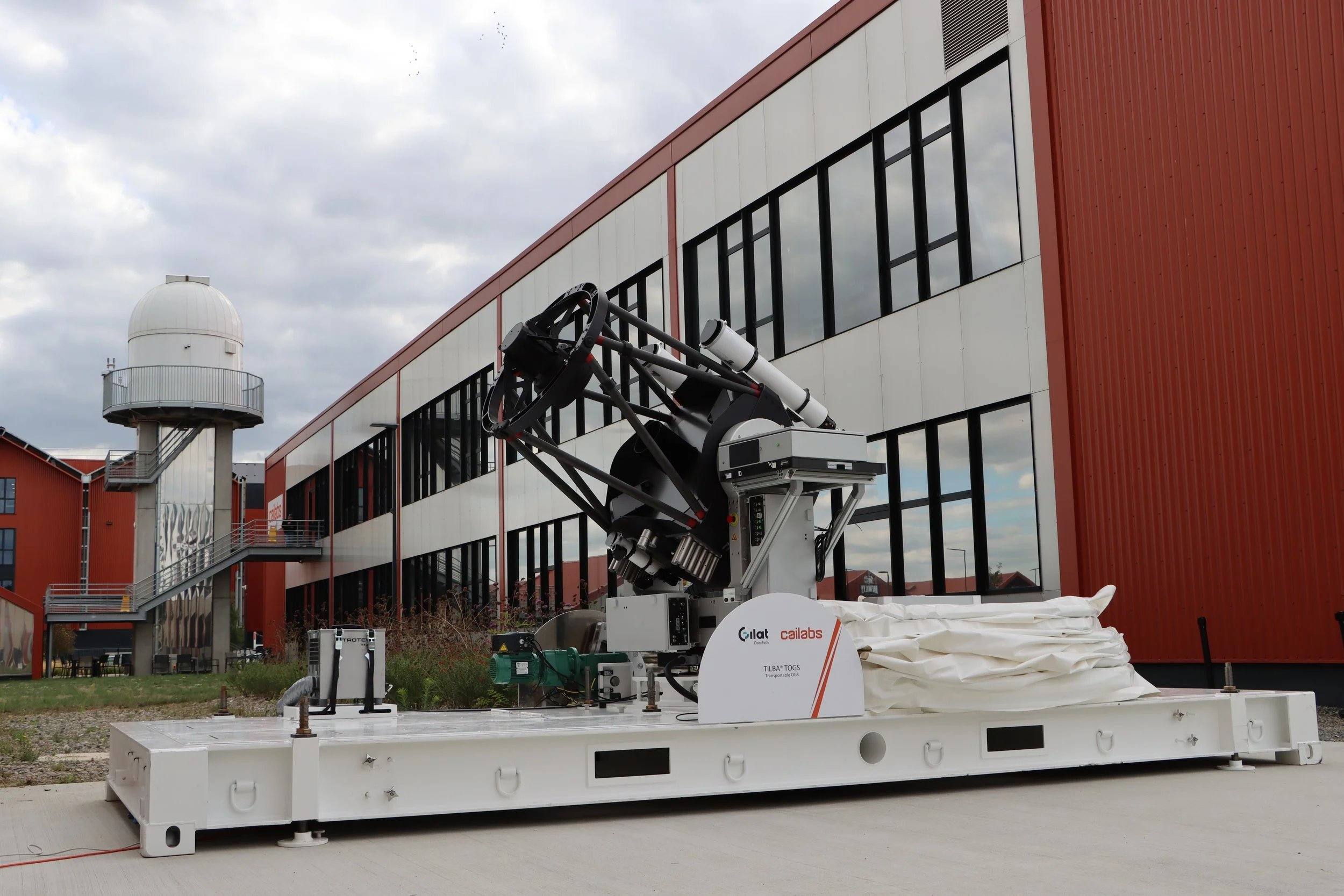
Guangyou Xingkong accelerates core technology iteration in satellite-to-ground laser communication, advancing mass production and delivery
en.Wedoany.com Reported - On July 16, China's Guangyou Xingkong announced that it will allocate new resources primarily to the core technology iteration of high-speed satellite-to-ground laser communication, mass production of products, and market expansion. The company has recently completed two consecutive rounds of financing, but the specific amounts were not disclosed. The next business focus is to advance the next-generation 100G satellite-to-ground laser communication products for both satellite-borne and ground-based systems from experimental verification to engineering production and batch delivery.
Founded in 2024, Guangyou Xingkong is headquartered in Beijing, with a research and development center in Wuhan's Optics Valley. The company primarily develops high-speed satellite-to-ground laser communication systems. Current product directions include satellite-borne laser communication terminals, ground receiving equipment, and core photonic devices and digital signal processing algorithms that support high-speed signal processing. The goal is to build a complete laser communication link from satellite terminals to ground stations.
The core challenge in mass-producing satellite-to-ground laser communication products lies in stable signal reception under atmospheric turbulence conditions. When laser beams emitted by satellites pass through the atmosphere, they are susceptible to temperature, airflow, and weather changes, leading to beam drift, distortion, or signal attenuation. Guangyou Xingkong employs mode diversity reception technology and continuously iterates its Space-DSP digital signal processing algorithm tailored for atmospheric channels to improve fiber coupling efficiency and link stability in complex environments.
The relevant technology has undergone multiple rounds of actual satellite-to-ground communication verification. In December 2024, Guangyou Xingkong collaborated with China's Changguang Satellite to conduct a 100Gbps satellite-to-ground laser communication experiment, with data transmission exceeding 10 terabits during a single satellite pass, verifying the capability of transmitting high-speed remote sensing images back to the ground via laser links. This experiment provided measured data for the subsequent standardization of satellite-borne terminals, ground receiving systems, and high-speed processing equipment.
In terms of high-orbit communication, Guangyou Xingkong participated in an experiment using a 1.8-meter laser communication ground station to establish a stable link with a geosynchronous orbit satellite. At a communication distance of up to approximately 40,741 kilometers, the system achieved symmetric 1Gbps uplink and downlink transmission, with a link establishment time of 4 seconds and continuous communication lasting over 3 hours. This experiment primarily validated long-distance, long-duration bidirectional communication capabilities, and the relevant system has progressed from minute-level tests to hour-level stable operation.
Mass production will focus on satellite-borne terminals, ground station equipment, optical receiving components, and signal processing modules. Compared to single experimental systems, batch products also need to address issues such as device miniaturization, cost control, environmental adaptability, assembly consistency, and full-process testing. Currently, Guangyou Xingkong has not disclosed the area of its production base, the number of automated production lines, or annual production capacity, and the products are still in the transition phase from in-orbit verification to standardized delivery.
Market expansion will cover low-orbit communication constellations, high-orbit communication satellites, as well as remote sensing and navigation satellites. Low-orbit constellations require satellite-to-ground laser links to transmit large-scale data back to the ground, while high-orbit satellites focus more on long-distance bidirectional communication and long-duration stable connections. As the volume of data generated by remote sensing imagery, satellite internet, and in-orbit computing increases, satellite-to-ground links will become a critical component connecting satellite networks with ground data centers.
Guangyou Xingkong will continue to conduct system integration and in-orbit testing with satellite operators, satellite manufacturers, and ground station construction entities. Subsequent progress should focus on the standardization of 100G products, initial batch orders, production line construction, and actual delivery quantities, rather than judging its industrialization level solely based on financing rounds.
Related Products


Comprehensive Mining Automation Control System
Beijing Tianma Intelligent Control Technology Co., Ltd.
20 Inch 1600*900 Full HD 60Hz TFT LED Monitor with VGA and DP Interfaces for Desktop Computers-Business Use
Guangzhou Zanying Optoelectronics Technology Co., Ltd.
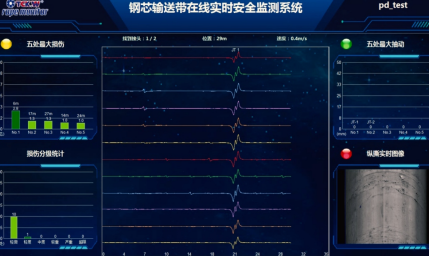
Conveyor Belt Intelligent Monitoring System
LUO YANG WIRE ROPE INSPECTION TECHNOLOGY CO., LTD.



One-Stop Steward Service for the Entire Logistics System Integration Chain
Zhongding Intelligent (Wuxi) Technology Co., Ltd.
G.652.D Wavelength-extended Non-dispersion Shifted Single-mode Optical Fiber
HONGAN GROUP CO., LTD.
Automatic Aiming Laser Remote Obstacle Removal Robot
Pinggao Group Weihai High-Voltage Apparatus Co., Ltd.