FMI Forecasts Global Agricultural Sprayer Market to Reach $6.544 Billion by 2036
en.Wedoany.com Reported - Market research firm Future Market Insights (FMI) released its latest forecast, valuing the global agricultural sprayer market at $3.6891 billion in 2026, with projections indicating growth to $6.5443 billion by 2036, representing a compound annual growth rate (CAGR) of 5.9%.
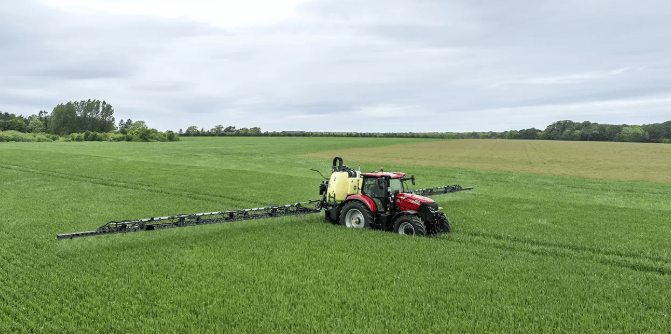
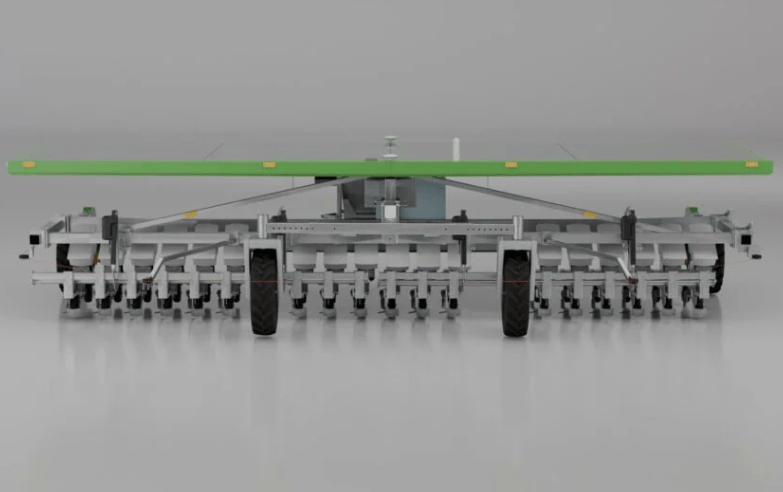
The report attributes the market's primary growth drivers to increased mechanization of agricultural operations, rising adoption rates of precision agriculture technologies, and a growing emphasis on enhancing crop yields while reducing chemical waste. Labor shortages and rising input costs are prompting growers to upgrade their equipment, with spray systems featuring precision nozzles, automatic controls, and battery-powered operation gaining preference; manufacturers are also launching intelligent spraying platforms that integrate digital monitoring, AI-driven analytics, and drone-assisted application technologies to optimize resource utilization and improve operational efficiency.
The market also benefits from government-supported mechanization initiatives, sustainability programs, and heightened awareness of the importance of precise application and nutrient delivery. Growing investments in precision agriculture are expected to further accelerate adoption among both smallholder and large-scale farming operations. Modern sprayers are rapidly evolving from conventional application equipment into highly specialized systems capable of delivering greater accuracy, improved droplet control, and enhanced field performance.
FMI projects that the market will generate an incremental opportunity of $2.8552 billion between 2026 and 2036, with the market size expanding by nearly 1.8 times. Growth during the first half of the forecast period will be driven primarily by mechanization and replacement demand, while the latter half will benefit from broader adoption of precision agriculture technologies. Procurement decisions are increasingly influenced by factors such as operational efficiency, nozzle performance, droplet distribution, application consistency, and drift resistance. Battery-powered and electric sprayers are gaining attention due to lower operating costs, while drone-assisted aerial spraying systems offer new options for large-scale farming operations.
By product segment, handheld sprayers are expected to account for approximately 33.2% of market demand volume in 2026; hydraulic nozzles remain the dominant technology, offering stable spray output and wide applicability; fuel-powered models hold the major share due to their large coverage area and extended operating cycles, while electric and battery-powered solutions are gradually expanding their share; large agricultural enterprises account for approximately 50% of total demand.
In terms of country-level growth rates, India is projected at 7.7%, China at 7.4%, ASEAN at 6.9%, Germany at 5.7%, the United States at 5.6%, the United Kingdom at 5.4%, and Japan at 5.1%. India is expected to grow the fastest, driven by mechanization initiatives, government subsidies, and labor shortages, with accelerated adoption of electric and battery-powered spraying systems; China relies on precision agriculture expansion and large-scale deployment of aerial spraying platforms; ASEAN maintains steady growth amid increased planting activities and modernization efforts; developed markets such as Europe and the United States focus on replacement demand and advanced precision spraying technologies.
Competitive focus in the market centers on precision application capabilities, AI integration, and localized service networks, with key players continuously investing in machine vision, drone technology, autonomous spraying platforms, and advanced nozzle control mechanisms. Major companies include: AGCO Corporation, Bucher Industries AG, Buhler Industries Inc. (Rostselmash), CNH Industrial N.V., Deere & Company, EXEL Industries, Jacto Inc., KUBOTA Corporation, Mahindra & Mahindra Limited, and STIHL. In recent developments, Ecorobotix has expanded production capacity for ultra-precision spraying systems, John Deere has strengthened its See & Spray technology portfolio, and New Holland has increased investments in drone-assisted spraying platforms and AI-based crop protection technologies.
Nikhil Kaitwade, Principal Consultant for Industrial Automation at FMI, stated that the market is likely to shift toward equipment that enhances field precision and reduces chemical losses, with manufacturers holding advantages in nozzle control, battery platforms, and precision spraying support expected to gain a competitive edge.
Related Products


4HS-8 High-efficiency Peanut Inverted-laying Harvester
Hebei Yongfa Hongtian Agricultural Machinery Manufacturing Co., Ltd.

714CD Series C-Band Weather Radar
Chengdu Zhongdian Jinjiang Information Industry Co., Ltd.

Industrial and Commercial Point-Type Gas Detector
Jinan Benan Technology Development Co., Ltd.