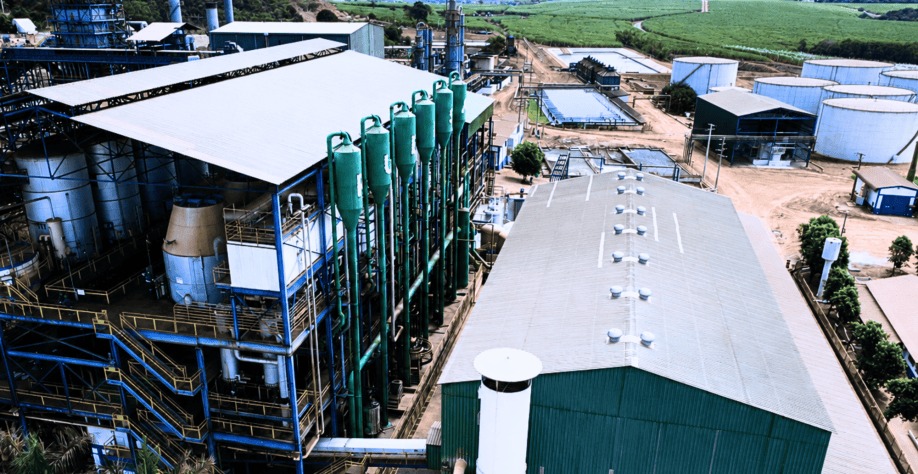
Brazil's sugarcane energy industry faces a strategic choice between expanding crushing capacity and improving profitability
en.Wedoany.com Reported - Brazil's sugarcane energy industry is facing a strategic choice: whether to channel limited capital into expanding crushing capacity or into improving business profit margins. The outcome of this choice will determine which companies merely grow in scale and which achieve value growth.

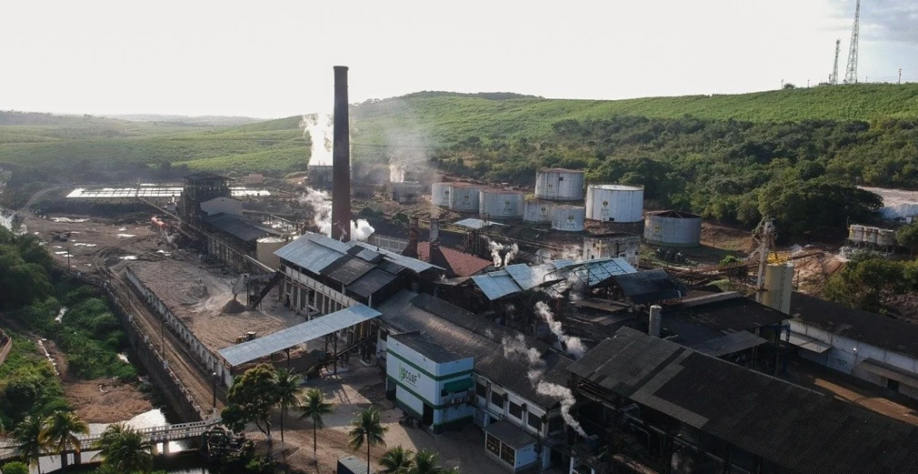
For decades, crushing capacity growth has been firmly tied to the simple logic of "crushing more sugarcane." More planted area, greater industrial capacity, longer harvest seasons, new equipment, and millions of additional tons of sugarcane processed have constituted the primary criteria by which the industry judges a company's strength. But the industry environment has changed: rising costs, more expensive capital, shorter market volatility cycles, stricter environmental and regulatory requirements, and intensifying competition for raw materials across multiple regions.
Expanding crushing capacity does not automatically translate into profit growth. Scaling up requires securing a larger sugarcane supply, expanding logistics, recruiting or training teams, strengthening maintenance, adjusting industrial infrastructure, and financing greater working capital. Expansion across different regions may also intensify competition for raw materials, putting pressure on land leases, supplier contracts, and average transport distances. New industrial capacity may be ready, but the key lies in whether sufficient sugarcane—in terms of quantity, quality, and cost competitiveness—can support it over the investment's useful life. Poorly calibrated scale can create one of the most dangerous situations: a larger structure with higher fixed costs but almost no additional cash flow.
Installed capacity is not the same as profitable capacity. Large expansion projects often rely on the assumption that increased scale will automatically translate into growth, yet actual operations depend on raw materials, logistics, personnel, energy, maintenance, credit, and market conditions all aligning simultaneously. If any one of these fails, capacity may sit idle or operate inefficiently, turning an investment meant to reduce costs through scale into the opposite—burdening the company with a larger structure without delivering the expected returns. Therefore, before deciding to crush more, management must first answer: can capacity growth be accompanied by sustainable performance growth?
Profitability-oriented growth is not stagnation; it is an alternative growth path. Its core lies in extracting greater economic results from existing assets, raw materials, and facilities: reducing agricultural and industrial losses, making fuller use of ATR (Total Recoverable Sugars), improving energy efficiency, optimizing maintenance, enhancing industrial availability, making more precise commercial decisions, lowering input consumption, using data to predict operational deviations, better utilizing by-products, and diversifying revenue streams. Most of these initiatives require lower investment than traditional capacity expansion and offer shorter payback periods. By extracting higher value from the same ton of sugarcane, a company can achieve economic growth without physical expansion. This is precisely why it is regarded as one of the most important metrics for measuring competitiveness in the industry.
Emphasizing profitability growth does not mean no mill should expand capacity. Under conditions of access to competitive raw material sources, favorable geographic location, appropriate logistics structure, a solid regional market, and sufficient financial strength, crushing capacity expansion can create economies of scale, dilute fixed costs, and strengthen market position. The problem arises when volume itself becomes the goal: expanding because competitors are expanding, increasing capacity to climb rankings, or announcing growth without deeply assessing capital returns. These practices often produce companies that are larger in size but fragile at their core. The real divide is not between volume and profitability, but between value-creating growth and growth whose returns are disproportionate to its risks.
A company's capital is limited; funds invested in expansion cannot be directed elsewhere. Expansion decisions should compete head-on with projects such as efficiency improvements, digitalization, automation, sugarcane field renewal, energy generation, biogas, biomethane, storage, logistics, and the development of new by-products. The question to ask is no longer simply "how much more crushing capacity," but "which option offers the best strategic return for every real invested." The same capital, if used to restore the efficiency of existing assets, may yield better results than adding capacity; the cash generated by reducing losses, improving agricultural productivity, or refining commercial strategies may also exceed the returns from processing more sugarcane. Expansion is not off the table, but it must outperform other options in a real comparison—not win merely on the strength of growth ambition.
Before approving an expansion, a mill needs to answer six questions: First, is there competitive raw material to support the new capacity throughout the entire economic cycle of the investment? Second, what is the impact of expansion on average transport radius and sugarcane hauling costs—if new feedstock arrives at higher logistics costs, crushing more may lose its meaning? Third, does expansion increase profit or merely turnover—higher revenue does not guarantee higher margins? Fourth, are there hidden bottlenecks elsewhere in operations, such as receiving, steam generation, fermentation, storage, or shipping capacity, that could constrain capacity utilization? Fifth, can the project's returns exceed those of alternative investments such as efficiency initiatives and new revenue streams? Sixth, does the company have sufficient financial structure to weather periods of volatility in prices, costs, climate, and sugarcane supply—that is, must the investment remain viable under adverse scenarios?
The market has long evaluated mills by crushing tonnage, and this metric remains relevant, but it cannot reveal the quality of the business. Two mills can crush similar volumes of sugarcane yet deliver completely different operating results. The gap may stem from productivity, costs, efficiency, debt, commercial strategy, production mix, and the ability to convert waste and by-products into revenue. The most competitive mill is not the one with the largest crushing volume, but the one that creates the most value from the resources it controls.
Physical growth is visible—new towers, equipment, and plants, along with millions of additional tons of sugarcane processed, are all easy-to-communicate numbers. Profitability growth, by contrast, happens in the details: a loss eliminated, maintenance performed ahead of schedule, a better-structured contract, a data-driven decision, a ton of sugarcane more fully utilized. This unassuming growth strengthens cash flow, reduces risk, and prepares the company for larger decisions ahead. Expanding crushing capacity can be an excellent strategy, and so can improving profitability. The mistake lies in believing that more volume automatically equals better growth. In the sugarcane energy industry, scale still confers importance, but it is profitability that converts growth into value.
Related Products



714CD Series C-Band Weather Radar
Chengdu Zhongdian Jinjiang Information Industry Co., Ltd.


Industrial and Commercial Point-Type Gas Detector
Jinan Benan Technology Development Co., Ltd.
4HS-8 High-efficiency Peanut Inverted-laying Harvester
Hebei Yongfa Hongtian Agricultural Machinery Manufacturing Co., Ltd.