U.S. CF Industries Reports Q2 2026 Net Earnings of $727 Million, Below Expectations
en.Wedoany.com Reported - CF Industries Holdings (NYSE: CF) released its second quarter and first half 2026 financial results on August 6, 2026. Although the nitrogen fertilizer producer fell short of Wall Street earnings expectations, the company made progress on safety metrics, capacity utilization, and the Blue Point clean ammonia project. The report showed second quarter net earnings of $727 million, or $4.73 per diluted share, on revenue of $2.22 billion, all below analyst estimates. The company's stock closed at $116.25, down slightly from the previous closing price. Management stated that constructive supply-demand fundamentals are expected to persist into 2027.
Second quarter adjusted EBITDA was $1.2 billion, and $2.2 billion for the first half of 2026. Over the trailing twelve months, the company generated net earnings of $2.1 billion, adjusted EBITDA of $3.7 billion, and free cash flow of $1.8 billion. Over the past year, CF returned $1.3 billion to shareholders through $958 million in share repurchases and $314 million in dividends, with $1.5 billion remaining under its current $2.0 billion share repurchase authorization (valid through 2029).
Second quarter net sales were $2.22 billion with a gross margin of 51.5%; first half net sales totaled $4.21 billion with a gross margin of 44.9%. Net earnings attributable to common shareholders were $727 million in the second quarter and $1.34 billion in the first half, with diluted earnings per share of $4.73 and $8.71, respectively.
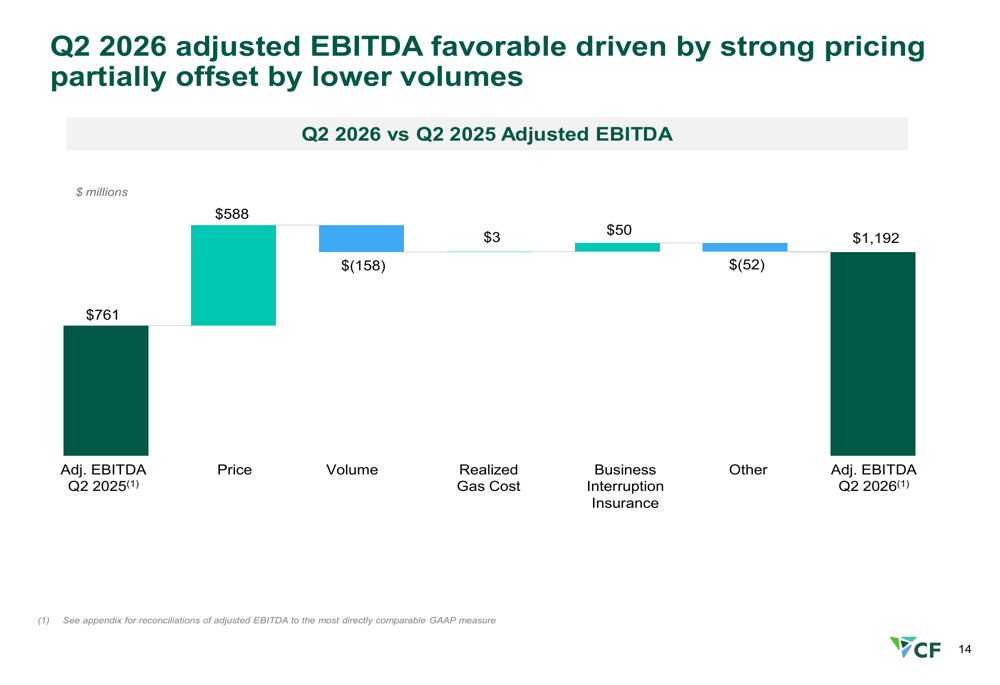
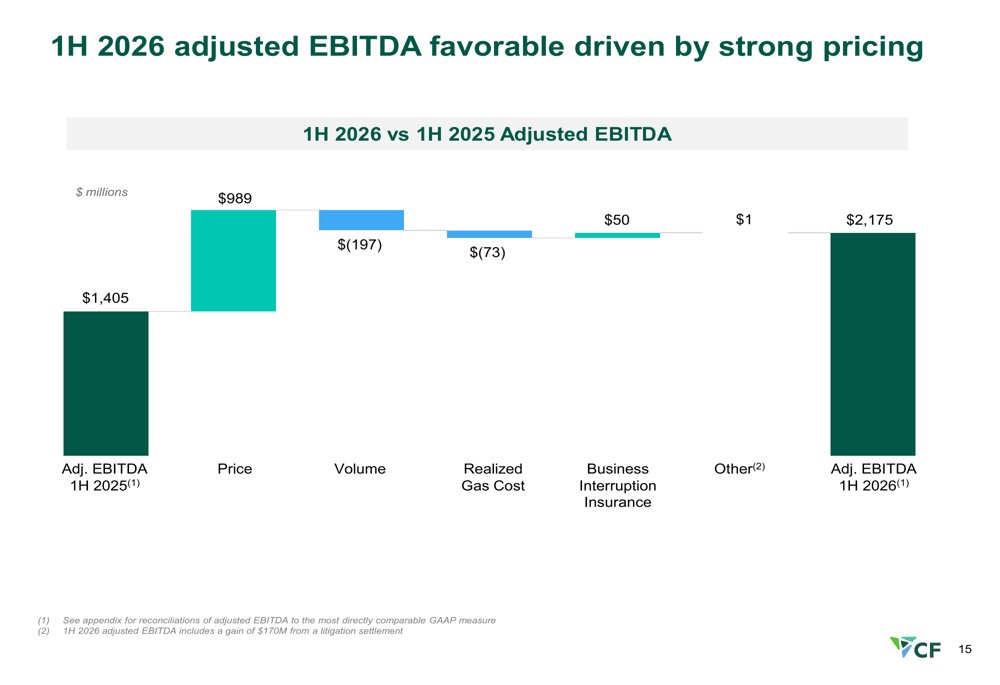
In terms of EBITDA drivers, price improvements contributed $588 million to the year-over-year increase in second quarter adjusted EBITDA, while lower volumes dragged down $158 million, business interruption insurance added $50 million, partially offset by $52 million in other costs. In the first half, price gains reached $989 million, volumes declined by $197 million, realized natural gas costs rose by $73 million, and the results included a $170 million litigation settlement gain.
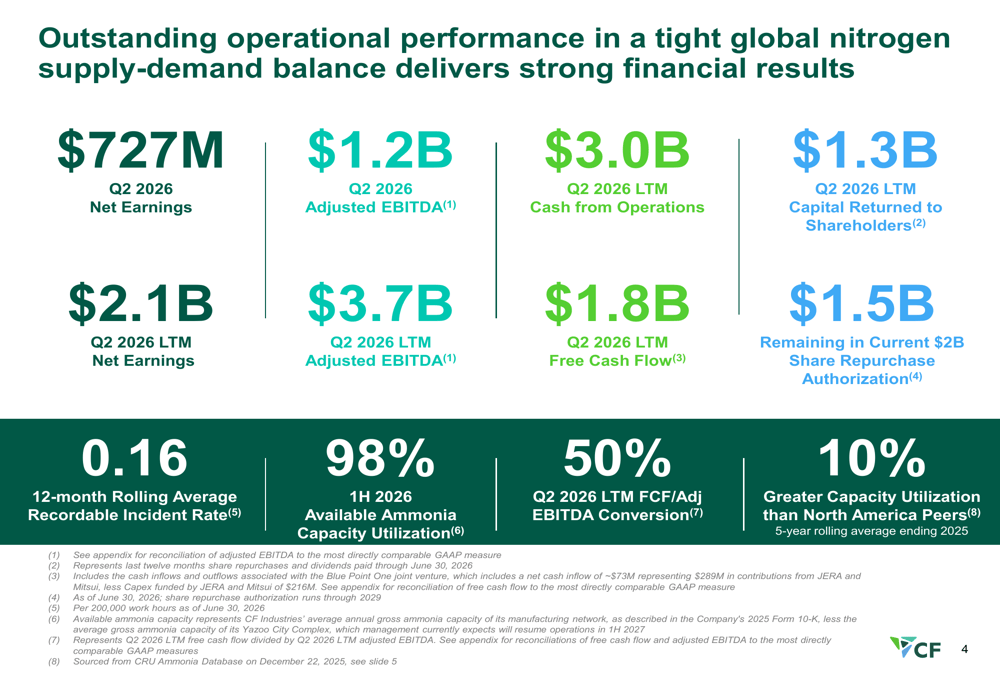
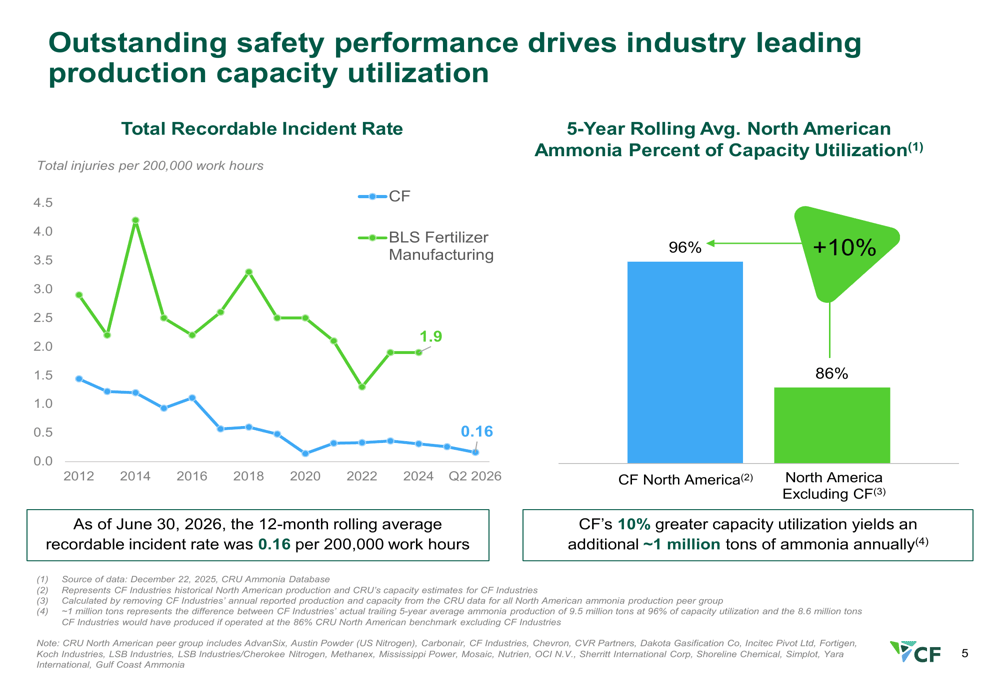
As of June 30, 2026, the company's trailing twelve-month rolling average recordable incident rate was 0.16 per 200,000 work hours, significantly better than the U.S. Bureau of Labor Statistics benchmark of 1.9 for the fertilizer manufacturing industry. In the first half of 2026, CF achieved 98% available ammonia capacity utilization (excluding the Yazoo City facility, which is expected to resume operations in the first half of 2027), with a five-year rolling average capacity utilization of 96%, 10 percentage points higher than North American peers, equivalent to approximately 1 million tons of additional annual ammonia production.
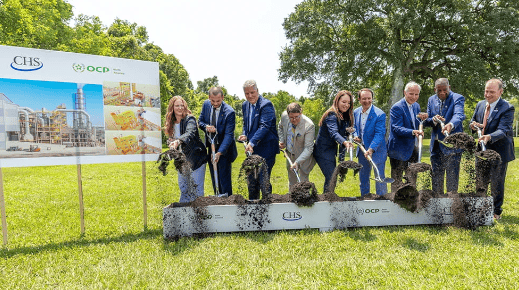
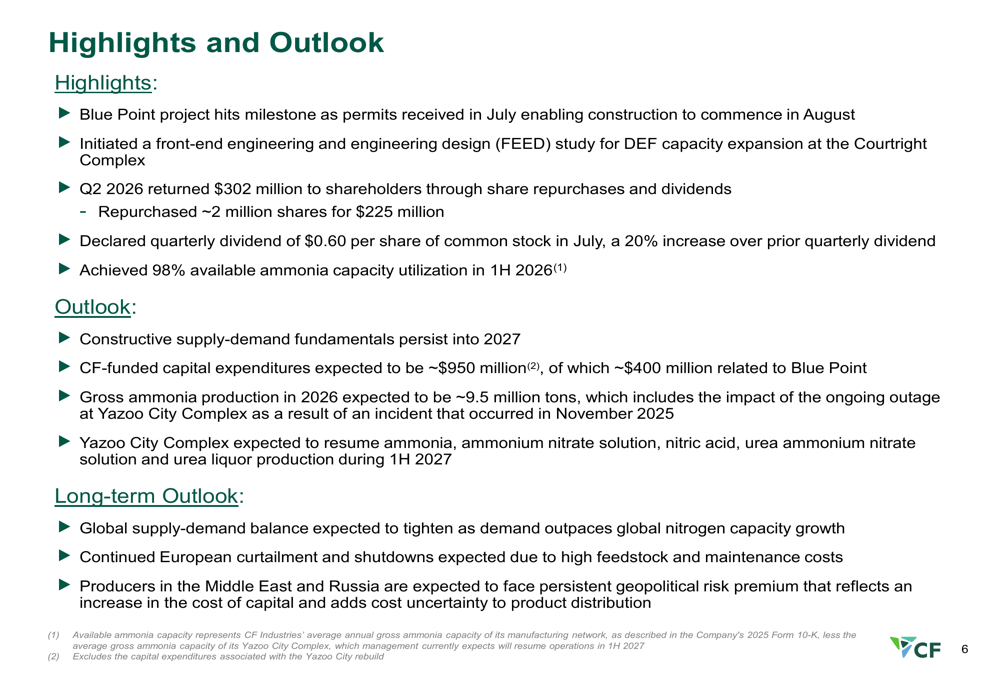
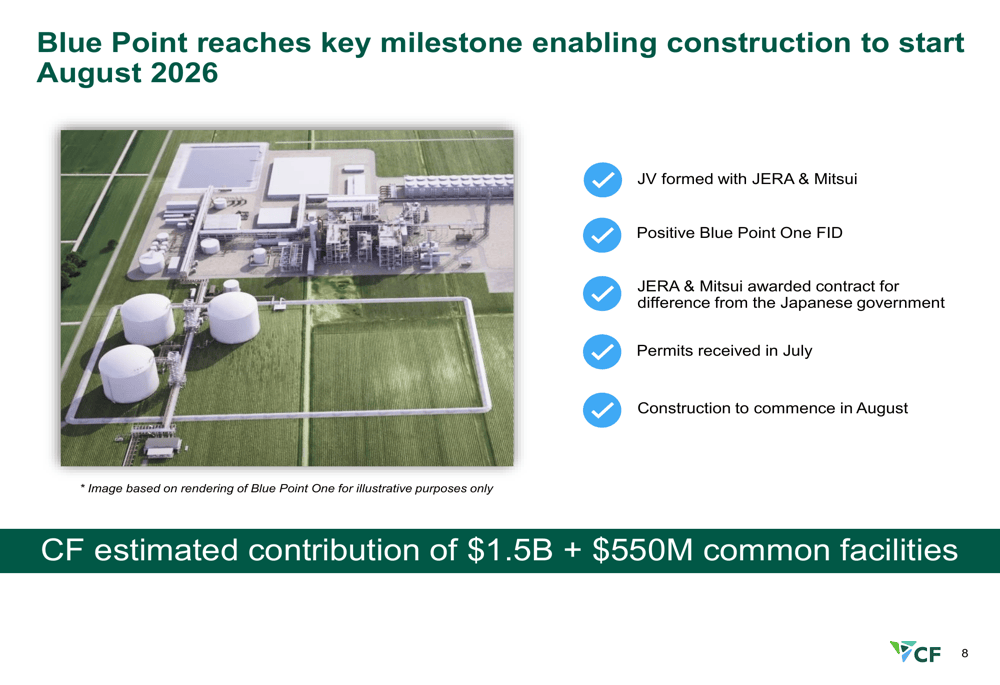
The Blue Point clean ammonia project received its permit in July, and construction commenced in August 2026. The joint venture, advanced by CF together with JERA and Mitsui, involves a total expected CF contribution of $1.5 billion, plus $550 million for utilities. The project has completed joint venture formation, the Final Investment Decision (FID), and secured Japanese government Contracts for Difference (CfD) for JERA and Mitsui. The company also announced front-end engineering and design studies for a diesel exhaust fluid (DEF) capacity expansion at the Courtright facility. The Yazoo City facility is expected to resume production in the first half of 2027, producing ammonia, ammonium nitrate solution, nitric acid, urea ammonium nitrate solution, and urea solution.
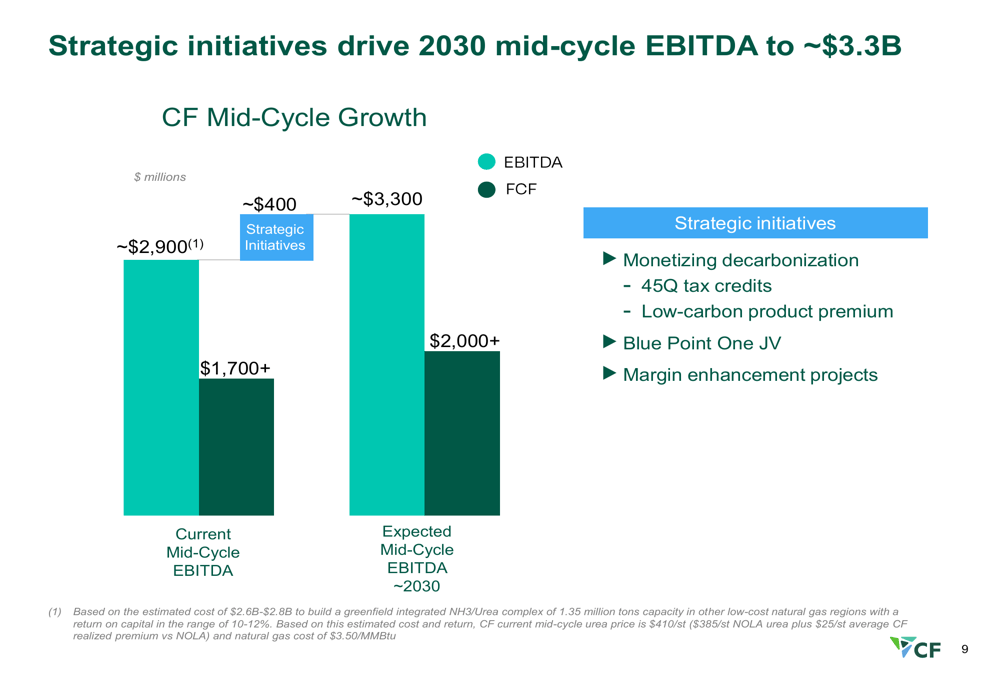
CF expects mid-cycle EBITDA to grow from approximately $2.9 billion currently to approximately $3.3 billion by 2030. The growth strategy is built on three pillars: monetizing decarbonization through 45Q tax credits and low-carbon product premiums, the Blue Point One joint venture, and margin enhancement projects.
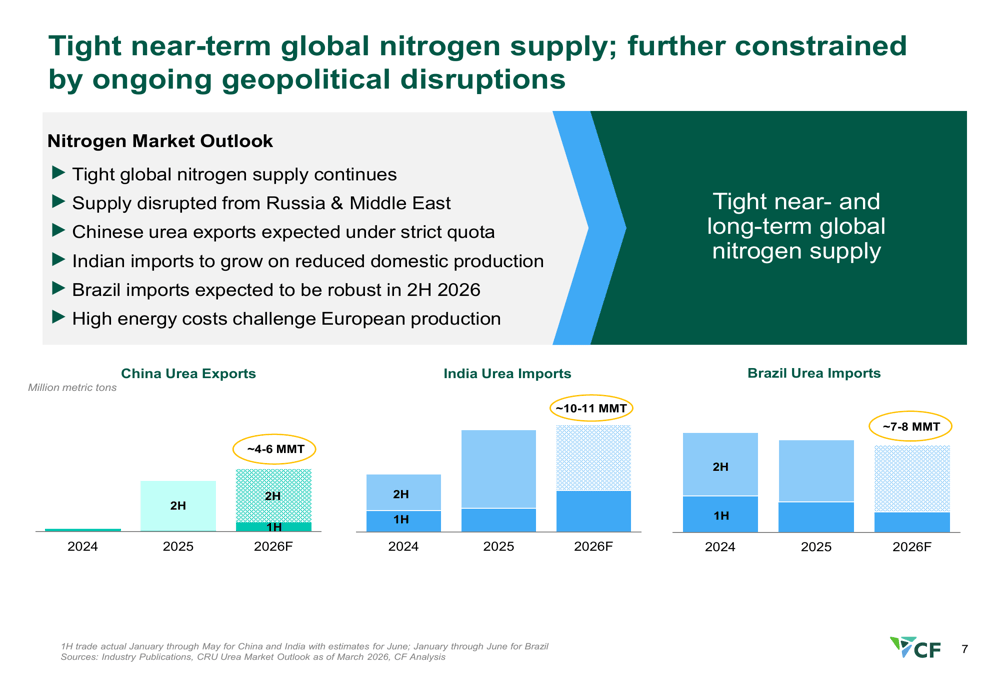
Global nitrogen market supply remains tight: supply disruptions in Russia and the Middle East, China's urea exports are expected to remain strictly quota-limited in 2026, with export volumes of 4 to 6 million metric tons; India's imports are expected to grow to 10 to 11 million metric tons due to reduced domestic production; Brazil's urea imports are expected at 7 to 8 million metric tons, with strong demand continuing into the second half of 2026. High energy costs continue to pressure European production, while Middle Eastern and Russian producers face geopolitical risk premiums.
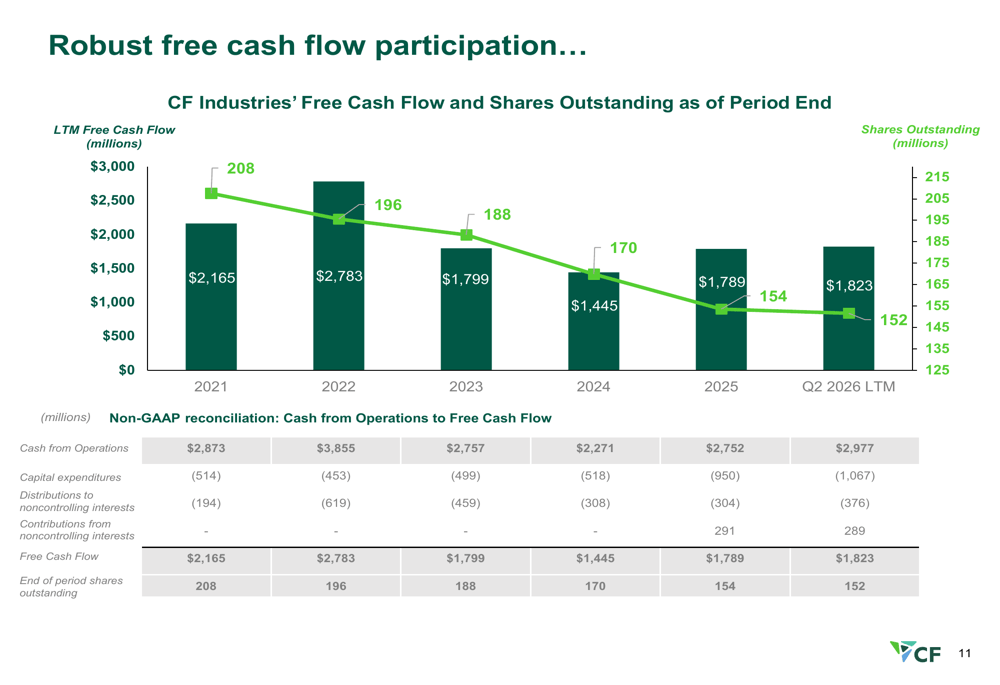
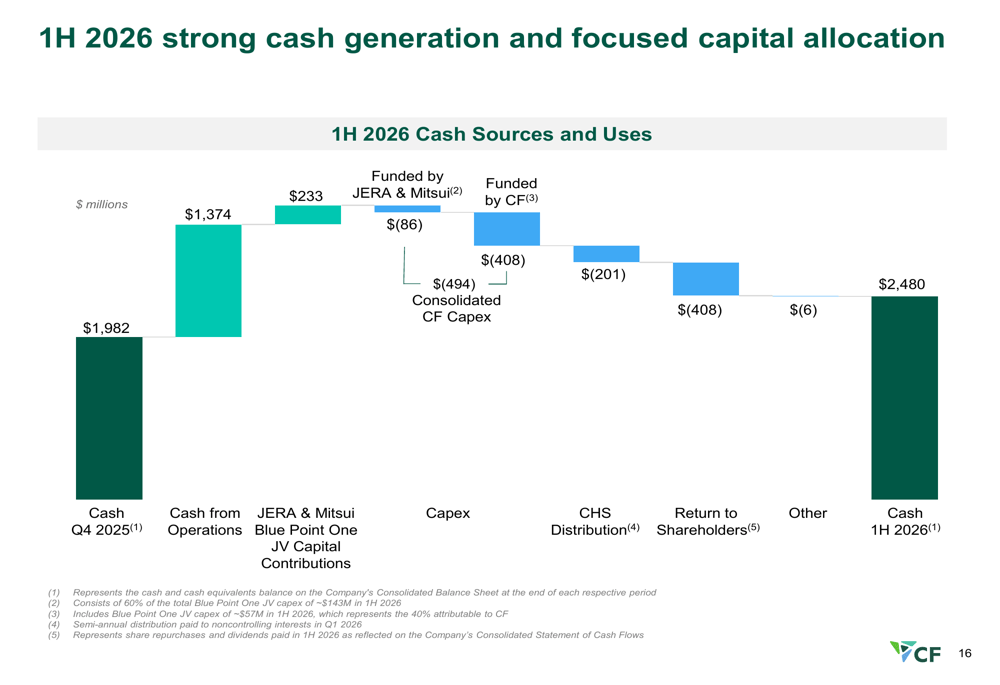
From 2021 through the second quarter of 2026, CF generated $1.4 billion to $2.8 billion in annual free cash flow, with shares outstanding reduced from 208 million to 152 million, a 27% decline. In the trailing twelve months through the second quarter of 2026, operating cash flow was $2.98 billion, capital expenditures were $1.07 billion, distributions to noncontrolling interests were $376 million, contributions from noncontrolling interests were $289 million, resulting in free cash flow of $1.82 billion. Cash increased to $2.48 billion in the first half of 2026, up from $1.98 billion at the end of 2025. In the second quarter, CF repurchased approximately 2 million shares for $225 million and paid dividends. The quarterly dividend declared in July was $0.60 per share, a 20% increase from the previous quarter.
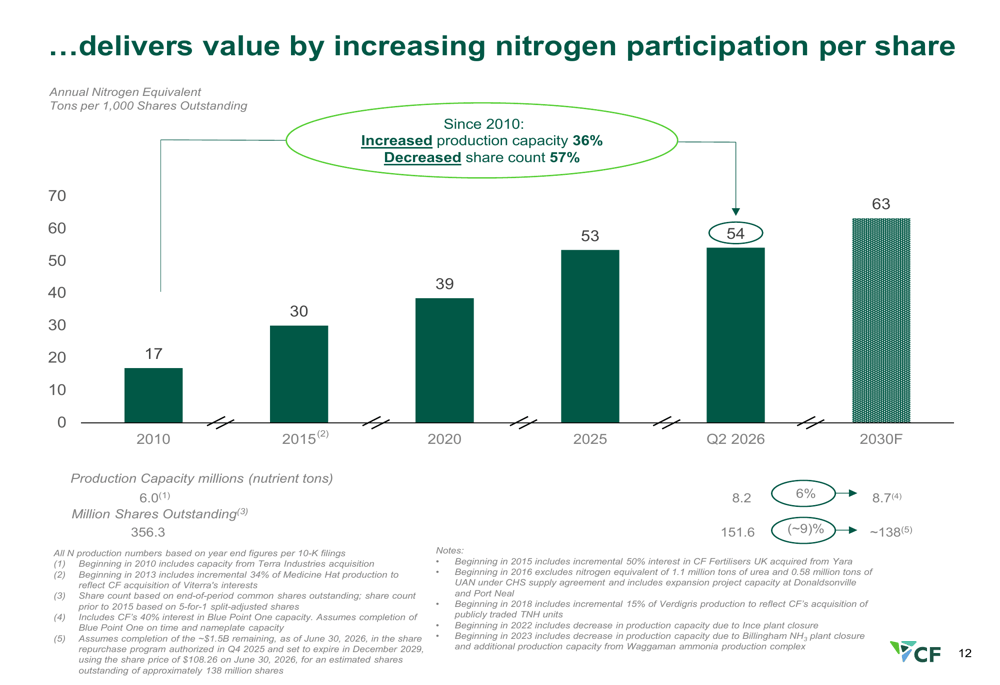
Annual nitrogen equivalent tons per 1,000 shares outstanding increased from 17 tons in 2010 to 54 tons in the second quarter of 2026, with a projected 63 tons by 2030. Since 2010, CF's capacity has grown 36% while share count has decreased 57%. The company's capacity is expected to grow 6% from 8.2 million nutrient tons in the second quarter of 2026 to 8.7 million tons by 2030; shares outstanding are expected to decline approximately 9% from 151.6 million to approximately 138 million.
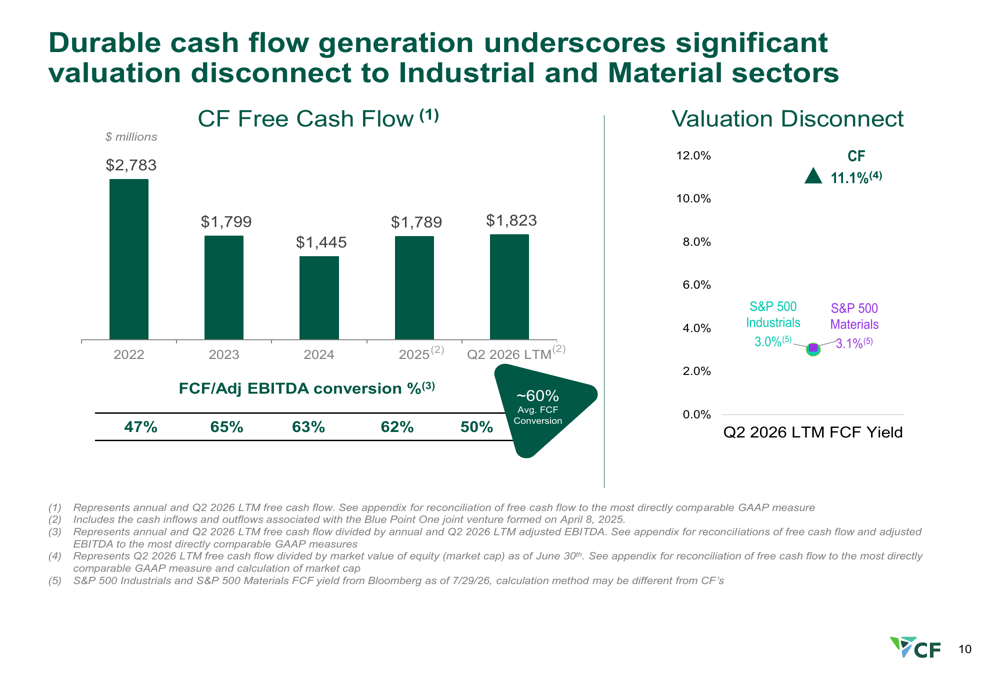
From 2022 through the trailing twelve months ending in the second quarter of 2026, CF's annual free cash flow ranged between $1.45 billion and $2.78 billion, with an average free cash flow to adjusted EBITDA conversion rate of approximately 60%, and a 50% conversion rate in the trailing twelve months through the second quarter of 2026. CF's free cash flow yield was 11.1% in the trailing twelve months through the second quarter of 2026, compared to 3.0% for the S&P 500 Industrials sector and 3.1% for the S&P 500 Materials sector.
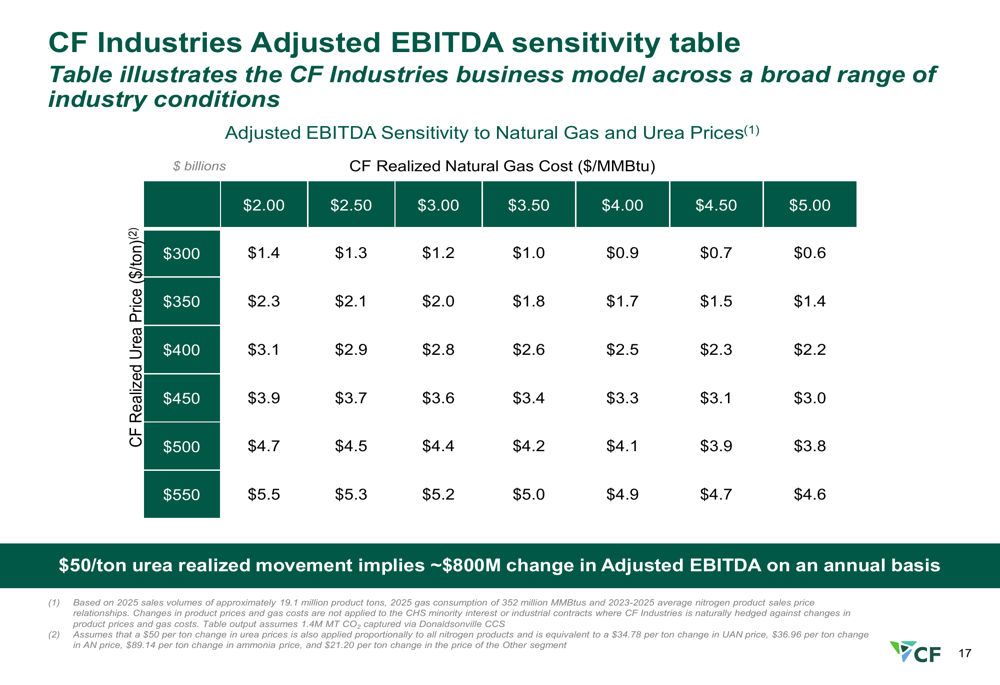
CF-funded capital expenditures for 2026 are expected to be approximately $950 million, of which approximately $400 million is related to the Blue Point project. Total ammonia production for 2026 is expected to be approximately 9.5 million tons, including the impact of the ongoing outage at the Yazoo City facility. Sensitivity analysis shows adjusted EBITDA ranging from $600 million under a low-price scenario (urea at $300/ton, natural gas at $5.00/MMBtu) to $5.5 billion under a high-price scenario (urea at $550/ton, natural gas at $2.00/MMBtu). A $50 per ton change in realized urea prices corresponds to an approximate $800 million change in annual adjusted EBITDA.
Over the long term, global nitrogen demand growth is expected to outpace capacity growth, tightening the supply-demand balance. Europe is expected to continue reducing output due to high feedstock and maintenance costs, while Middle Eastern and Russian producers maintain risk premiums due to geopolitical factors, with rising capital costs and distribution uncertainties.
Related Products

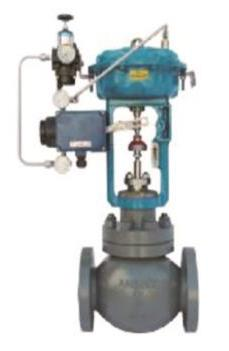
Quick-Change Single-Seat Control Valve / Quick-Change High-Pressure Single-Seat Control Valve
Beijing Consen Automation Technology Co., Ltd.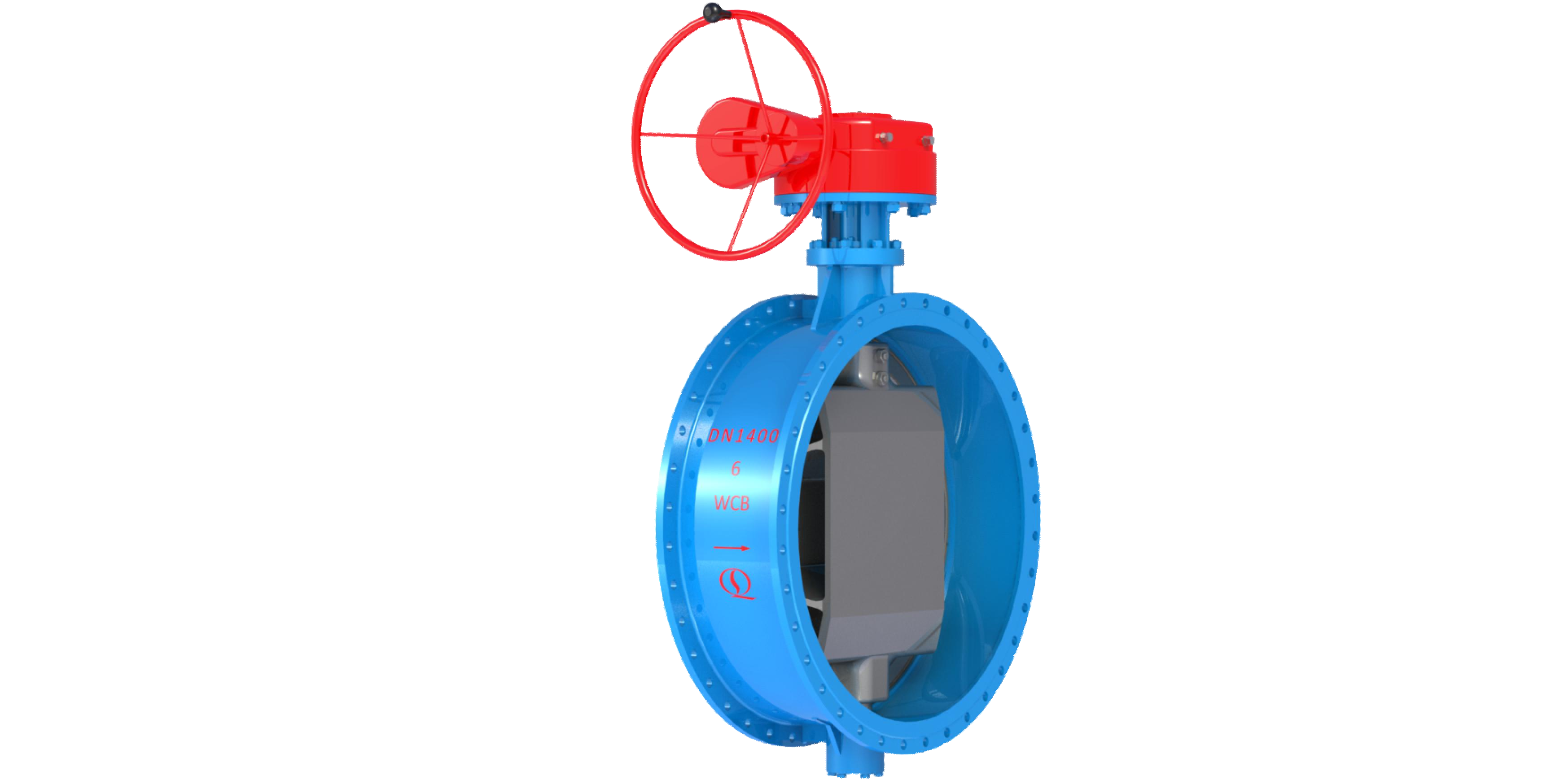
Bidirectional Metal Hard Sealed Seawater Butterfly Valve
Henan Quanshun Flow Control Science & Technology Co., Ltd.
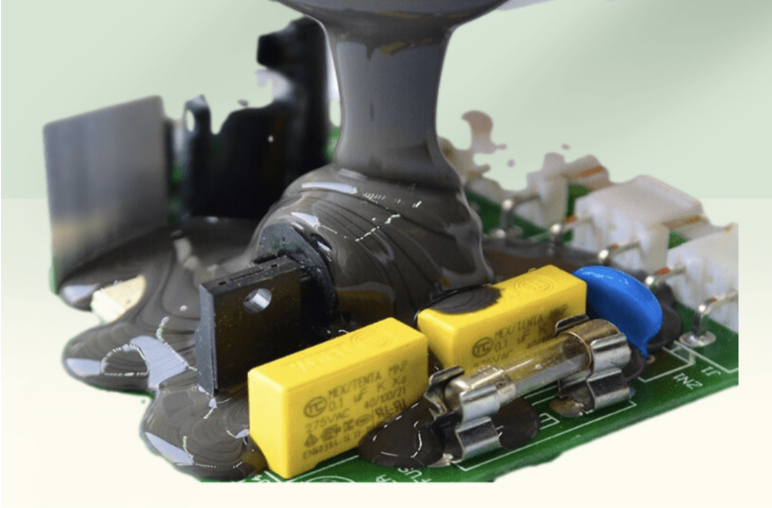
High Thermal Conductivity Encapsulating Resin
Nantong BESALL Sealing Technology Company.,Limited
Nitrogen Export, Nitrogen Manufacturer, High-purity Nitrogen Supplier
Foshan Yuexin Industrial Gas Co., Ltd.
PVC Impact-Modified Chlorinated Polyethylene
Gansu Jinchuan Hengxin Polymer Technology Co., Ltd.