US-based Aphelion Orbitals Develops Dedicated Launch Vehicles for Nanosatellites
en.Wedoany.com Reported - Aphelion Orbitals is developing a family of launch vehicles tailored for nanosatellites, aiming to lower the barrier to orbit for small spacecraft through cost-effective launch services. Centered on the concept of "dedicated launches," the company seeks to address long-standing industry pain points for small satellites, including limited launch opportunities and insufficient scheduling flexibility. Its product portfolio includes the Trailblazer suborbital launch vehicle, the Helios orbital launch vehicle, and in-house developed propulsion and avionics systems.
As the small satellite industry expands rapidly, the demand for launching compact spacecraft on customer-defined schedules is growing. While rideshare missions spread launch costs, payloads typically must adapt to the launch window, orbital parameters, and integration constraints set by the primary mission, which can lead to deployment delays and limit mission planners' scheduling freedom. Aphelion Orbitals' approach enables nanosatellites to fly as the primary payload, no longer constrained by the mission cadence of larger spacecraft. Its design goals are to reduce the cost of dedicated launches while maintaining rapid-response launch operations, giving commercial constellations, scientific missions, technology demonstrations, educational projects, and government payloads greater mission control.

Trailblazer is the first member of the company's launch vehicle product line, designed to support high-frequency suborbital missions. Suborbital flights provide near-space test conditions for scientific research, technology validation, aerospace testing, and educational experiments without requiring full orbital insertion. The rocket supports configurable mission profiles that can be adjusted to customer specifications to accommodate different types of experiments and test objectives. Its design turnaround time is approximately one month, covering everything from customer booking to launch operations, reducing waiting periods in flight experiments. Aphelion Orbitals states that the rocket can launch from almost anywhere within the United States, facilitating launch site selection based on mission requirements and operational considerations.
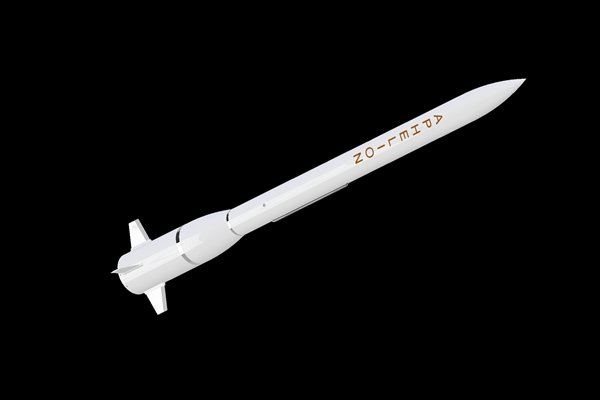
Helios is the company's orbital-class launch vehicle, providing dedicated launch services for CubeSats and nanosatellites requiring independent orbital insertion. The rocket can deliver payloads of up to 20 kilograms to Sun-synchronous orbit (SSO), and also supports other orbital destinations such as polar orbit and highly elliptical orbit. Helios is compatible with multiple CubeSat configurations including 1U, 3U, 6U, and 12U, as well as other nanosatellite form factors. Instead of sharing capacity with other customers, clients receive launch services customized to their specific payload needs and can design spacecraft adapter structures according to mission requirements. The company states that in the market segment Helios targets, launch demand continues to outpace available dedicated capacity, making it particularly suitable for users with specific orbital environment requirements in Earth observation, communications, scientific research, technology demonstration, and institutional missions.
Supporting these rockets is an in-house propulsion development program. Aphelion Orbitals has designed and manufactured multiple rocket engines, including a 250-newton liquid rocket engine family currently used in Trailblazer propulsion system testing. The company has also developed liquid propellant engines with thrust levels ranging from approximately 20 newtons to 30 kilonewtons, accommodating launch vehicles of varying sizes and mission requirements.
At the manufacturing and avionics level, Aphelion Orbitals maintains in-house manufacturing capabilities for ablative materials and precision engine components, and is developing annular aerospike rocket engines using additive manufacturing processes. Additive manufacturing enables complex engine geometries that are difficult to achieve with traditional processes, while balancing cost control and operational reliability. Vehicle guidance and control rely on a scalable avionics architecture developed on modern electronics and extensive system testing, with flight experience accumulated in previous launch vehicle applications. The system supports advanced vehicle features such as aerospike thrust vector control, while maintaining low mass, low power consumption, and high cost-effectiveness, and can be reused across different launch vehicles.
Aphelion Orbitals is an aerospace company headquartered in New Jersey, United States, focused on developing launch vehicles and propulsion technologies for the nanosatellite market. Its operations span the Trailblazer suborbital rocket, the Helios orbital rocket, liquid rocket engines, scalable avionics, and additively manufactured aerospike engines, aiming to provide commercial, scientific, educational, and government customers with more responsive and mission-targeted access to space.