Black Canyon hits 7m at 40.7% manganese at Wandanya, Western Australia
en.Wedoany.com Reported - Black Canyon (ASX:BCA) has reported final assay results from the Wandanya Manganese Project in Western Australia, with multiple drill holes returning high-grade manganese mineralisation at shallow depths. Hole WDRC825 intersected 7 metres at 40.7% manganese from 5 metres downhole; hole WDRC826 intersected 6 metres at 35.3% from 2 metres; and hole WDRC829 intersected 6 metres at 35.8% from 7 metres.
The southern extension zone remains open, with a further 1.4 kilometres of strike length yet to be drilled. Notable results include 4 metres at 44.8% manganese from 4 metres downhole, including a 2-metre interval at 51.2% from 5 metres.
Multiple drill holes returned intersections exceeding 40% manganese over widths of 2 to 4 metres, further strengthening the case for Wandanya's direct shipping ore (DSO) potential.
The first Mineral Resource Estimate (MRE), covering both manganese and iron, remains on track for completion in September, followed by a scoping study in December. Meanwhile, a further 5,000-metre reverse circulation (RC) drilling campaign will commence in the coming weeks to test additional areas along the 9-kilometre mineralised trend.
Black Canyon Managing Director Brendan Cummins said the final assay results capped off a strong resource drilling campaign. "What sets the Wandanya discovery apart is the grade and predictability of the mineralisation," he said. Cummins noted that consistently high-grade results at shallow depths, DSO potential and positive pilot-scale metallurgical test work are de-risking Wandanya and attracting interest from end users.
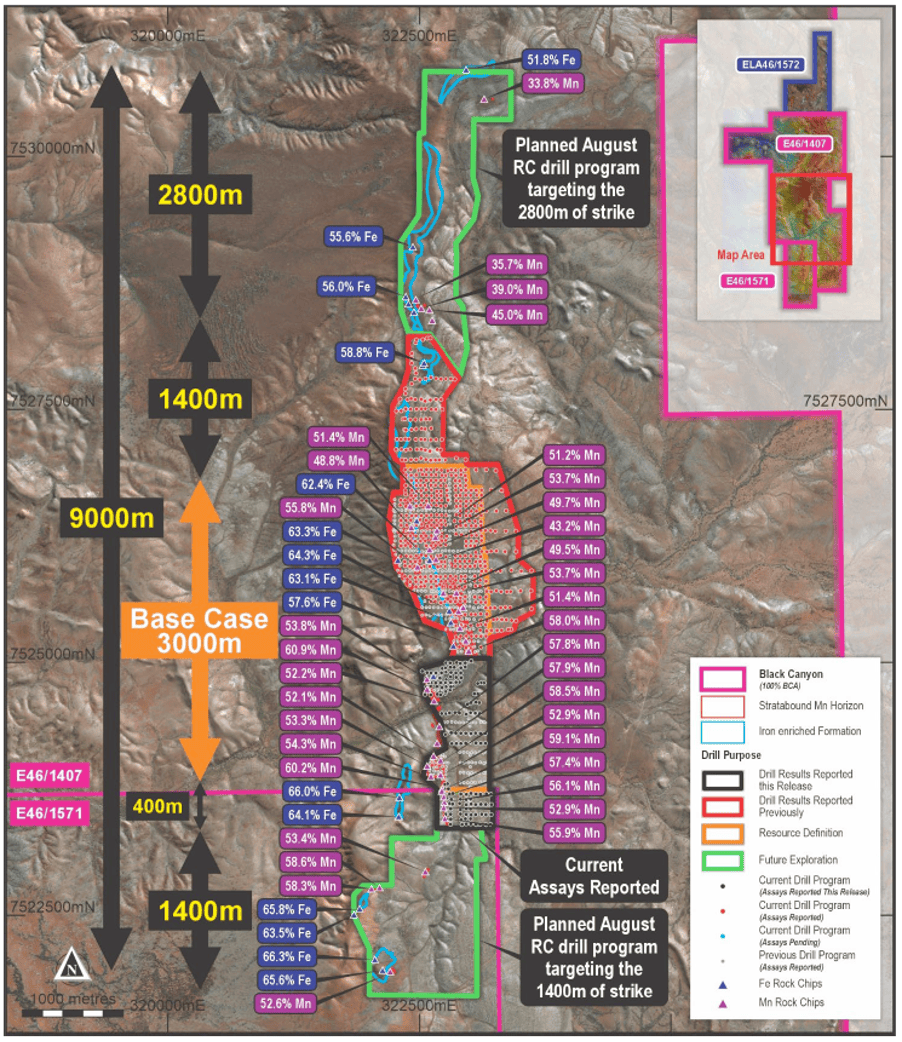
The latest drilling has extended Wandanya's known manganese mineralisation 400 metres south of the 3-kilometre baseline zone. A further 1.4 kilometres of strike length to the south remains untested and will be targeted in the upcoming expansion RC drilling campaign.
Black Canyon has completed approximately 17,200 metres of resource definition and expansion RC drilling at Wandanya in 2026. Most drilling has focused on the 3-kilometre baseline zone, which, together with the broader program, has tested 4.8 kilometres of the project's 9-kilometre mineralised system. Drill hole spacing in the resource definition area has been infilled to a 50-metre by 50-metre grid to support resource classification as well as the upcoming scoping and feasibility studies. The latest results cover 142 drill holes for a total of 2,823 metres, with an average hole depth of 28 metres.
Dense infill drilling has strengthened grade and geological continuity across the southern zone. Reported drilling results in the southern zone span approximately 1.6 kilometres of strike length. The footwall of the mineralised body is strongly enriched, with several 1-metre intervals grading above 40% manganese. Down-dip intersections indicate mineralised widths of 350 to 600 metres (across strike). Shallow high-grade mineralisation is associated with oxide manganese, while further east, the gently dipping stratabound system transitions to carbonate manganese at depths of 20 to 25 metres.
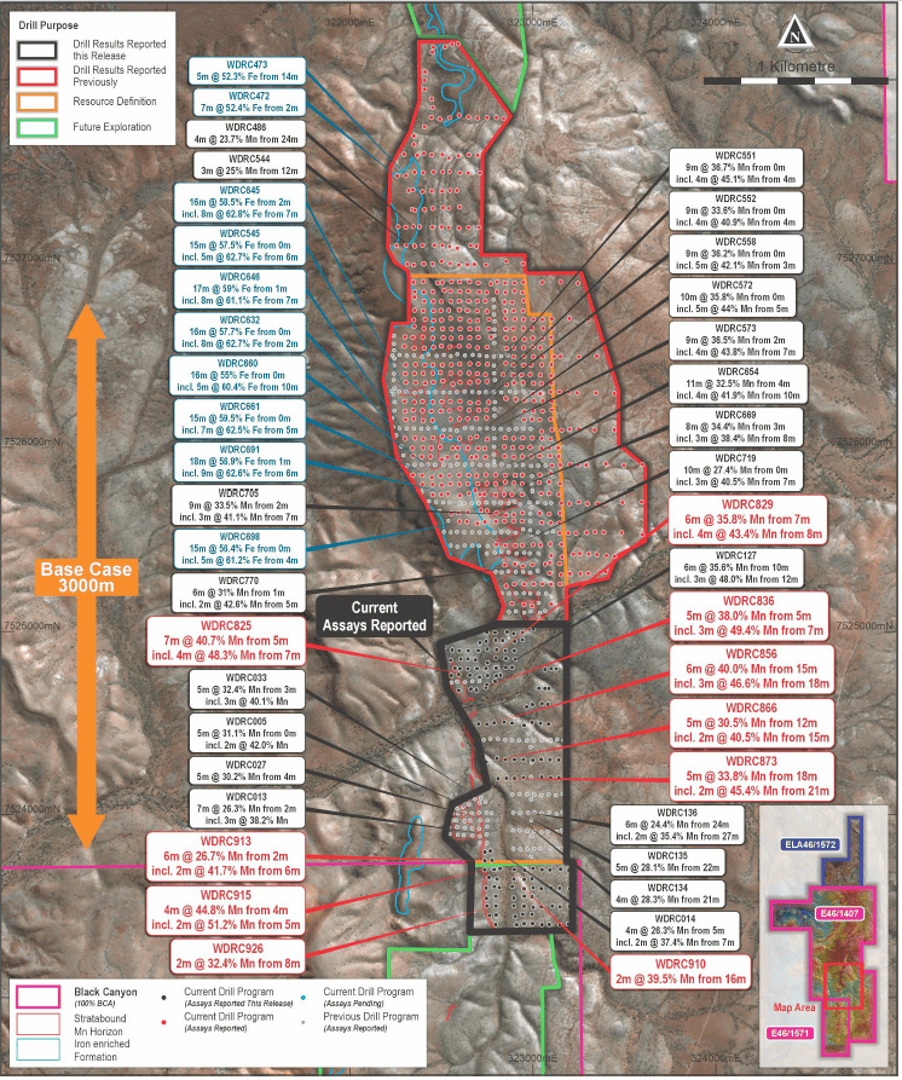
With all final assay results now received, Black Canyon is completing its maiden Mineral Resource Estimate, due for delivery in September. The company is working with consultants, contractors and equipment suppliers to develop key assumptions and cost estimates for the Wandanya scoping study scheduled for December. A gravity survey co-funded by the Western Australian Government's Exploration Incentive Scheme has been completed, with results to be released following processing and interpretation. A phase two baseline flora and vegetation survey will commence in late August.
Black Canyon holds more than 2,000 square kilometres of tenure in the underexplored Balfour Manganese Field and Oakover Basin in Western Australia. Wandanya is located on the eastern margin of the Oakover Basin and hosts stratabound, high-grade manganese and iron mineralisation. The company is evaluating Wandanya as a potential dual-commodity project, with the maiden resource and December scoping study set to be the next major steps in determining its development pathway.
Related Products
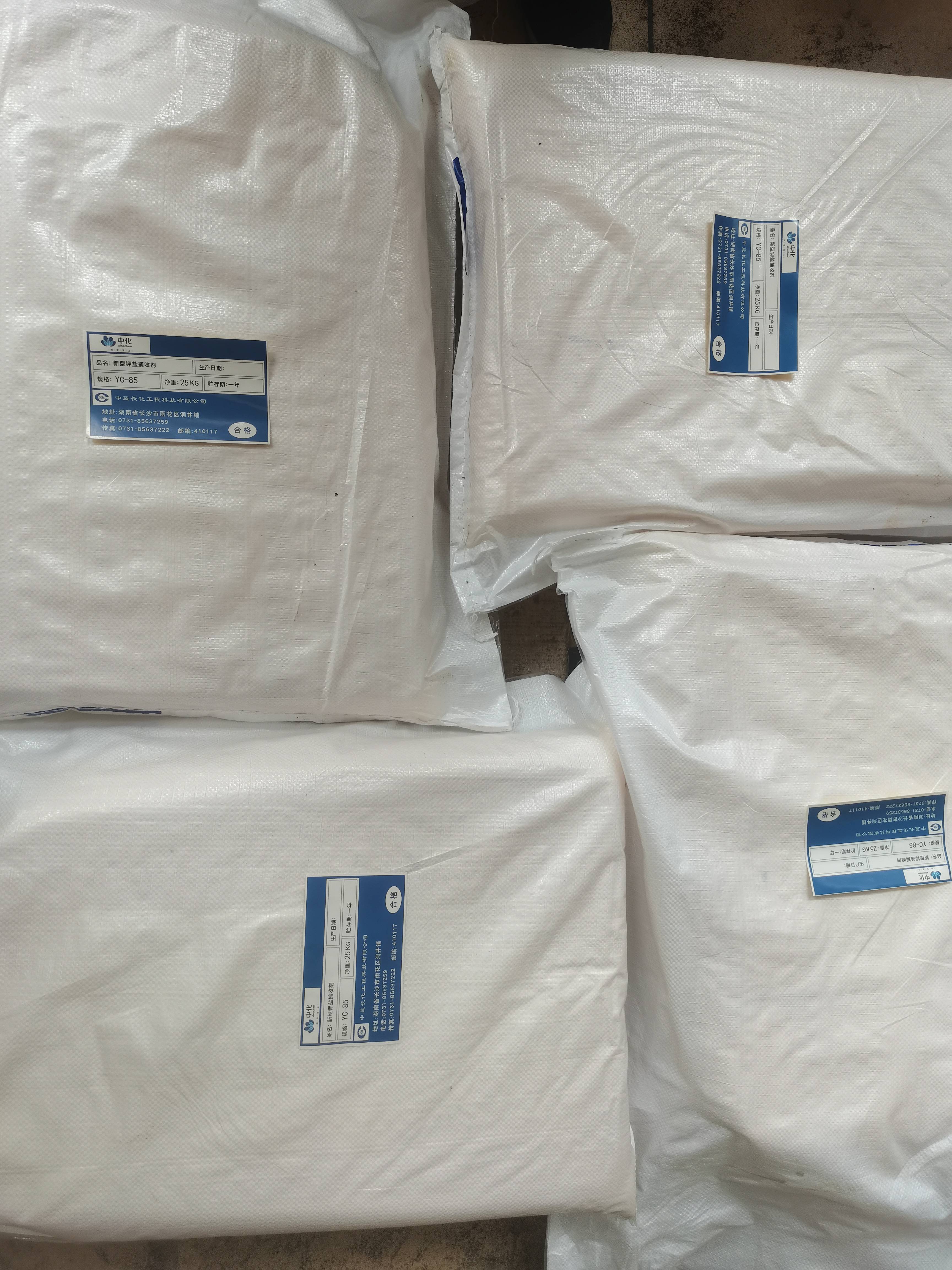

New Environmentally Friendly Green Potassium Salt Collector
Chonfar Engineering and Technology Co., Ltd.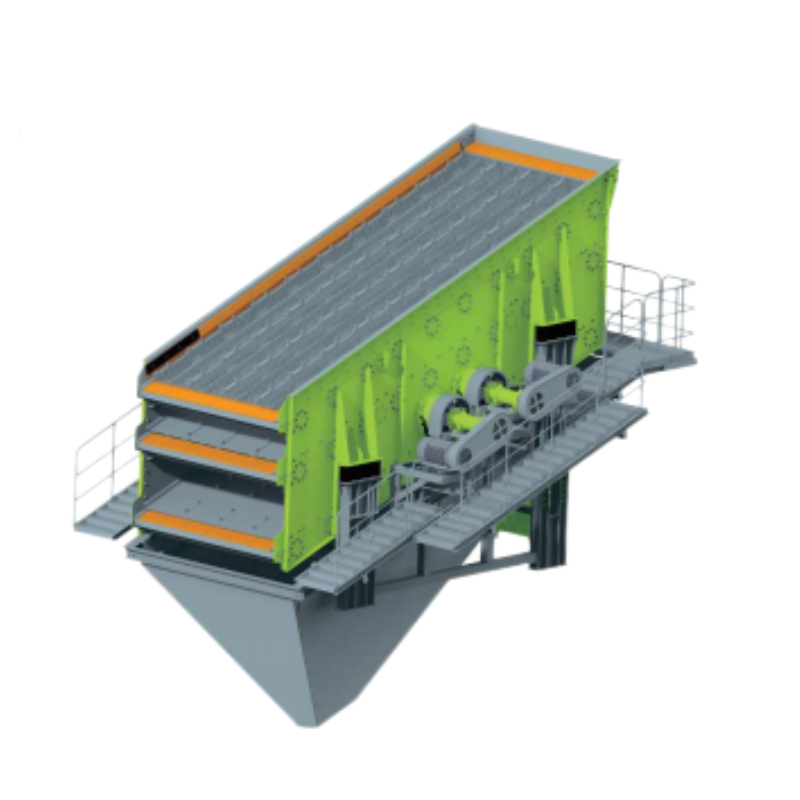

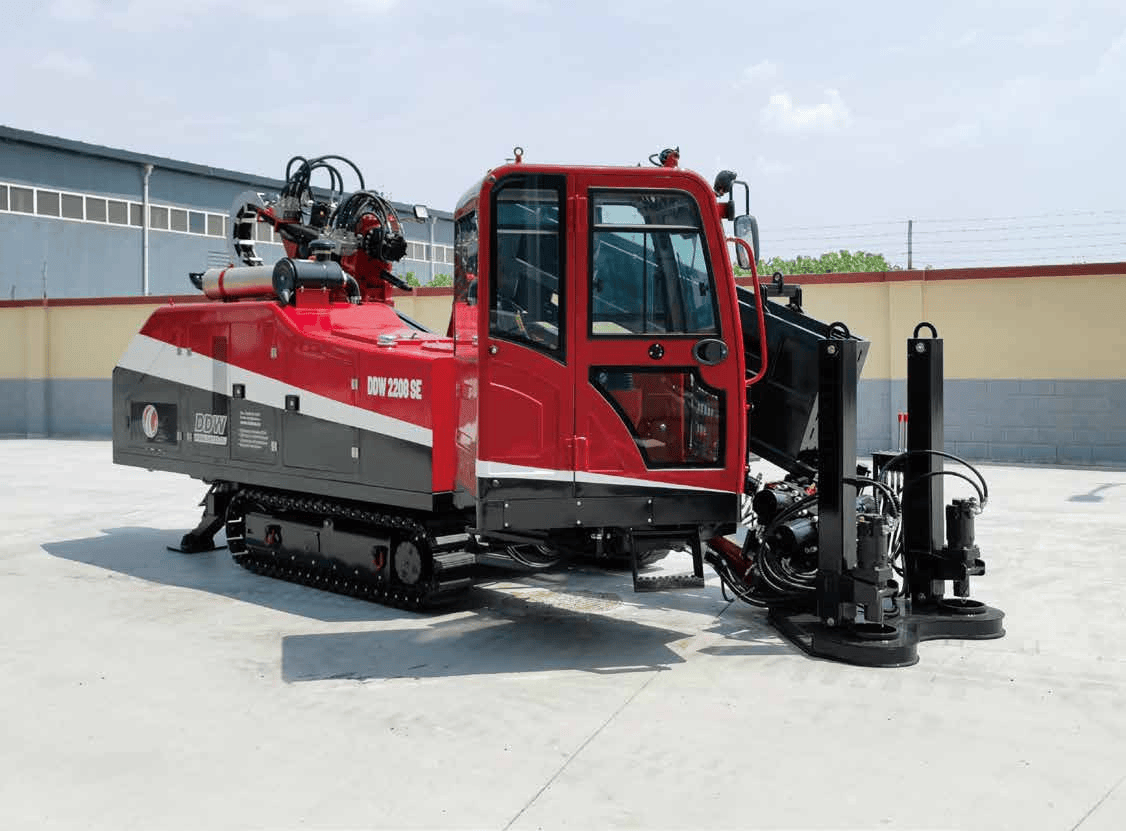
DDW22/08SE-HORIZONTAL DIRECTIONAL DRILL
DW/TXS Construction Equipment (Beijing) Co., Ltd.
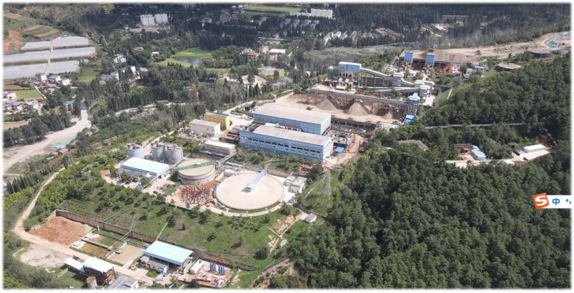
Yunnan Phosphorus Chemical Group Co., Ltd. 2 Million t/a Phosphorus Ore Mining and Beneficiation Project
China Bluestar Lehigh Engineering Corporation
Quick-Change Single-Seat Control Valve / Quick-Change High-Pressure Single-Seat Control Valve
Beijing Consen Automation Technology Co., Ltd.