Panama Canal Authority to Reduce Daily Transits to 32 Starting September 15
en.Wedoany.com Reported - The Panama Canal Authority (ACP) has announced that, due to insufficient rainfall caused by the El Niño phenomenon, it will reduce the daily vessel transits from 36 to 34 starting September 4, and further to 32 on September 15. The maximum allowable draft for Neopanamax vessels will be set at 48 feet starting September 2, while a previously planned further reduction to 47.5 feet has been postponed to October 1. These adjustments, confirmed by Freight Waves, are a direct response to the deteriorating water resource conditions in the canal's watershed.
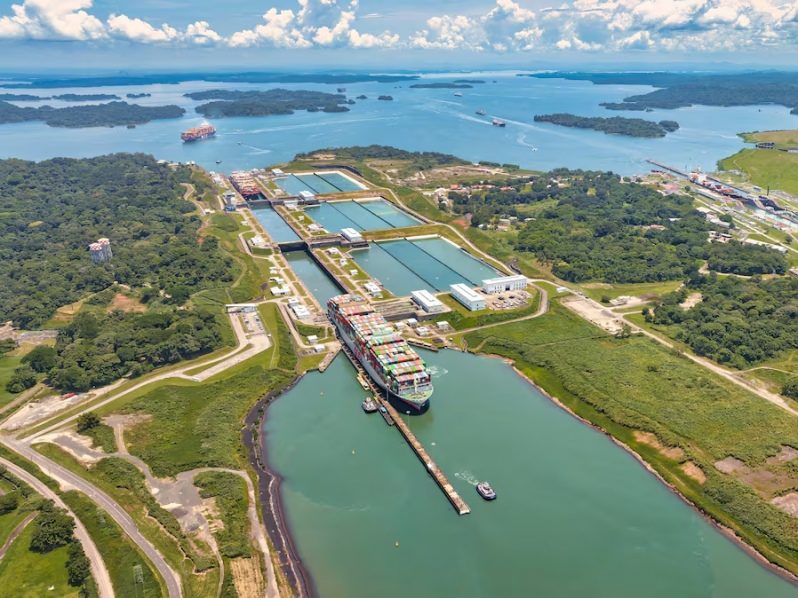
The Canal Authority stated that between May and August, rainfall in the watershed was 34% below the historical average, and water replenishment was 44% below average. The ACP aims to preserve sufficient water reserves to ensure operations during the 2027 dry season while safeguarding the supply of drinking water for human consumption. Additionally, a potentially severe El Niño event in 2026-2027 adds uncertainty to the outlook.
The Panama Canal handles approximately 5% of global trade volume, with over 70% of its cargo originating from or destined for the United States, and about 72% of vessels transiting the waterway are linked to U.S. ports. The reduction in transit capacity will directly impact the reliability and costs of logistics chains connecting Asia with U.S. East Coast (USEC) and U.S. Gulf Coast (USGC) ports, affecting everything from the ports of New York and New Jersey to Houston and New Orleans, and impacting vessel schedules, equipment positioning, and terminal workloads.
For Asia-U.S. East Coast routes, the impact may be particularly pronounced. Relevant liner services will compete for a more limited number of booking slots, vessels without guaranteed transit slots may face delays, and draft restrictions could force lower load factors.
This outlook may also drive more cargo to shift to the U.S. West Coast (USWC) and then move eastward by rail, increasing demand for intermodal trains, inland terminals, chassis, and transloading operations. The ports of Los Angeles and Long Beach handled approximately 1.9 million TEUs in July, nearing record levels.
In terms of data, container freight rates from Asia to the U.S. East Coast have reached $10,527/FEU, 42% higher than at the outset of the conflict between Iran and the United States, and $3,334/FEU higher than rates to the U.S. West Coast.
For global shipping, facing reduced transit resources, some shipping lines may choose to reroute via the Suez Canal or the Cape of Good Hope. Both alternative routes entail longer distances, higher fuel consumption, and greater operational and geopolitical risks. For U.S. agricultural exporters using Gulf Coast ports to ship to Asian buyers, these restrictions could also translate into longer voyage times and higher delivery costs.
The ultimate impact extends beyond delays at the Panama Canal itself. Reduced canal capacity could alter the balance among U.S. gateway ports, drive up freight rates, and force shippers and carriers to make routing decisions earlier.