Southern Illinois University Receives NASA Funding to 3D Print Plastic Waste into Cookies
en.Wedoany.com Reported - A research team at Southern Illinois University Carbondale (SIU Carbondale), funded by NASA's Deep Space Food Challenge, has developed a process that converts PET plastic waste into edible cookies via microbial transformation and 3D printing, naming this high-protein product "µBite."
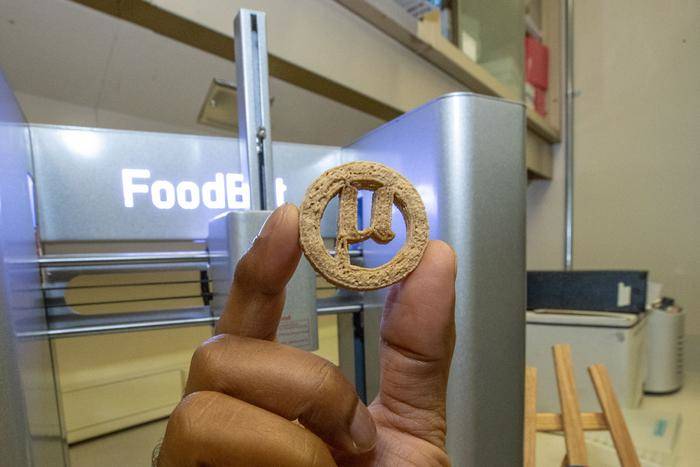
3D printing filaments and 3D-printed food are nothing new, but turning plastic waste directly into printable food ingredients has rarely been seen before. The SIU team's research is rooted in the fact that both plastic and food contain carbon. Lahiru Jayakody, an associate professor involved in the project, stated that the team is working to develop plastic upcycling technologies to create more valuable products, and thus came up with the idea of rebuilding carbon molecules from plastic into edible proteins.
PET (polyethylene terephthalate), widely used in water bottles and food packaging, is a common source of plastic waste. The researchers programmed various yeasts, including baker's yeast, to convert carbon molecules from plastic and agricultural waste into proteins, vitamins, and even flavoring agents. Jayakody noted that the traits of microorganisms can be harnessed to solve problems caused by humans themselves.
In terms of the process, the team employs an oxidative hydrothermal dissolution method developed by Ken Anderson, a geology professor at the university, which uses water and oxygen under high temperature and pressure to break down PET waste and corn stover into fragments that yeast can digest more easily. These fragments are then fed to the programmed yeast, successfully converting them into different edible components, which are subsequently mixed with fiber, starch, and sweeteners to form a 3D-printable paste.
The resulting high-protein 3D-printed cookies have not yet been taste-tested. The team is awaiting institutional approval to conduct the first taste test. Based on existing data and odor test results, the cookies are considered promising, with several people expressing willingness to consume them under resource-constrained conditions, such as deep-space missions or disaster areas with food shortages.
The team is also attempting to produce more food additives through programmed yeast to enhance the product's appeal. Currently, baker's yeast has converted plant biomass into vanilla flavoring, while another yeast has transformed ethylene glycol from PET into beta-carotene—a plant pigment that the human body can convert into vitamin A. Sandhy Jayasekara, a graduate student, stated that the team is using microorganisms to develop cookies into a more consumer-friendly product, and in the future, it may even be possible to use microorganisms to directly produce the starch, fiber, and sweetener components in the cookies.
The research team believes this technology could provide a food source in areas with scarce natural resources, such as the Moon or Mars, and could also be used for submarine crew catering or in regions where hunger is widespread. Jayakody cited projections indicating that global food demand will grow by 35% to 56% by 2050, with about 30% of the world's population at risk of hunger, and microorganisms may be one pathway to addressing this issue.
Related Products




Industrial and Commercial Point-Type Gas Detector
Jinan Benan Technology Development Co., Ltd.
714CD Series C-Band Weather Radar
Chengdu Zhongdian Jinjiang Information Industry Co., Ltd.
4HS-8 High-efficiency Peanut Inverted-laying Harvester
Hebei Yongfa Hongtian Agricultural Machinery Manufacturing Co., Ltd.