Brazil's 2026 Fertilizer Deliveries Expected to Fall to 42-45 Million Tons
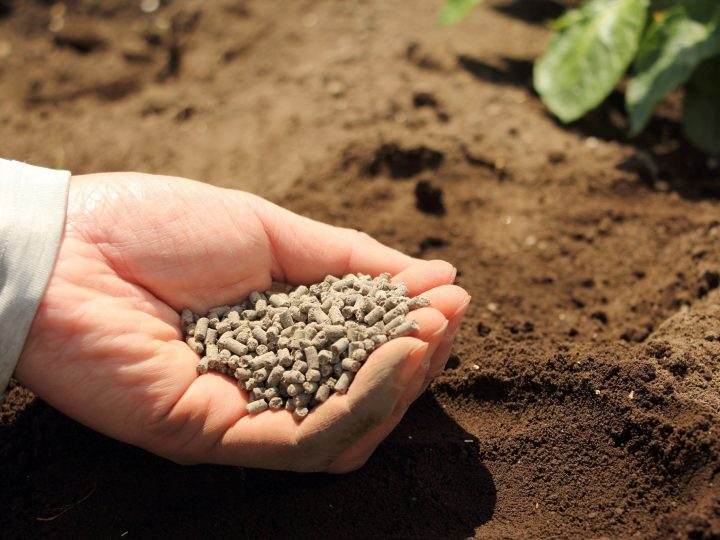
en.Wedoany.com Reported - Brazil's fertilizer deliveries in 2026 are expected to decline by more than 10% compared to the 49 million tons recorded in 2025, falling to between 42 million and 45 million tons. The estimates were presented by participants at the 13th Brazilian Fertilizer Congress, held by the National Association for Fertilizer Diffusion (Associação Nacional para Difusão de Adubos, ANDA) on Tuesday, August 25, in São Paulo. Shrinking demand, difficulties in accessing credit, and the impact of the Middle East conflict on raw material supply and prices are jointly weighing down expectations for Brazilian fertilizer deliveries.
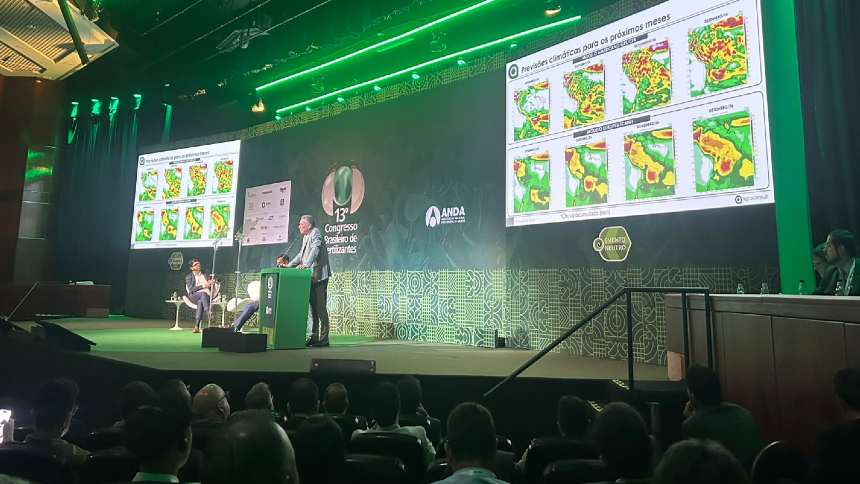
Looking at forecasts from various institutions, Agroconsult's preliminary estimate points to deliveries of 45 million tons, while acknowledging the actual figure could be lower; Agrinvest previously estimated 44 million tons, also considering the possibility of a downward revision; Yara's expectation is around 43 million tons; and Mosaic provided a range of 42 million to 45 million tons.
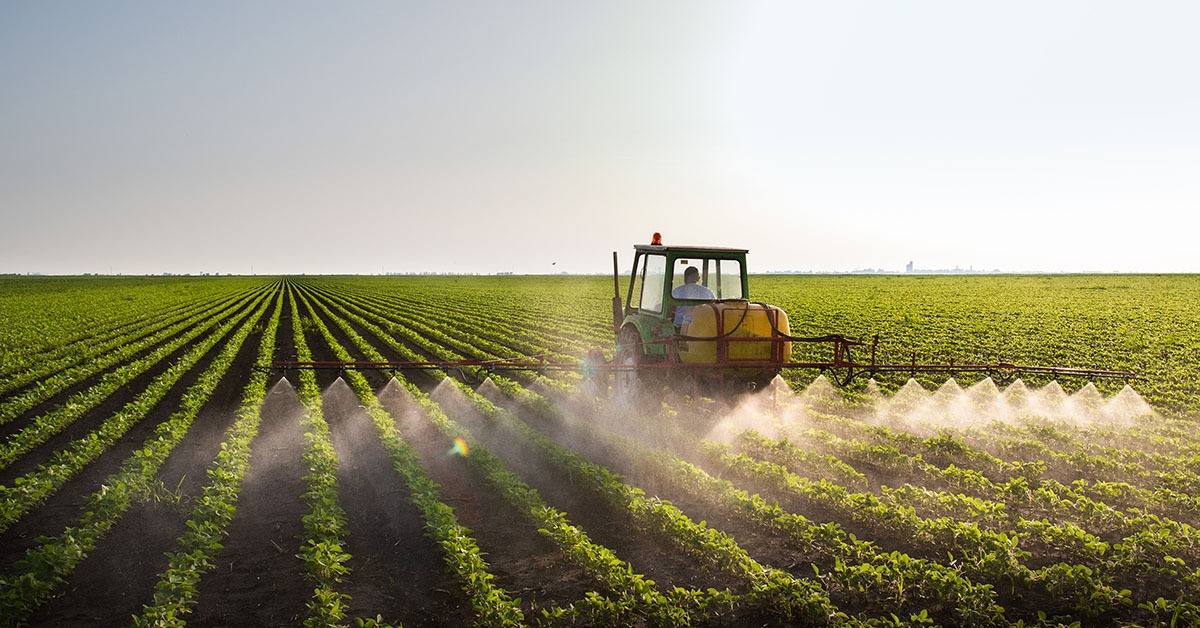
This contraction comes just weeks before the start of the grain planting season in Brazil's Center-West, the country's main soybean-producing region. The current pace of fertilizer purchases is slower than in previous seasons, mainly reflecting lower crop profitability and financing difficulties. André Pessôa, founding partner and director of Agroconsult, described this as a "Mounjaro harvest" during a panel discussion at the congress, referring to the impact of demand contraction—symbolized by Eli Lilly's weight-loss injection pen—on the fertilizer market. The consultancy expects full-year deliveries to land at 45 million tons, with downside risks. Pessôa stated that a drop to 44 million tons would not be surprising, while reaching 46 million tons would be.
The decline will affect all major nutrient categories, with phosphates being the most affected, while nitrogen and potash are also expected to contract. Agroconsult considers the most critical delivery period to be from May to September, during which 23.9 million tons of fertilizers were delivered in 2025, compared to an expected 19.6 million tons this year—a difference of 4.3 million tons. Reduced import supply combined with domestic production difficulties partly explains the adjustment. On the import side, foreign purchases are expected to fall from 43.3 million tons in 2025 to 38.4 million tons this year, a decline of 11.3%; domestic production is expected to drop from 7.2 million tons to 5.8 million tons, a decrease of 19.4%.
In terms of supply-demand balance, considering opening inventories, imports, and production, total supply in 2026 is expected to decline 10.4% to 53 million tons; total demand, including deliveries, exports, and other uses, is expected to fall 7.7% to 46.3 million tons. As supply is declining faster than demand, closing inventories are expected to drop from 8.8 million tons to 6.7 million tons, a reduction of 23.4%.
Pessôa believes that for financially strained producers, reducing planted area may make more sense than merely cutting fertilizer application rates. He noted that producers are being forced to cut back; they had originally planned to increase, not decrease, their investment in technology, but now have to reconsider. Difficulties in accessing credit are one of the main factors driving the contraction. Eduardo Monteiro, country manager for Mosaic in Brazil, pointed out that producers are facing multiple pressures from bad debts, risk perception, and high interest rates, which have become a major bottleneck. According to Mosaic's estimates, as of two weeks before the congress, approximately 85% of the fertilizer needed for the season had been traded, but this share remains below the usual level for this period; he stated that the current stage is about 3% to 5% lower than in previous seasons.
Guilherme Schmitz, vice president of marketing and agronomy at Yara, stated that rising fertilizer prices, combined with lower returns and compressed margins for producers—especially grain farmers—are prompting them to delay investments. This delay is more pronounced in some regions: in the Cerrado, more than 90% of fertilizers for the summer crop have already been sold, while in Rio Grande do Sul, phosphate and potash sales are between 65% and 70%. Declining purchasing power is also changing the fertilizer mix. According to Monteiro, producers are shifting toward products with lower nutrient concentrations, such as triple superphosphate, and sulfates are gaining ground in phosphorus-nitrogen combinations.
Phosphorus is one of the industry's main concerns, due to rising prices of sulfur, the raw material used to manufacture phosphate fertilizers. Schmitz estimates that monoammonium phosphate (MAP) prices were $620 to $630 per ton (CFR) before the conflict, and have now risen to $900 to $920 per ton, remaining at high levels; prices have not yet retreated due to sustained cost and supply pressures. Monteiro puts MAP pricing at $850 to $860 per ton, noting it is the only one of the three main nutrients that has not retreated after rising. Mosaic expects phosphate application rates to decrease by 20% to 30% this year; the cuts are aimed at reducing costs, but may ultimately affect yields. The company estimates that reducing phosphate application could lead to a 5% to 7% decline in soybean yields, with a greater impact in areas with shorter cropping histories and less fertilizer legacy. Mosaic states that approximately 70% of Brazil's agricultural land has been cultivated for more than 10 years, while the remaining 30% has shorter cropping histories, where the impact of reduced fertilization on yields is more pronounced. Pessôa, in turn, noted that producers are trying to fine-tune fertilizer rates to avoid yield losses and economic damage, but this adjustment is nearing its limit.
While the main concern for 2026 lies on the demand side, the alarm for 2027 comes from the supply side. Monteiro stated that some of the sulfur currently used by Brazilian fertilizer companies was purchased before the price surge, and the country did not face a phosphorus shortage this year—first, because consumption fell significantly, and second, because the sulfur used by Brazilian plants was procured in advance at old prices, and this inventory helped avoid more severe constraints. However, this protection is weakening, and with production affected in multiple regions, it could take 6 to 12 months for supply to return to normal. Sulfur prices have risen from $400 to $450 per ton before the conflict began to approximately $1,200 per ton today. Monteiro stated that at such high sulfur prices, producing phosphate fertilizers is economically unviable. The combination of high prices and reduced output in several producing regions could trigger a supply shock next year, with production impacts already observed in Brazil, North Africa, China, and the United States. He emphasized that this is a global impact, and if conditions do not improve, fertilizer supply will face a severe shock next year, though the timing is still difficult to determine.
In response, Mosaic has made significant capacity adjustments, with 7 of its 15 plants in Brazil either shut down or operating at reduced rates. Monteiro stated that when the market size may shrink from 49 million tons to between 42 million and 45 million tons, the capacity adjustments have kept the company's losses far below what they would be under normal circumstances. Yara, in turn, is relying on the diversification of its production and supply structure to reduce its exposure to potential supply disruptions this year. Schmitz explained that of the fertilizers the company sells in Brazil, approximately 25% comes from its own overseas plants (mainly in Europe), 25% is produced domestically in Brazil at plants in Rio Grande (RS), Ponta Grossa (PR), and Cubatão (SP), and the remaining 50% is imported from external suppliers. With its own production system accounting for 50% in total and the other 50% coming from more reliable sources, this structure provides the company with greater supply stability and security. Yara expects its final results for 2026 to be on par with last year, maintaining stability in financial performance, sales volume, and profitability.
Related Products

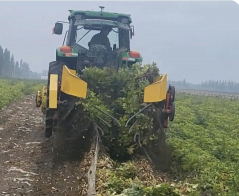
4HS-8 High-efficiency Peanut Inverted-laying Harvester
Hebei Yongfa Hongtian Agricultural Machinery Manufacturing Co., Ltd.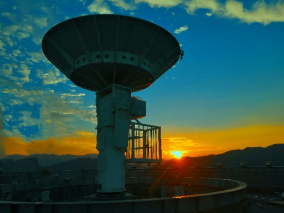
714CD Series C-Band Weather Radar
Chengdu Zhongdian Jinjiang Information Industry Co., Ltd.
Industrial and Commercial Point-Type Gas Detector
Jinan Benan Technology Development Co., Ltd.