Argentina's Atucha 2 Nuclear Power Plant Tests Dry Storage Facility Capable of Holding 50,000 Spent Fuel Assemblies
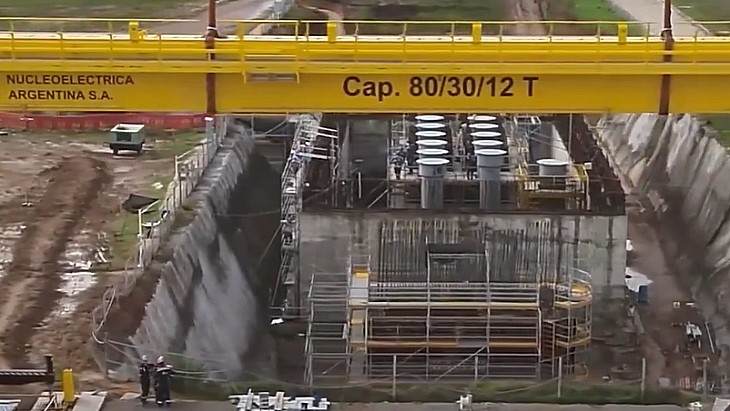
en.Wedoany.com Reported - Nucleoelectrica Argentina is testing equipment for the spent fuel dry storage facility at the Atucha 2 nuclear power plant, a step considered one of the key elements required for the long-term operation of the unit. The facility, named ASECG II (Almacenamiento en Seco de Combustibles Gastados de Atucha II, Atucha 2 Spent Fuel Dry Storage Facility), will safely store up to 50,000 spent fuel assemblies on the plant site once completed. The facility is equipped with a passive ventilation system that maintains fuel assembly temperatures within safe limits without requiring electricity or human intervention.
After being discharged from the reactor, spent fuel typically needs to be stored underwater for at least five years, and often longer, until the fuel has cooled sufficiently and radiation levels have dropped significantly before transfer or dry storage. Nucleoelectrica stated that the cooling pool at the Atucha 2 nuclear power plant could reach capacity by the end of next year, making the new facility necessary to ensure the unit's continued operation.
The equipment currently being tested includes a gantry crane, used to move containers safely and precisely within the storage facility. The gantry crane was developed by IMPSA according to Nucleoelectrica's technical specifications, delivered at the end of 2025, with installation and commissioning scheduled to be completed within four months.
The dry fuel storage facility at the Atucha 1 nuclear power plant was commissioned in 2022 to store spent fuel assemblies from the pressurized heavy water reactor.
The Atucha 2 nuclear power plant is a 693 MWe pressurized heavy water reactor, ordered in 1979, designed by Siemens, and is a scaled-up version of the Atucha 1 unit. In 1981, construction began under a joint venture between Argentina's National Atomic Energy Commission (CNEA) and Germany's Siemens-Kraftwerk Union, but progressed slowly due to funding shortages, reaching 81% completion when work halted in 1994. In 1994, Nucleoeléctrica Argentina was established, taking over the nuclear power plant from CNEA and overseeing the construction of Atucha 2. In 2003, the company submitted a plan to the government to complete the unit; in August 2006, the government unveiled a strategic plan for the nuclear industry, explicitly including the completion of Atucha 2. The unit was essentially completed in September 2011, achieved first criticality in early June 2014, was connected to the grid that same month, and reached full power operation in February 2015.
In May of this year, Argentina's Nuclear Regulatory Authority (Autoridad Regulatoria Nuclear) renewed the operating license for Atucha 2 for a 10-year period, valid until May 2036.
Related Products

Single-Phase Automatic Voltage Regulator(AVR)
Shaanxi Sefon Electrical Equipment Co.,Ltd.
Smart Photovoltaic Prefabricated Substation
Shanghai Jinyou Jinhong Intelligent Electric Co., Ltd.
Double-slide Triple-sealed Hot Air Isolation Door
Xi'an Yingchuan Electric Power Equipment Co., Ltd.
Microcomputer Protection and Substation Automation
Beijing Agent Devote Power Technology Development Co., Ltd.