German and Japanese Teams Develop Waste-Heat-Driven Solid-State Cooling System Achieving 4°C Temperature Difference
en.Wedoany.com Reported - Research teams from the Karlsruhe Institute of Technology (KIT) in Germany and the University of Tsukuba in Japan have demonstrated a solid-state cooling prototype system driven by heat rather than electricity. The system utilizes shape-memory alloy thin films to convert thermal energy into mechanical work, which is then further transformed into measurable cooling, offering a new pathway for refrigeration using waste heat and solar energy. The findings have been published in Nature Energy.

Refrigerators, air conditioners, and data centers rely on electrically driven compressors to transport heat carried by refrigerants from one end to the other—a fundamental working principle that has remained unchanged for over a century. Meanwhile, cooling and heating together account for nearly half of global energy consumption, and many commonly used refrigerants themselves contribute to global warming. Elastocaloric solid-state cooling is regarded as a promising alternative: shape-memory alloys cool down upon releasing a previously applied mechanical load. However, previous elastocaloric cooling systems still required electrically driven actuators to generate the necessary force, and thus could not directly utilize abundant available heat sources such as waste heat and solar energy.
The research team combined two layers of ultra-thin nickel-titanium films with complementary functions. The first film layer leverages the shape-memory effect, contracting when heated to directly convert thermal energy into mechanical work without the need for an electric motor; this motion is then transferred to the second film layer, which induces reversible changes in the crystal structure through the cyclic application and release of load, thereby generating cooling. Thermal power thus replaces the electric actuators that previously drove elastocaloric cooling systems.
Dr. Jingyuan Xu, leader of the ZEco Thermal Lab's young researcher group at KIT's Institute of Microstructure Technology (IMT), explained that the key innovation lies in combining two complementary functions of shape-memory alloys: one film converts heat into mechanical work, while the other converts that work into cooling. This approach establishes a new method for driving solid-state cooling, opening up new possibilities for utilizing waste heat and solar energy.
Under actuator temperature conditions of 86°C, the prototype system achieved a temperature difference of 4°C at the component level, with the elastocaloric refrigerant experiencing a temperature change of nearly 13°C, marking the first time the research team experimentally validated the feasibility of the concept. The device also operated stably with an external heat source input of 130°C, demonstrating that the system can work with real-world heat sources. Yi-Ting Hsiau, first author of the paper and a doctoral student at IMT, stated that the decisive moment came when they measured cooling genuinely produced by the heat-driven system, proving that the principle holds not only in theory.
The current device was designed for feasibility study purposes and has not yet been optimized for maximum cooling capacity. The research team is now working on connecting multiple film layers in parallel to enhance cooling performance. Potential applications span multiple directions, including cooling computer chips using the processors' own waste heat, as well as cooling sensitive electronic components in vehicles using powertrain heat. This research was conducted in collaboration with the University of Tsukuba in Japan. The research team believes this is just the beginning, and by scaling up this technology, compact cooling systems could be developed to achieve sustainable refrigeration using widely available heat sources.
Related Products
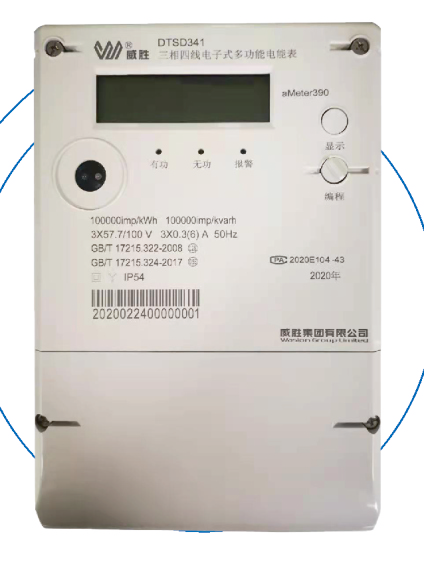

Overseas IEC Gateway Energy Meter - DTSD341/DSSD331-aMeter390
Wasion Group Limited Co., Ltd.
Post-type AC Pollution-resistant Disc Suspension Porcelain Insulator (Triple Umbrella Type)
Shandong High Voltage Insulator Co., Ltd.
H-40.5/0.4~1.14kV New Energy Power Generation Dedicated High Voltage/Low Voltage Prefabricated Substation
XJ (Xiamen) Intelligent Power Equipment Co., Ltd.
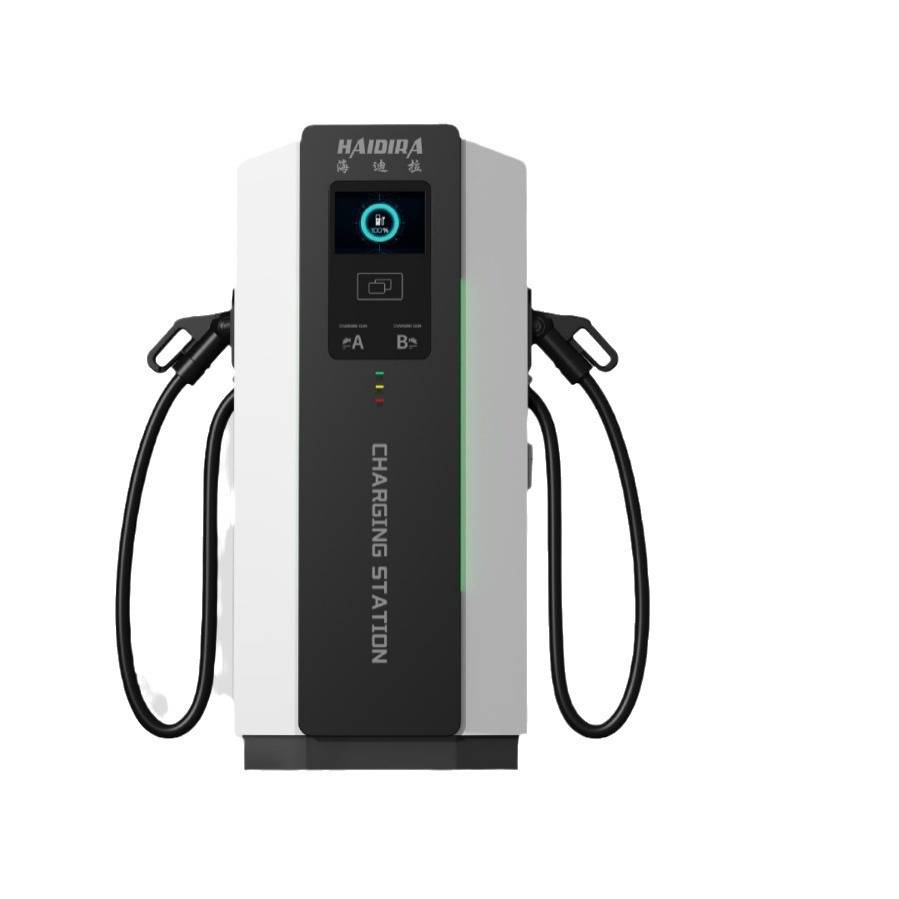
Manufacturer Direct Sales Tesla New Energy Electric Vehicle Universal DC 180kW Dual-gun Charging Pile Commercial Fast Charger
Anhui Haidira Electric Technology Co., Ltd.
Industrial and Commercial Point-Type Gas Detector
Jinan Benan Technology Development Co., Ltd.