Korea Institute of Civil Engineering and Building Technology: Rebound from Residential PV Adoption Across Tariff Tiers Offsets 11%-22%
en.Wedoany.com Reported - Researchers Jiyoung Eum and Gyeong-Seok Choi at the Korea Institute of Civil Engineering and Building Technology in Goyang found through simulation analysis that residential PV adoption under South Korea's progressive electricity tariff system may trigger rebound effects. Households that cross tariff tiers offset 11% to 22% of expected energy savings, while households remaining within the same tariff tier show almost no rebound effect.

The rebound effect refers to the phenomenon where a more energy-efficient technology partially offsets expected gains due to changes in consumer behavior. In the residential PV sector, households may increase electricity consumption after installing PV systems because self-generated power lowers their electricity costs, thereby partially offsetting expected energy savings and emission reduction benefits.
The simulation framework developed by Eum and Choi matches hourly solar generation with household electricity consumption to calculate self-consumption rates and track behavioral responses when PV adoption moves households into cheaper tariff tiers under South Korea's progressive electricity pricing mechanism.
The results show that PV significantly reduces household electricity consumption and bills, but some expected savings may be offset as household consumption increases. Jiyoung Eum told pv magazine that the offset effect is concentrated among households whose consumption falls into lower tariff tiers after installation. She also noted that these are simulation-based estimates, and validation with metered household data would be a useful supplement.
Another finding of the paper is that households forgo 19 to 120 kilograms of carbon dioxide (CO2) emission reductions annually, depending on the number of months spent transitioning between tariff tiers. Based on this, the researchers recommend that policymakers evaluating residential PV projects should no longer assume uniform decarbonization outcomes.
The study also examined South Korea's net metering mechanism and found that net metering amplifies rather than eliminates the rebound effect. Under net metering, the rebound effect for high-consumption households doubles from 4.5% to approximately 9%, because such households may reduce grid electricity usage and enter cheaper tariff tiers.
The paper concludes that South Korea's progressive electricity tariffs may generate potential rebound effects that partially offset expected energy and emission reduction savings, revealing "dynamics not considered in existing policy evaluation frameworks." The study recommends incorporating rebound adjustment factors differentiated by tariff tier transition status, system capacity, and net metering eligibility into PV policy evaluation frameworks.
Jiyoung Eum noted that government support remains a key driver of residential PV in South Korea, with national subsidy programs reducing upfront installation costs; some local governments also provide additional support, with support levels and availability varying by region and year. She believes that continued support to lower upfront costs is critical to maintaining deployment, and that solar PV incentives and tariff design should be considered together, as the tariff structure affects both household electricity bill savings and subsequent rebound effects.
The research findings were published in the journal Energy and Buildings under the title "Rebound effects of residential PV adoption under progressive electricity tariffs in South Korea."
Related Products


714CD Series C-Band Weather Radar
Chengdu Zhongdian Jinjiang Information Industry Co., Ltd.
80kW Megawatt Supercharging Module TH80F10030C9
Shijiazhuang Tonhe Electronics Technologies Co., Ltd.

Industrial and Commercial Point-Type Gas Detector
Jinan Benan Technology Development Co., Ltd.
Mineral-insulated Compact Busway (Fire-resistant Busduct)
Zhuhai Guangle Electric Busway Co., Ltd.
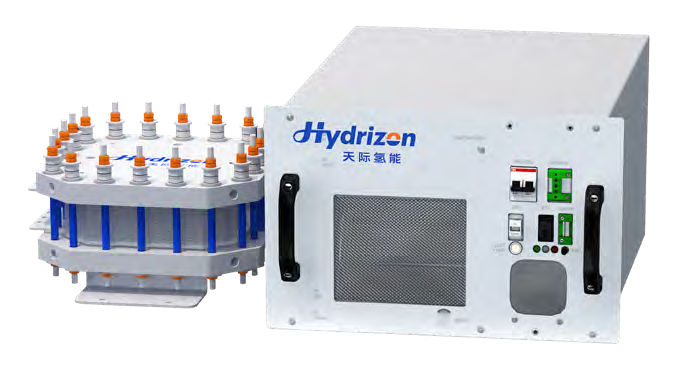
HI-Pro Green Hydrogen High-efficiency Production System-HI-PRO-AEM
Hydrizon Technology (Beijing) Co., Ltd.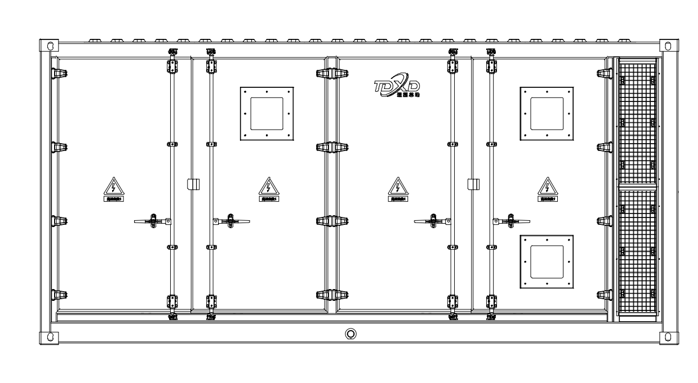
5012kWh DC Energy Storage System TD-EES-5012kWh
Suzhou Tongding Xindong Energy Storage Technology Co., Ltd.