Altowav Launches 3.2 km 60 GHz Wireless Bridge
en.Wedoany.com Reported - On November 19, U.S. wireless communications equipment manufacturer Altowav launched the AltoPlex LR400 and LR170 60 GHz long-range wireless bridges, supporting point-to-point (PtP) and point-to-multipoint (PtMP) communications. The LR400 delivers up to 3.8 Gbps of Layer 2 bidirectional aggregate throughput at a transmission distance of 2 km and 2 Gbps at 3.2 km; the LR170 supports 3.8 Gbps at 600 m and 2 Gbps at 1.5 km.

Both devices use chipsets based on the IEEE 802.11ay standard, combined with Altowav's self-developed time division multiple access (TDMA) communication interface, achieving deterministic scheduling by reserving transmission time slots for terminals, with communication latency below 1 ms. The system employs GPS-synchronized time division duplex (TDD) technology to coordinate signal transmission across different sectors and sites. The wireless link uses a single 2.16 GHz channel; the U.S. and Canadian versions support channels 1 through 5 within the 57 to 68 GHz band, while the EU version supports channels 1 through 4 within the 57 to 66 GHz band.
The LR400 is equipped with a 42 dBi high-gain Cassegrain antenna, while the LR170 uses a 35 dBi antenna. Both devices can be used as standalone point-to-point wireless backhaul links or connected to an existing AltoPlex multipoint distribution network. When paired with the D621 distribution device, the LR400 provides 3.8 Gbps transmission capability at 400 m and 2 Gbps at 800 m; the corresponding transmission distances for the LR170 are 200 m and 500 m, respectively.
The hardware features an IP67-rated die-cast aluminum enclosure, a 2.5GbE Ethernet interface, and power consumption below 13 W. The LR400 weighs approximately 2.81 kg and the LR170 approximately 1.32 kg; both integrate a GPS module and support installation alignment via a local 2.4 GHz Wi-Fi interface. Network management supports REST API, Web GUI, and command-line interface, and can integrate with existing network management systems, while also supporting VLAN, RSTP redundant link protection, and AES-128 encryption.
The two devices target fixed wireless access, campus communications, wireless backhaul, video surveillance, and smart city network deployments, and can be used for high-speed data connections across roads, rivers, railways, and ports.
Related Products


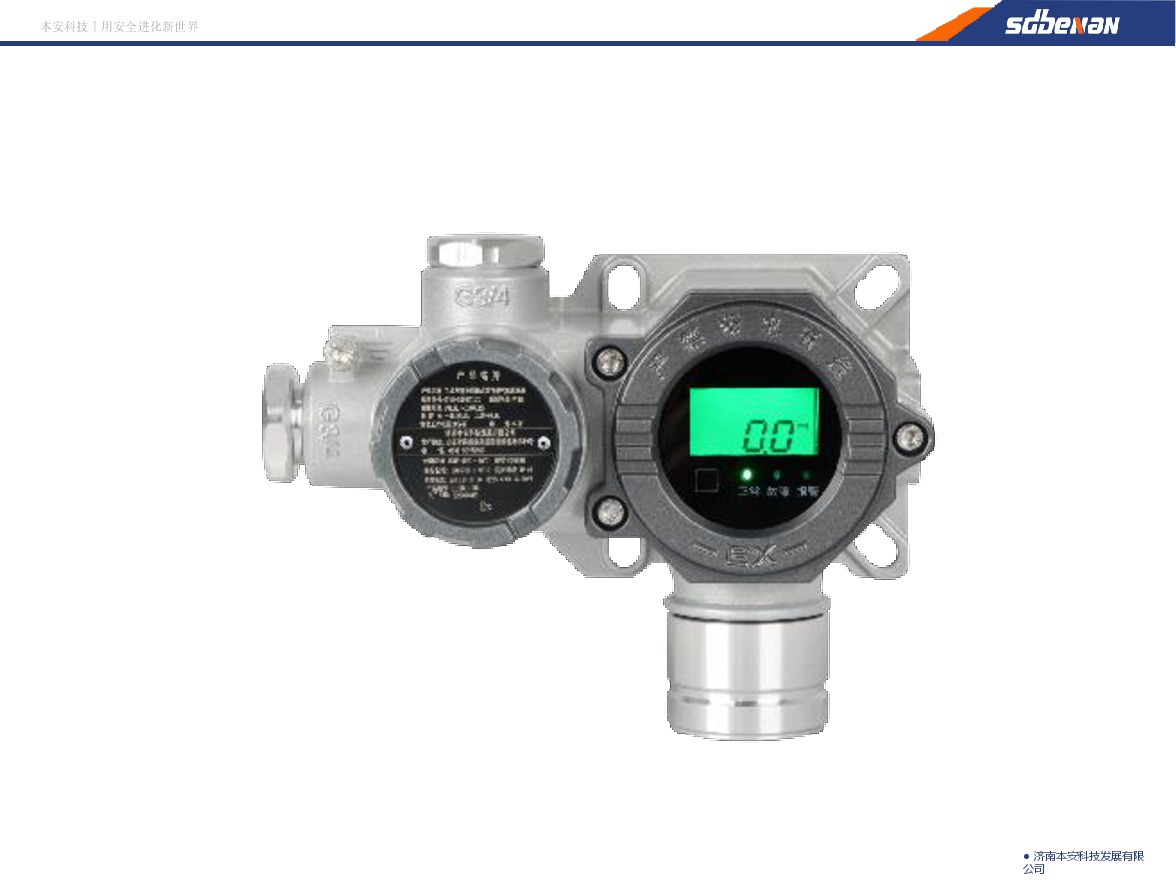
Industrial and Commercial Point-Type Gas Detector
Jinan Benan Technology Development Co., Ltd.
TWP16 P-Band Tropospheric Wind Profile Radar
China Huayun Meteorological Technology Group Co., Ltd.
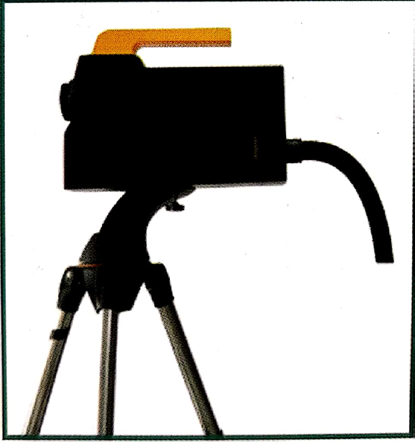
Automatic Aiming Laser Remote Obstacle Removal Robot
Pinggao Group Weihai High-Voltage Apparatus Co., Ltd.
MUX Series Communication Interface Device for Security and Stability Control System
Nanjing NR Electric Co., Ltd.