Wedoany.com Report-Aug. 8, Switzerland-based renewable energy company Axpo completed Spain’s first ship-to-ship (STS) bio-LNG bunkering operation for large container shipping at the Port of Algeciras. The operation involved supplying over 4,000 cubic meters of ISCC-certified bio-LNG to the CMA CGM Foet Bourbon, a 168-meter container vessel built by South Korea’s Samsung Heavy Industries and delivered to CMA CGM in November 2024.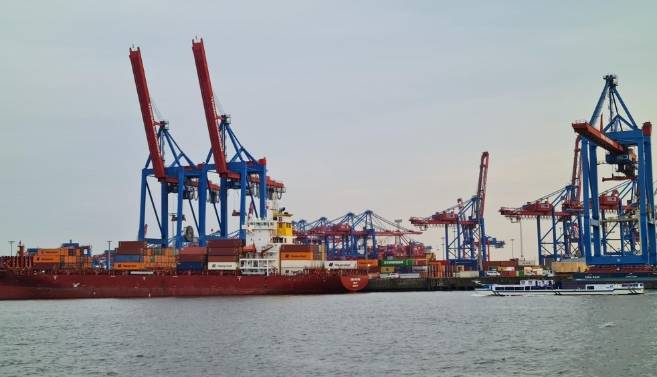
The bio-LNG was sourced through virtual liquefaction at the Enagás Regasification plant in Cartagena, a key liquefied natural gas hub in the Mediterranean, certified by ISCC EU since July 2024. Axpo representatives noted that this milestone builds on previous LNG bunkering operations in Spanish ports, including Algeciras and Málaga, and Portugal’s Port of Sines.
In March 2025, Axpo supplied 2,800 metric tonnes of LNG to a vessel owned by Mediterranean Shipping Company (MSC) at the Port of Málaga, using a unit chartered from Avenir LNG. In April 2025, Axpo conducted an STS LNG bunkering at Algeciras, transferring approximately 5,000 cubic meters of LNG to MSC’s Maria Cristina via the 7,500 cbm Avenir Aspiration.
Axpo stated: “The findings provide a strong foundation for future hydrogen infrastructure, supporting the feasibility of the design, in a context where offshore hydrogen pipeline design codes are under definition.” This reflects the growing role of bio-LNG in supporting sustainable maritime operations.
The global demand for LNG-capable ships is rising, with 1,329 vessels (6.56% of the global fleet) able to use LNG as fuel as of March 2025, up from 558 in 2021, according to Intermodal’s report. This growth, driven by regulations promoting environmentally friendly shipping, has increased the need for robust bunkering infrastructure. In 2023, 185 ports offered LNG bunkering services, a number that grew to 201 by 2025, with projections of 57 additional ports upgrading by the end of 2026.
The Algeciras operation highlights the shipping industry’s shift toward cleaner fuels, with bio-LNG offering a sustainable alternative to traditional fuels. Axpo’s efforts strengthen the infrastructure for low-emission maritime transport, supporting global sustainability goals.