Wedoany.com Report-Aug. 18, Chemists at Cornell University in Ithaca, New York, have developed a novel electrochemical method to synthesize chiral molecules, which exist as mirrored pairs, essential for effective and safe pharmaceuticals. The breakthrough, detailed in a Nature article published online on July 16, 2025, introduces a new approach to inducing chirality using reaction electrolytes.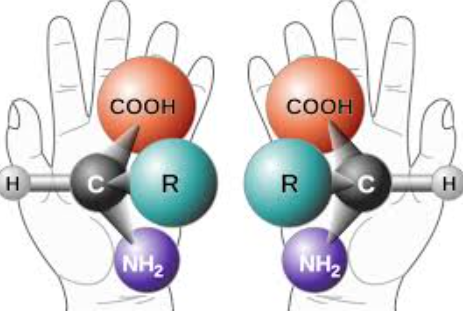
“Many drug molecules are chiral – like our hands, they look similar, but one could be very effective in treating a disease while the other could be inactive or even a poison,” said Song Lin, Howard Milstein Faculty Fellow and Tisch University Professor of chemistry and chemical biology at Cornell’s College of Arts and Sciences. “A lot of times, making only one of the two mirror image molecules is important in medicinal chemistry.”
Chiral molecules, critical in drugs like ibuprofen where one enantiomer is active and the other benign, are challenging to produce selectively. In some cases, the inactive enantiomer can be toxic, making precise synthesis vital. The Cornell team, led by Lin, used chiral supporting electrolytes to create a chiral environment, selectively producing the desired enantiomer through electrostatic interactions.
“Supporting electrolytes are salts added to experiments just to make sure the solution is conducting,” Lin explained. “They do not usually play explicit roles in the reaction. But in this work, we use electrolytes to interact with electrochemically generated molecules through simple electrostatic interactions, so that only one of the two mirror image products, the desired enantiomer, is formed.”
The method’s environmental benefits and potential for broad application across electrochemical reactions make it promising for pharmaceutical production. Collaborating with Brown University, the team used molecular dynamics simulations to study the reaction at the molecular level. “It is well known that the ions in the supporting electrolyte become even more concentrated near the electrode surface with the opposite charge,” said Yue Qi, Joan Wernig Sorensen Professor of Engineering at Brown University. “So now you have an even higher concentration of the chiral inducer near the electrode surface, which is going to make the electrochemical reaction more effective.”
“I think this technology could, in the future, be used in industry, but going from academic discovery to industry application always takes a long time,” Lin noted. “It’s important that NSF supports fundamental research. It allows us to discover something that might not be immediately useful but could play a big role in the long-term.”
The study, supported by the National Science Foundation Center for Synthetic Organic Electrochemistry, involved co-first authors Kaining Mao, Ph.D. ’25, and Chenfei Liu, former postdoctoral associate, alongside Cornell researchers Yi Wang, John M. Putziger, Nicholas I. Cemalovic, and Cameron Muniz ’25, with contributions from Yue Qi and Chaoxuan Gu at Brown University.