Wedoany.com Report-Nov. 17, Air China Cargo, based in Beijing and the sole national flag-carrying freight operator in China, has entered into an acquisition agreement for six A350F freighters. This positions the airline as the initial purchaser of the newly developed A350F model on the Chinese mainland.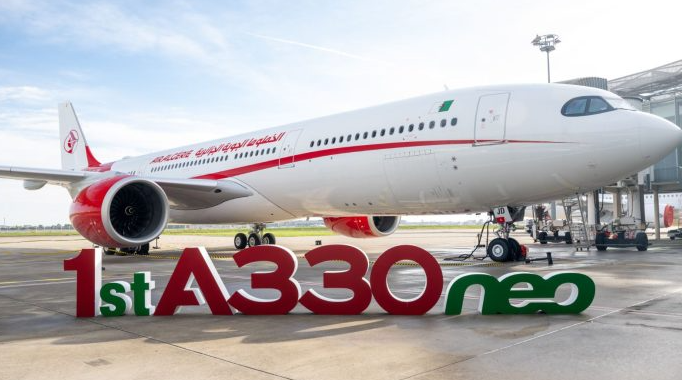
Since June 2025, Air China Cargo has managed all-cargo flights across North China, East China, South China, and Southwest China. The carrier maintains 25 dedicated freight routes connecting to key locations worldwide, encompassing the Asia-Pacific area, Europe, the Americas, and the Middle East. Its network combines freighter aircraft with belly capacity on passenger services, augmented by over 1,500 ground trucking connections globally.
“The introduction of the A350F to our existing mixed cargo fleet contributes to efficiency in operation and maintenance. The A350F will enhance Air China Cargo’s capability to withstand risks in its long-term stable operation,” said Wang Hongyan, Vice President of Air China Cargo.
“We are delighted to welcome Air China Cargo as the latest customer for the A350F. The A350F will bring new generation efficiency and performance as well as new levels of capacity and unprecedented loading flexibility. We look forward to ensuring a seamless integration into Air China Cargo’s operation,” said Benoît de Saint-Exupéry, Airbus EVP Sales of the Commercial Aircraft business.
The A350F, crafted as a leading-edge cargo aircraft, addresses diverse air freight requirements including express, general, and specialized shipments. It accommodates up to 111 tonnes of payload over distances reaching 8,700 kilometers. Equipped with Rolls-Royce Trent XWB-97 engines, the model achieves up to 40% lower fuel use and carbon dioxide output relative to prior designs.
Constructed with more than 70% advanced composites, the A350F weighs 46 tonnes less than comparable options and includes the widest main deck cargo door in its class. It complies fully with ICAO's 2027 carbon dioxide regulations from entry into service and supports 50% sustainable aviation fuel initially, aiming for full compatibility by 2030. Assembly of prototype units proceeds in Toulouse.
By late October 2025, the A350 family secured 1,445 firm commitments from 63 operators globally, with 74 A350F units ordered by 12 entities.
Separately, Air Algérie has accepted its inaugural A330-900 aircraft, advancing fleet renewal for long-range services and reinforcing ties with Airbus. The A330-900 will support route growth from Algiers, facilitating new connections across the Atlantic and to Asia.
The airline awaits seven more A330neo deliveries, establishing it as the primary operator of this type in Africa. The model delivers improved efficiency, cost savings, and passenger amenities. Configurations feature a three-class arrangement with 18 lie-flat business seats, 24 premium economy positions, and 266 economy seats.
The A330neo incorporates the Airspace cabin design, providing enhanced space, larger overhead storage, advanced lighting, and modern entertainment plus connectivity options.
Air Algérie plans to develop expertise in A330neo maintenance, including repair facilities and a dedicated training center.
As of the end of October 2025, the A330 series recorded over 1,900 confirmed orders from more than 130 clients worldwide. Like other Airbus products, the A330neo operates with up to 50% sustainable aviation fuel currently, with full capability targeted for 2030.
These acquisitions reflect strategic fleet enhancements for both carriers. Air China Cargo's A350F selection optimizes long-haul freight capabilities through superior range and volume. The aircraft's large cargo door simplifies loading of oversized items, while composite structures reduce maintenance intervals.
Integration into existing operations benefits from commonality with A350 passenger variants, streamlining crew training and spare parts management. Route planning will leverage the extended reach for direct services to distant markets.
For Air Algérie, the A330neo enables competitive offerings on high-demand corridors. Cabin features promote passenger satisfaction, supporting loyalty and yield improvement.
Maintenance investments build self-sufficiency, reducing downtime and external dependencies. The training center will cultivate local talent, contributing to aviation sector development.
Both models advance environmental performance via efficient aerodynamics and engine technology. Sustainable fuel readiness positions operators for future regulatory and market shifts.
Airbus continues production scaling for these types, with delivery schedules aligned to customer timelines. Ongoing refinements incorporate operational feedback to enhance reliability.
The orders underscore confidence in widebody platforms for cargo and passenger segments. Diverse applications meet varying network demands while prioritizing sustainability.