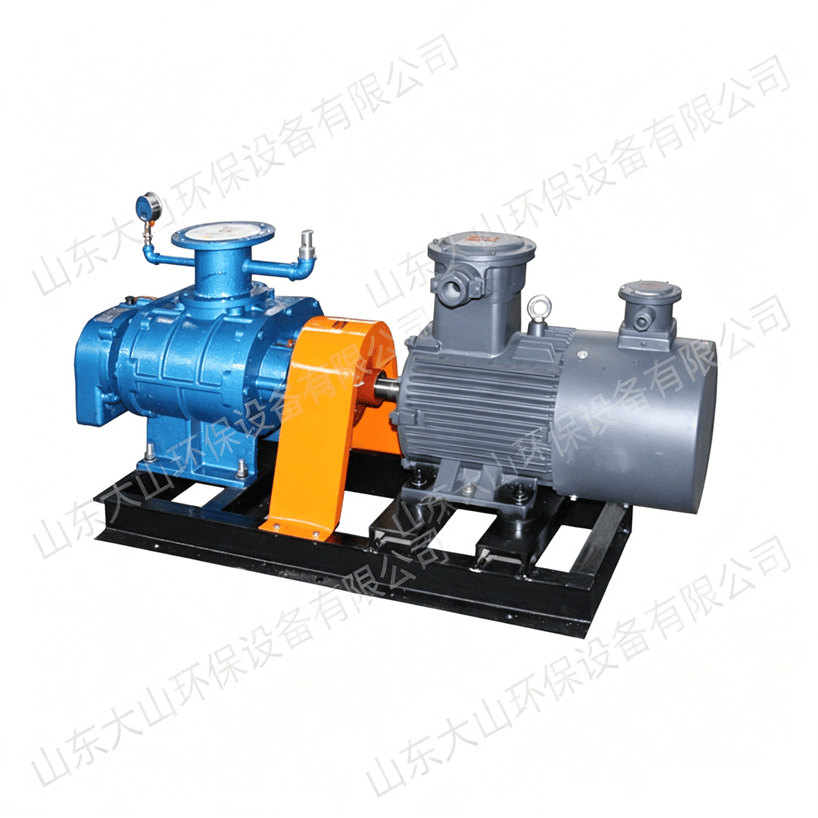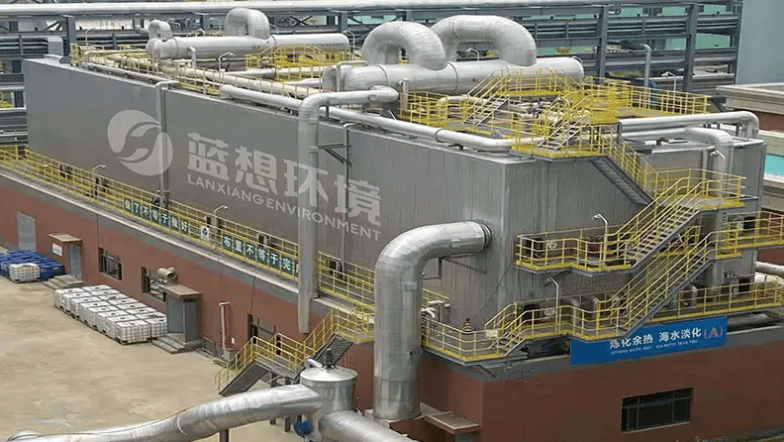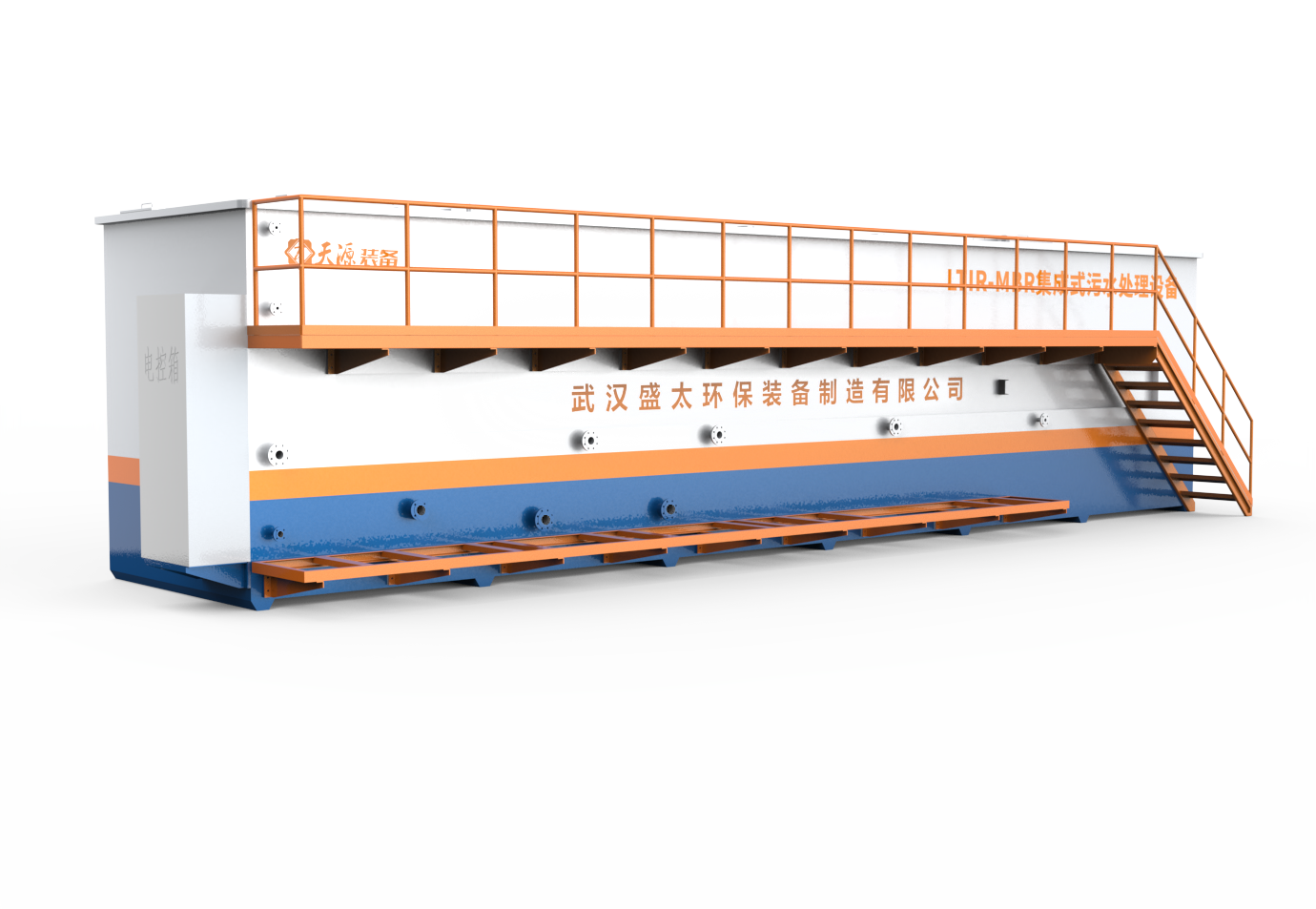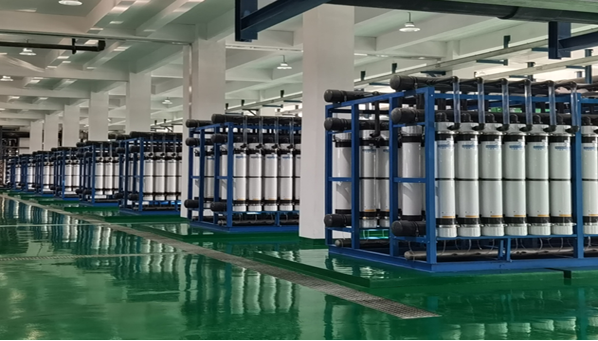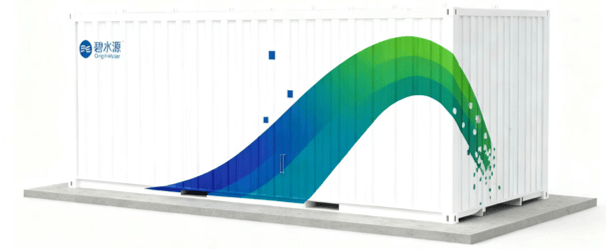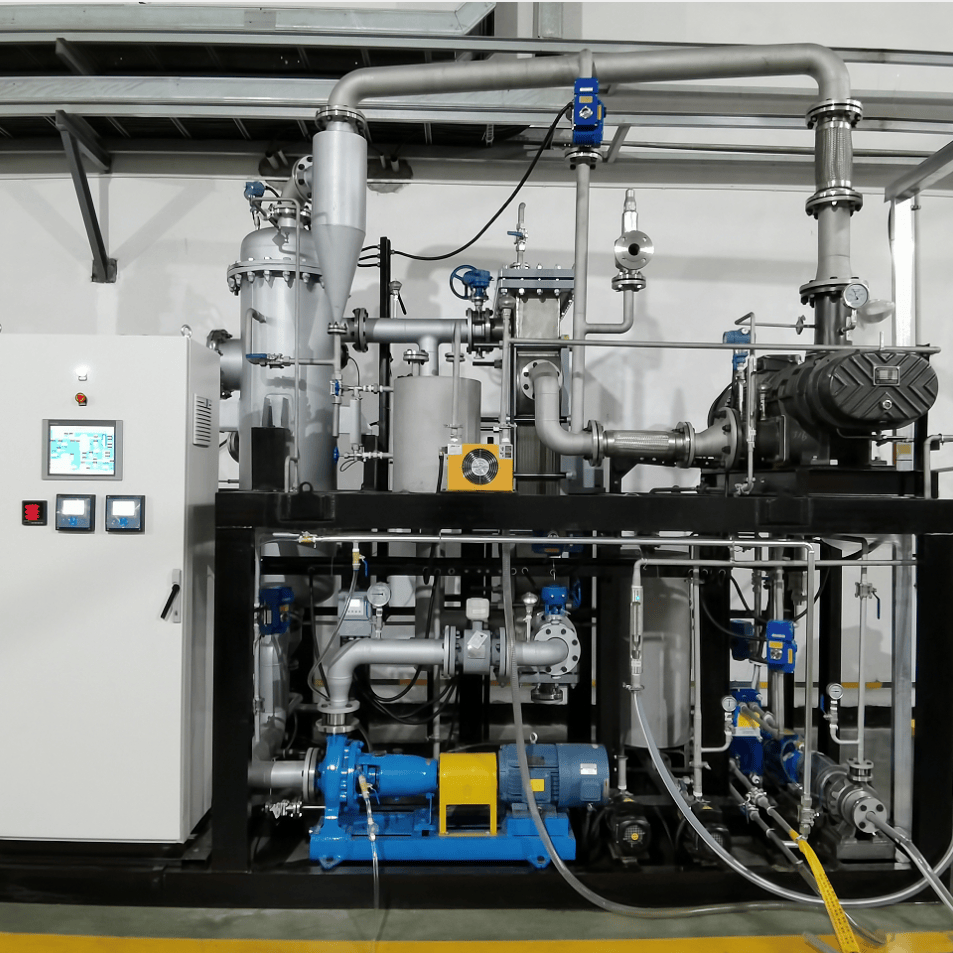


The plate-type MVR evaporation concentration and crystallization device is a high-efficiency water treatment equipment that can be used for the reduction and resource utilization of high-salt wastewater. Mechanical vapor recompression process (MVR) is an energy-saving technology that compresses the secondary low-grade steam generated by evaporation through a steam compressor to turn it into high-grade steam, which continues to be used to heat the raw material liquid to reduce external energy demand. Plate-type MVR technology is a high-efficiency evaporation technology that couples the mechanical vapor recompression process with plate-type evaporation, concentration, and crystallization processes. Its core equipment includes steam compressors, wide-channel plate evaporators, crystallizers, process pumps, etc. The plate-type MVR evaporation concentration and crystallization device has the following advantages:
(1) Intensive plate stack as the heat exchange element, with high packing density and small equipment size
(2) Variable flow field, sufficient turbulence, and heat transfer coefficient 2-3 times that of tubular type
(3) Small power consumption per unit area, and circulating power consumption is only 1/3~1/4 of tubular type
(4) Wide-channel plate evaporator is easy to disassemble and convenient for maintenance
The plate-type MVR has the advantages of easy cleaning, small footprint, low operation and maintenance costs, and low energy consumption. It is widely used in wastewater treatment, material concentration, and material purification in the microelectronics, pharmaceutical, chemical, food, and other industries. Evaporation and crystallization of various inorganic salts, evaporation of liquids with high hardness, evaporation and concentration of landfill leachate, concentration of liquids in the food, fermentation, and pharmaceutical industries, concentration of heat-sensitive materials, etc.
Application case: Lithium carbonate solution evaporation and concentration project. Plate-type MVR is used for evaporation and concentration of lithium carbonate solution. The operating evaporation capacity is 230kg/h, the power consumption per ton of water is 85kWh, and the distilled water salt content is 20mg/L. All performance indicators meet or exceed the design values.