
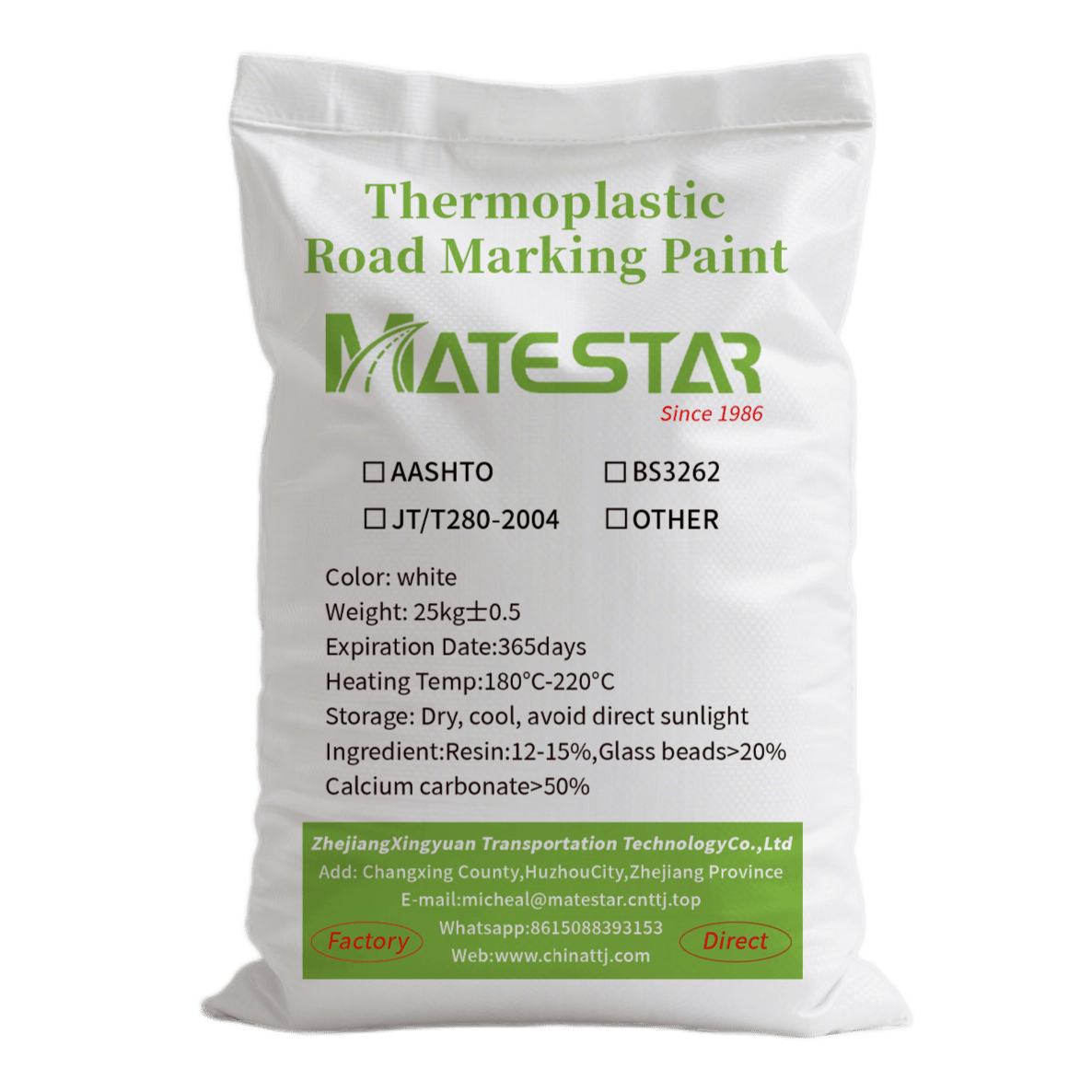

Profiled thermoplastic road marking paint for raised, vibration and wet-night visible road markings. Suitable for highways, edge lines, curves, bridges, tunnels and rainy road sections. OEM formula and bulk supply available.
Color customized:White/Yellow/Blue/other color could be customized
MOQ: 1 Ton,Fast Delivery:5-10 Days
Supporting: Free Samples
Related Keywords Used: thermoplastic road marking paint, thermoplastic road marking, road marking paint, road markings, road line marking, road lines, glass beads for road marking, road marking machine, thermoplastic paint, raised thermoplastic road marking, wet night road marking paint, vibration road marking
Profiled Thermoplastic Road Marking Paint
Raised road markings for wet night visibility, vibration warning and safer lane guidance.
MATESTAR Profiled Thermoplastic Road Marking Paint is designed for raised and structured road markings used on highways, rainy road sections, curves, bridges, tunnels and other safety-critical areas.
Unlike flat thermoplastic road marking paint, profiled thermoplastic creates raised ribs, dots or blocks on the road surface. These raised structures help improve wet night visibility and provide vibration or audible warning when vehicle tires pass over the line.
It is suitable for projects where ordinary flat road lines may lose visibility in rain, fog or night driving conditions.
What Is Profiled Thermoplastic Road Marking Paint?
Profiled thermoplastic road marking paint is a hot-applied thermoplastic paint used to form raised road markings. The material is heated into a molten state and applied through a special road marking machine to create regular ribs, dots or convex blocks.
Ordinary flat road markings can be covered by rainwater. Once a water film forms on the marking surface, the glass beads may lose part of their retroreflective effect. Profiled road markings solve this problem by creating a raised structure above the road surface. Part of the marking remains exposed even in wet conditions, helping drivers see the road lines more clearly at night.
The raised structure also creates a vibration and sound warning when vehicles run over the line. This makes profiled thermoplastic road marking especially useful for highway edge lines, center lines, curves and accident-prone road sections.
Why Use Profiled Thermoplastic Road Marking?
Better Visibility in Rain and Wet Night Conditions
In rainy weather, flat road markings are easily covered by water. This reduces the retroreflective performance of glass beads for road marking and makes the line harder to see at night.
Profiled thermoplastic road markings create drainage gaps between raised structures. Water can flow away from the line surface, while the upper part of the marking remains visible under vehicle headlights. This helps improve lane guidance in wet-night driving conditions.
This is the most important reason to choose profiled thermoplastic road marking paint instead of standard flat thermoplastic road marking paint.
Vibration and Audible Warning
Profiled road markings do more than provide visual guidance. When a vehicle tire crosses the raised line, the driver can feel vibration and hear a warning sound.For drivers who are tired, distracted or driving in poor visibility, the vibration warning can help them notice lane departure earlier.
Suitable for Safety-Critical Road Sections
Profiled thermoplastic road marking paint is not usually used for every road line. It is mainly used where road safety needs to be improved.
Recommended applications include:
| Application Area | Why Profiled Thermoplastic Is Suitable |
|---|---|
| Highway edge lines | Provides visual, vibration and audible warning |
| Rainy road sections | Raised profile improves wet night visibility |
| Curves and ramps | Helps drivers identify lane direction earlier |
| Bridges and tunnels | Improves guidance in low-light conditions |
| Mountain roads | Useful in fog, rain and sharp-turn areas |
| Accident-prone sections | Strengthens driver warning and road recognition |
| Road safety upgrade projects | Improves performance without changing road structure |
