

LES Logistics Execution System
PFEP Parts Planning: The LES system is an important tool for implementing Plan For Every Part (PFEP) management. It can formulate and manage detailed plans for every part in the production process. Based on material planning data, it operates around materials, equipment, production line workstations, and delivery modes; and it synchronizes relevant data from upstream and downstream systems in real time, eliminating the need for secondary entry, providing an end-user perspective that is accurate, real-time, and automated.
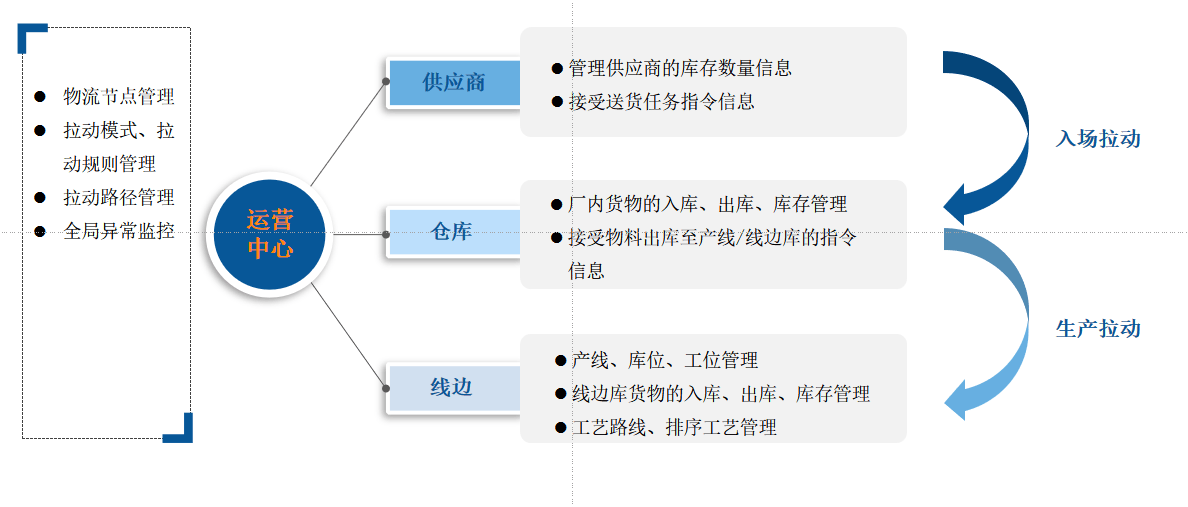
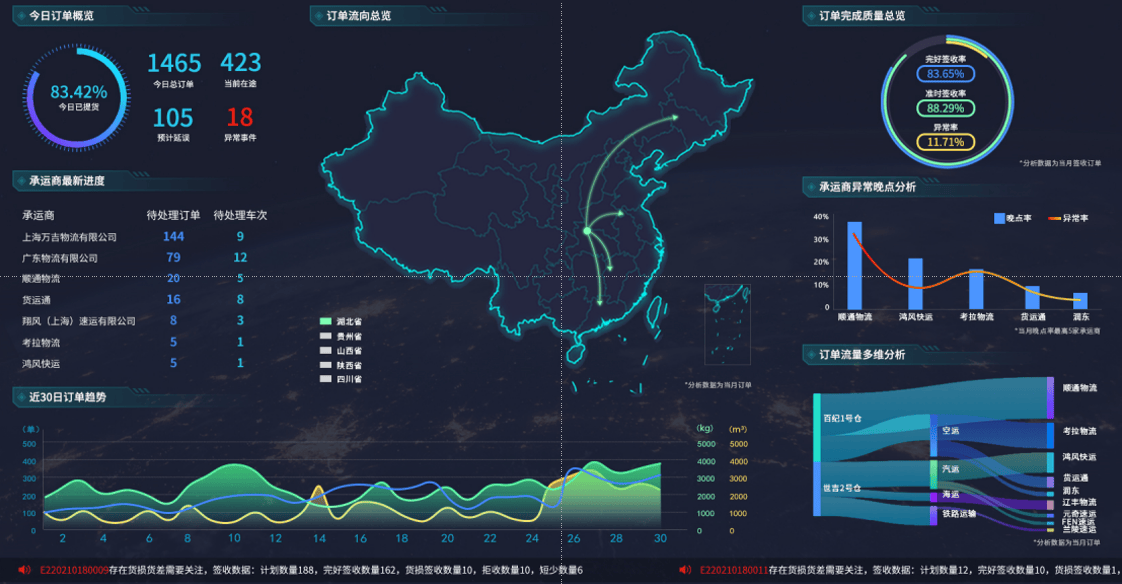
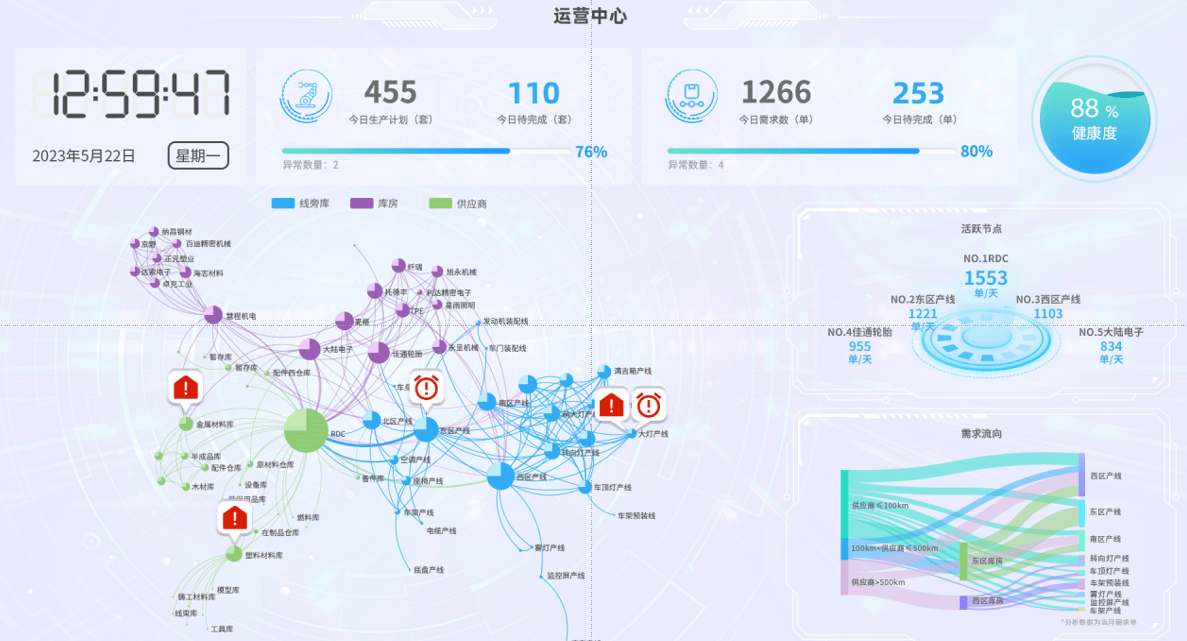
Operations Center: The Operations Center is the core planning and management department for PFEP implementation; it centrally manages and plans the entire material pull network system, business monitoring, operational analysis, and alerts; it focuses on overall logistics pull from a company/plant-wide perspective, changing the traditional pull system's focus on merely generating pull information and recording pull instruction execution status.
Logistics Nodes: In material pull scenarios, each business organization can be viewed as a logistics node, including but not limited to: production lines, line-side storage, in-plant logistics centers, supplier warehouses, VMI warehouses, 3PL warehouses, and other types; these material nodes are interconnected and driven by strategies to manage pull relationships between them, forming an organic, interactive, and dynamic material balance network.
Material Pull: Supports pull triggering via work orders, production pass-point information, inventory gap information, etc.; supports procurement demand scenarios, inter-warehouse transfer scenarios, and production delivery scenarios; supports common pull methods, including: work order pull, Min/Max pull, Kanban pull, empty container pull, sequence pull, KITTING, SPS, etc.
Strategy Center: Through the LES built-in rules engine, complex pull strategies between nodes can be flexibly configured; pull strategies are uniformly planned and maintained by planners in the Operations Center to ensure global coordination of pull strategies. When material pull instructions are issued or material inventory changes occur, these strategies are automatically executed, and specific operational instructions are dispatched to each operational node to drive business.
Inventory Management: LES can integrate with systems such as WMS and ERP to obtain real-time inventory information for material nodes; for inventory nodes not managed in real time by WMS, such as line-side storage, outsourced warehouses, and temporary warehouses, LES provides a built-in inventory management module that effectively manages material inbound and outbound activities and real-time inventory, making them digitalized nodes that can be integrated into the overall LES material pull network.
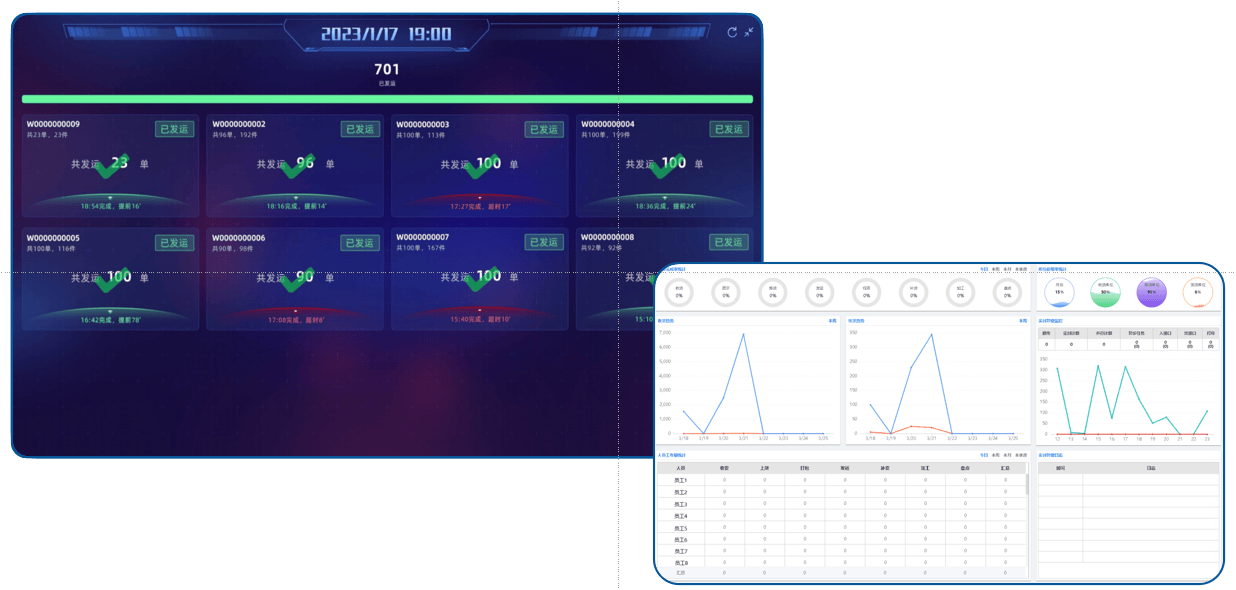
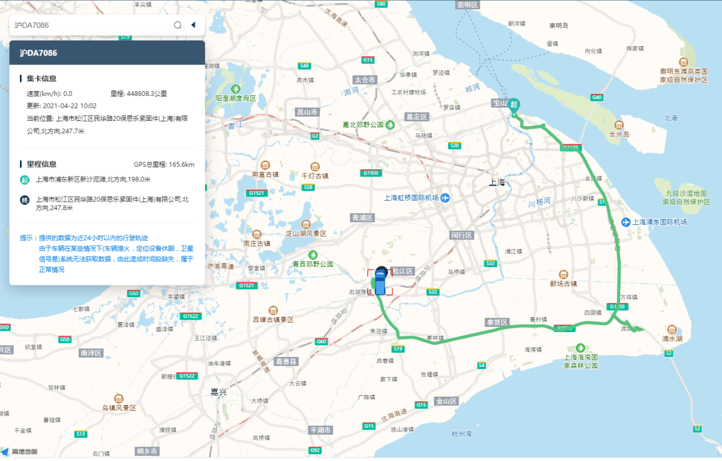
Monitoring and Alerts: LES addresses future operational scenarios by providing real-time, automated operational monitoring mechanisms; it tracks execution status and inventory anomalies from a full supply chain pull perspective, anticipating anomalies before they occur; it truly enables users to understand the operational status of the entire logistics pull from their office. Anomaly information is delivered to stakeholders in real time via monitoring screens, SMS, WeChat, DingTalk, and email.
System Integration: The Wisedge LES system has been implemented in numerous manufacturing plants; it provides mature system interfaces for rapid integration with various mainstream ERP, SRM, MES, MOM, WMS, and WCS systems; including but not limited to: SAP, ORACLE, Yonyou, Kingdee, Siemens, Dassault, Baosight, Yuangong International, and APICON.
Smart Manufacturing Logistics Informatization Based on LES
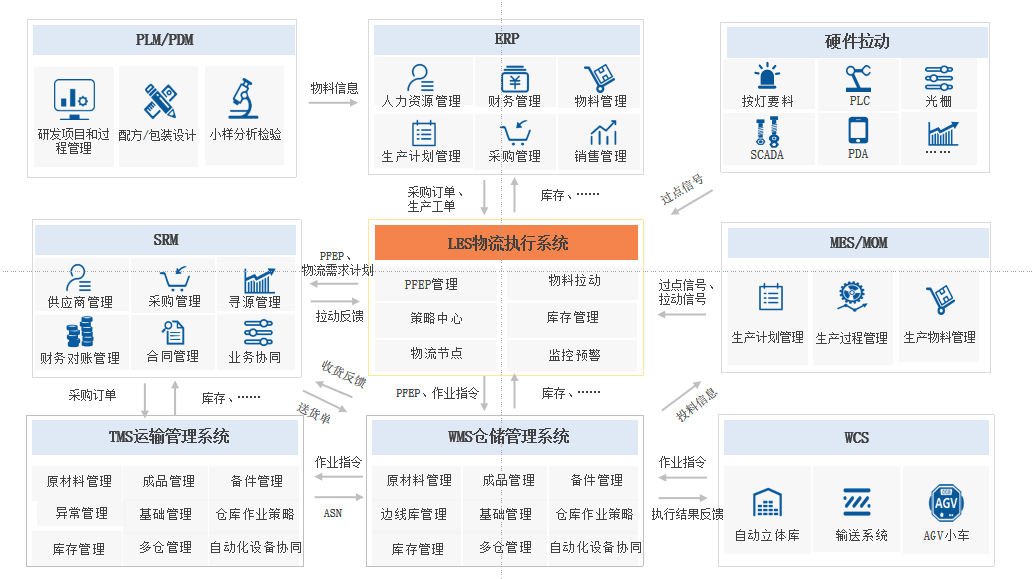
Overall Advantages of Wisedge LES Compared to Traditional Pull Models
Advantage 1: The system supports flexible pull rule configuration; when business changes occur, business rules can be flexibly adjusted to quickly respond to production demands.
Advantage 2: From a global supply chain perspective, it coordinates the material pull relationships among suppliers, in-plant warehouses, and line-side storage to ensure continuity of information flow.
Advantage 3: Based on actual in-plant operations, the system flexibly configures delivery strategies to ensure rapid response to production line demands and improve production efficiency.
PFEP Management
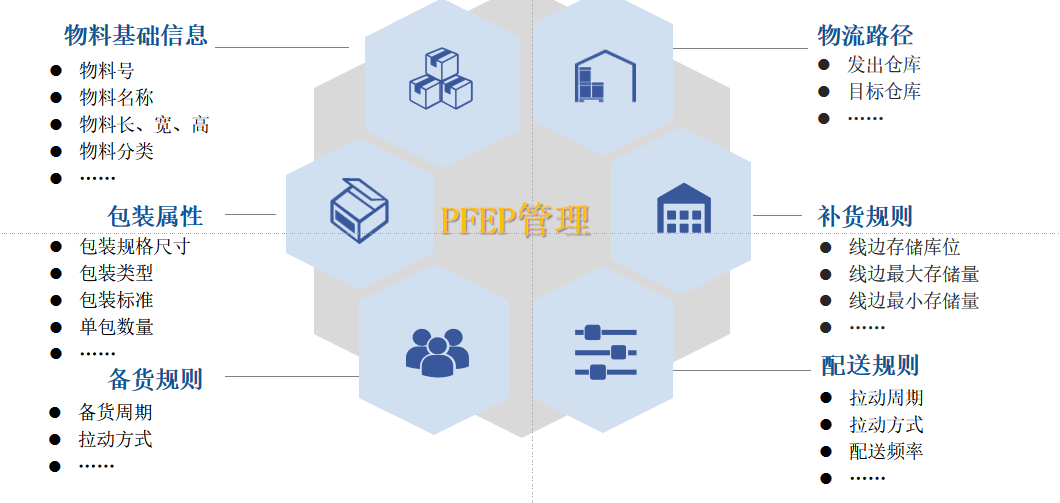
Material Planning Management
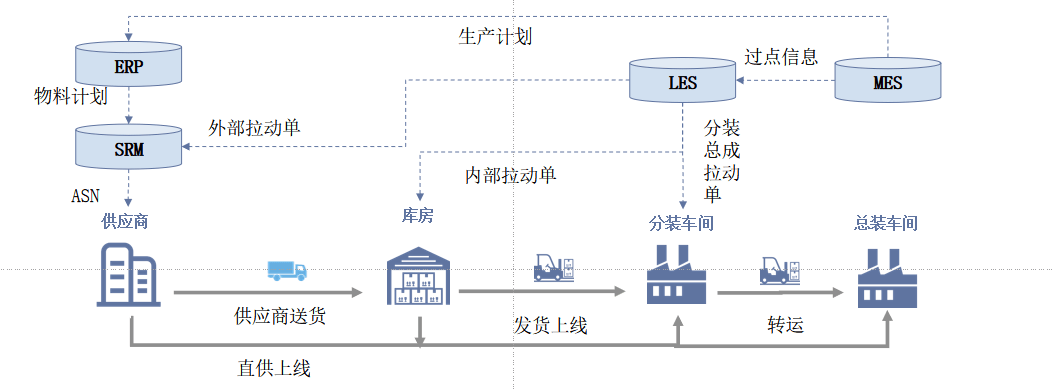
Suppliers deliver to the plant based on the locked D+N daily material plan.
Three pass-point pull paths: direct supply from suppliers, LOC delivery, and direct supply from sub-assembly lines.
Under normal conditions, production can adjust order schedules within the locked D+N plan for smooth production without affecting line startup.
Through adjustments to PFEP parameters (such as packaging ratios, delivery batch sizes, and production takt time), reliable lean material delivery is progressively achieved.
Multi-Level, Multi-Organization Production Pull Management Model