

WMS Warehouse Management System
Business Reference Model: By leveraging business model configuration, the same system can support completely different operational scenarios (e.g., e-commerce warehouses, finished goods warehouses, in-plant logistics for parts, etc.), different operational equipment, and different process applications, with business operations remaining independent of one another.
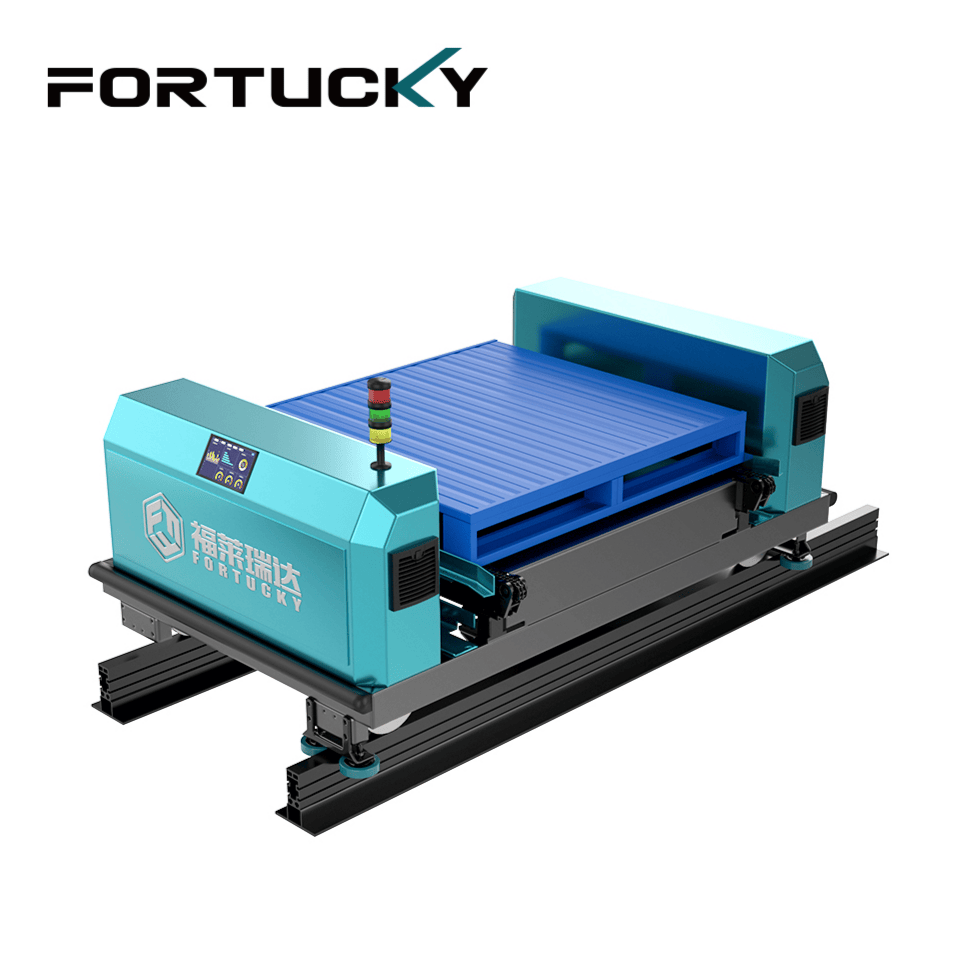
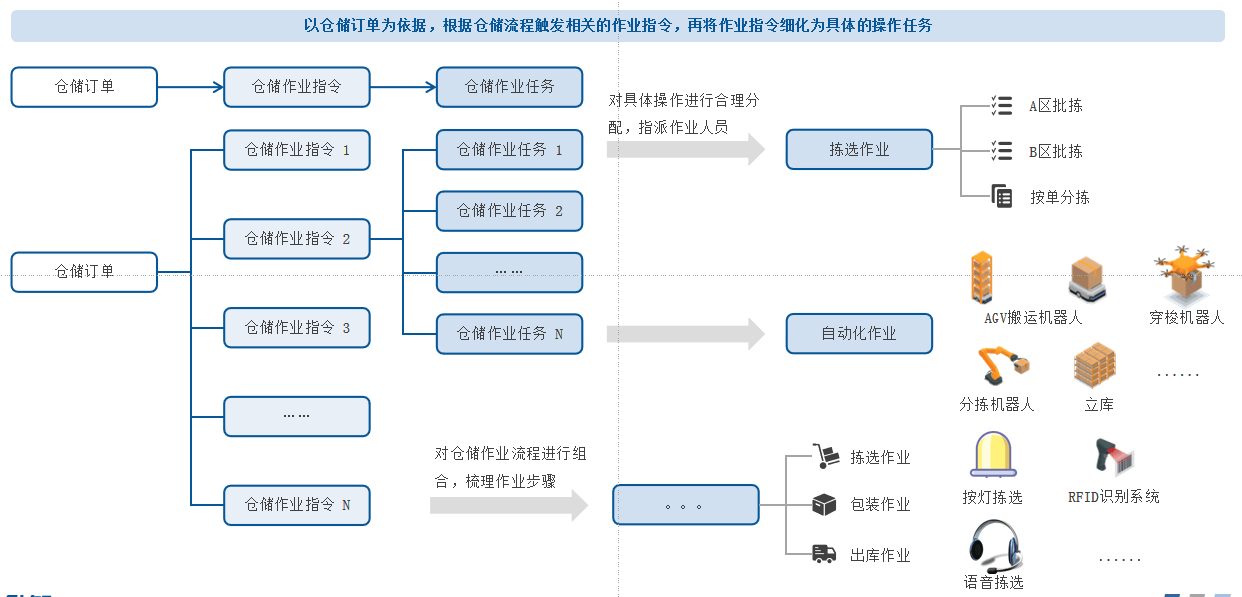
Automation/Intelligence/Unmanned Operations: Supports end-to-end intelligent paperless terminal applications; supports traditional MHE equipment and collaborative management of innovative flexible robots; intelligent generation and automatic dispatch of operational tasks; fully leverages the efficiency of warehouse automation equipment to avoid operational bottlenecks. Supports flat warehouses, AS/RS warehouses, semi-automated warehouses, fully automated warehouses, and lights-out factories.
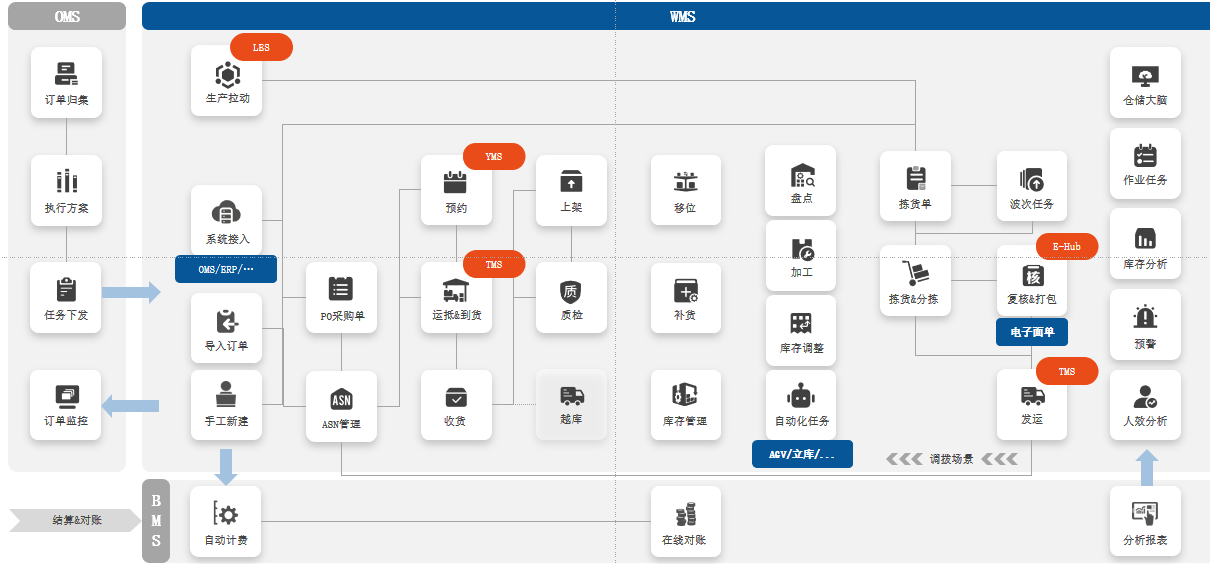
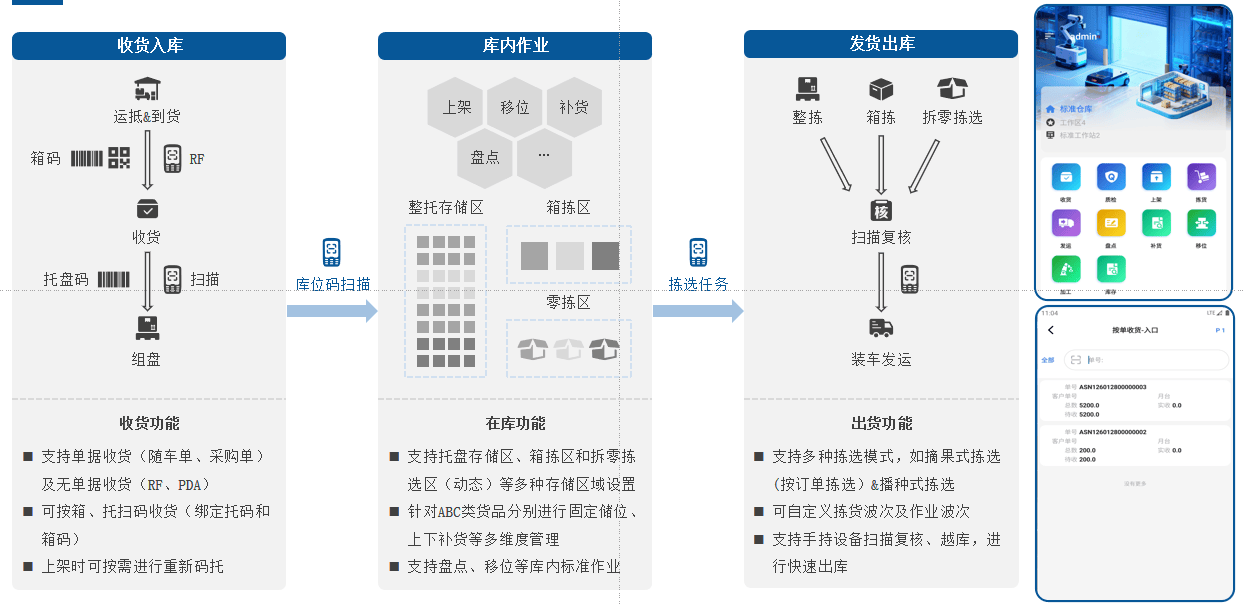
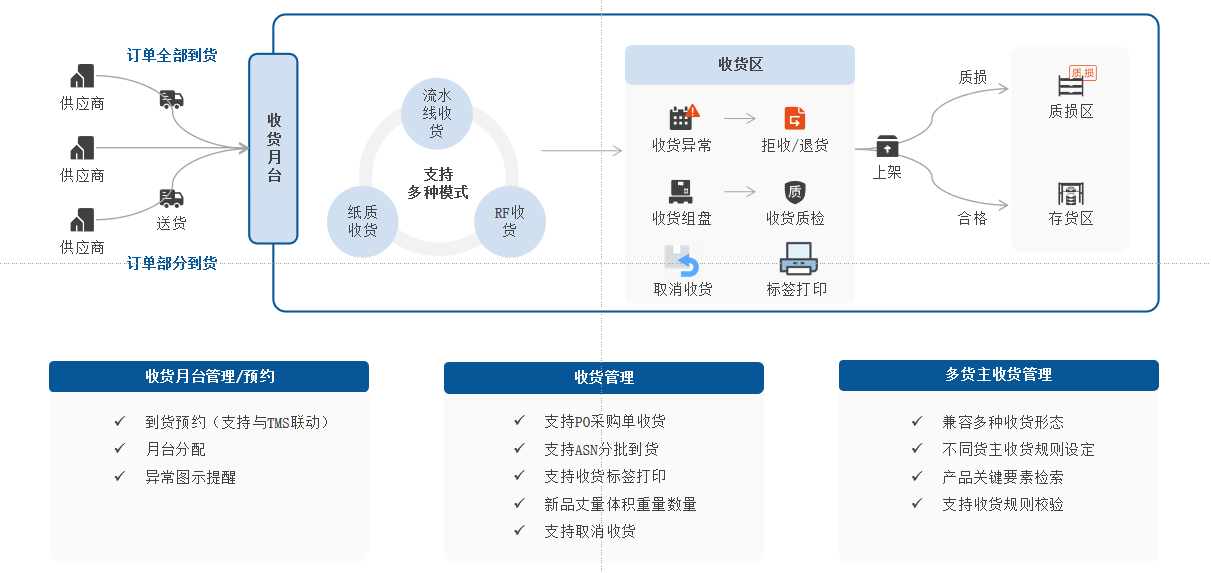
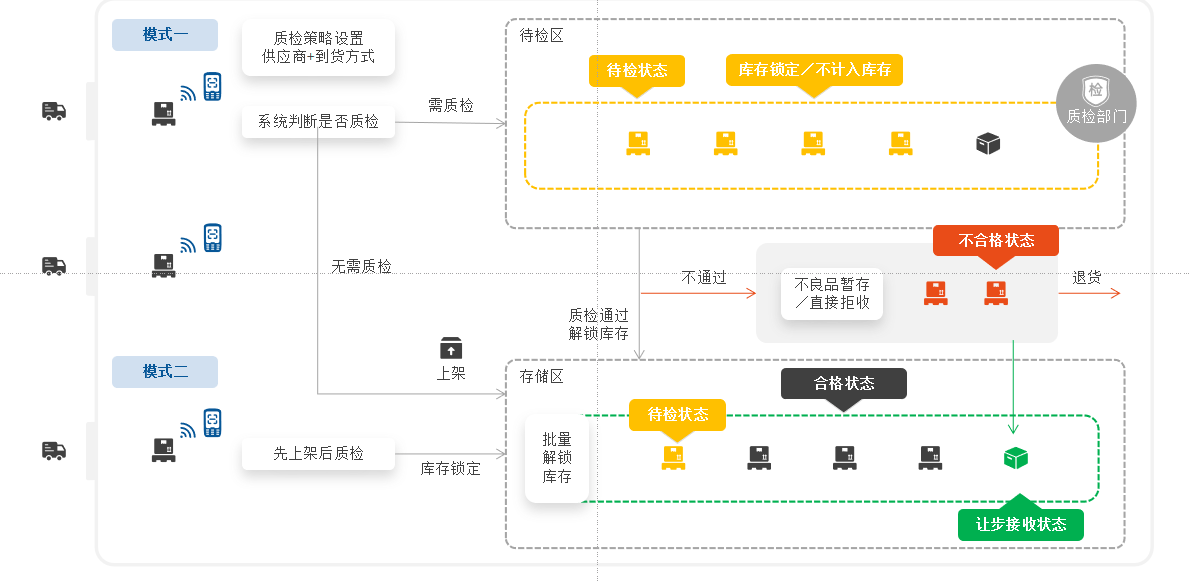
Inbound Management: Supports PO and ASN, accommodating multiple receipt requirements; supports multiple receiving modes (paper-based, RF, automated); supports short receipt, over-receipt, and concessionary receipt processes; supports receiving quality inspection management with flexibly configurable inspection strategies; supports putaway rule settings for different packaging and batches; supports receive-then-putaway or putaway-while-receiving modes.
Outbound Management: Supports 2B and 2C scenarios; supports outbound management requirements for industrial production, retail distribution, and circulation processes; supports both simple and complex outbound scenarios; supports segmented picking operations, including wave picking, sorting, packing, and verification; supports kit shipping, round-number shipping, and various other requirements; comprehensive order hold/interception mechanisms.
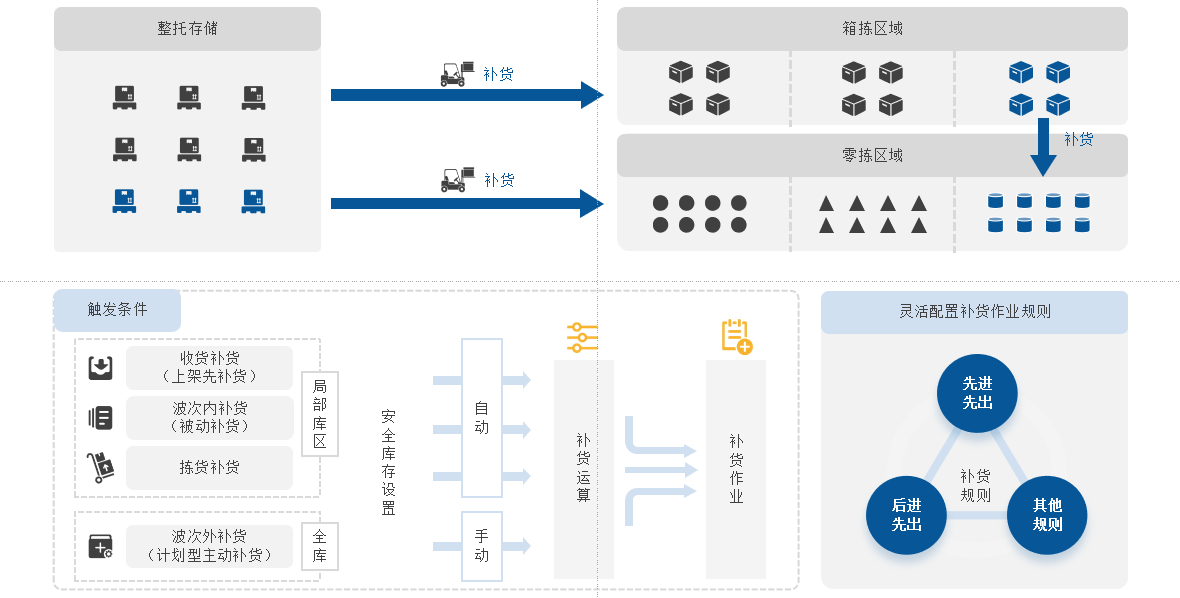
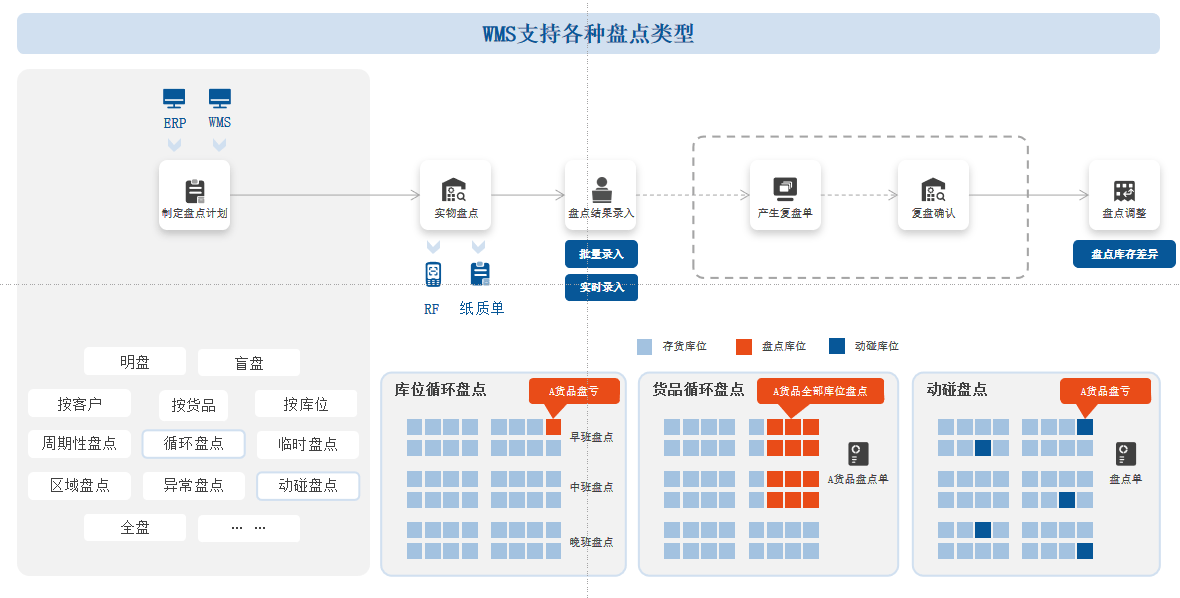
In-Warehouse Management: Supports shelf-life, batch, and safety stock level management; supports multiple cycle counting strategies including full counts, dynamic movement counts, location-based counts, and item-based counts; supports blind counts and open counts; supports both push-based and pull-based replenishment modes; comprehensive logging system and discrepancy inventory suspense system to precisely track inventory changes and assign accountability.
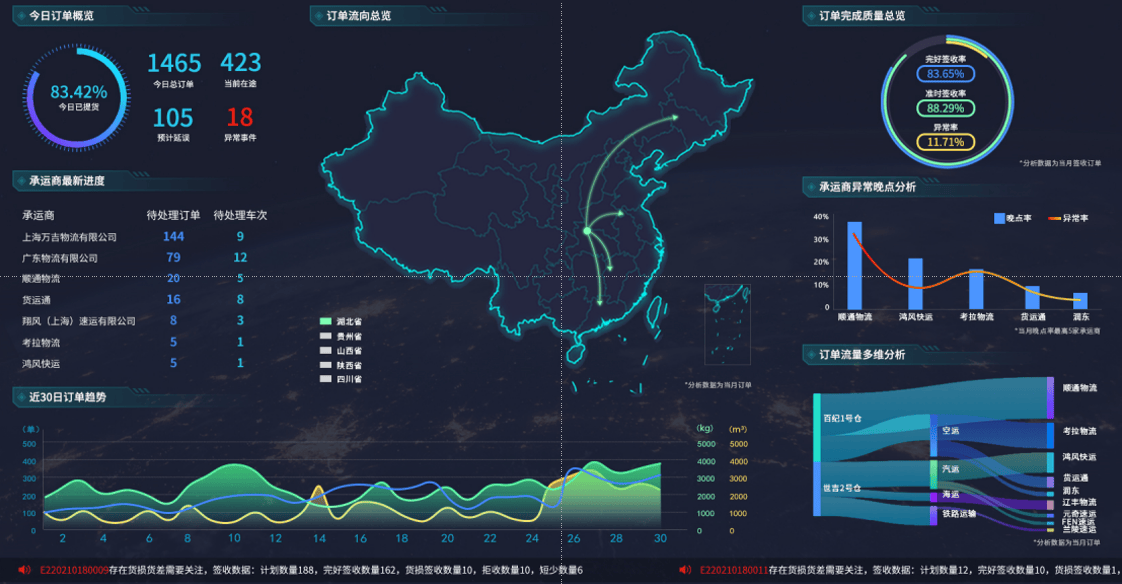
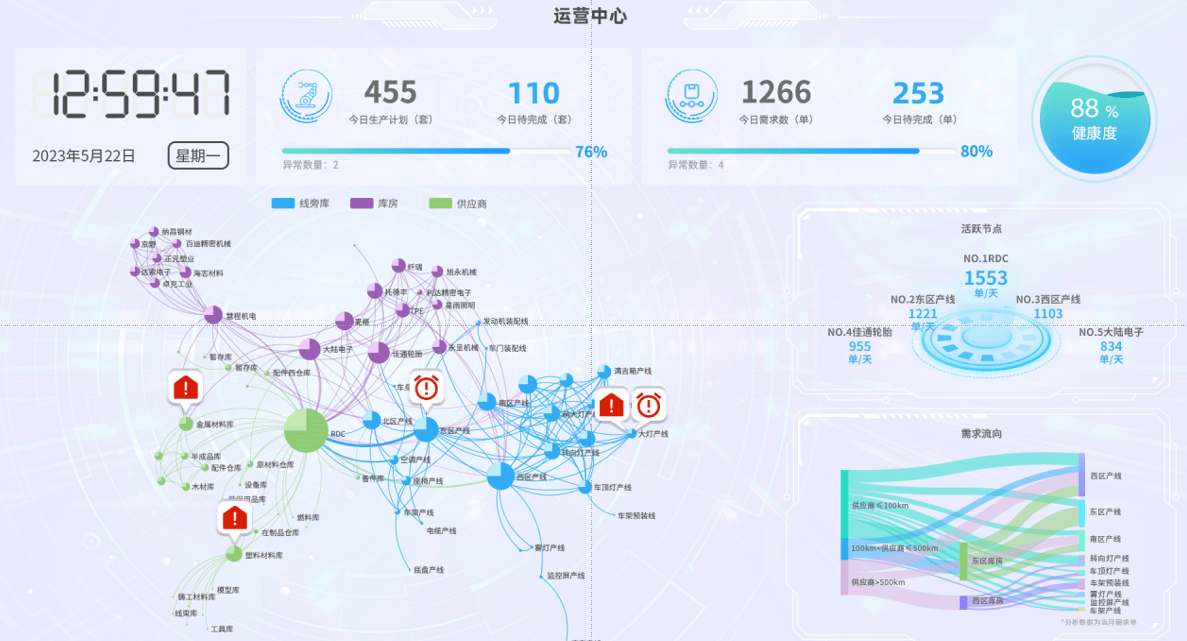
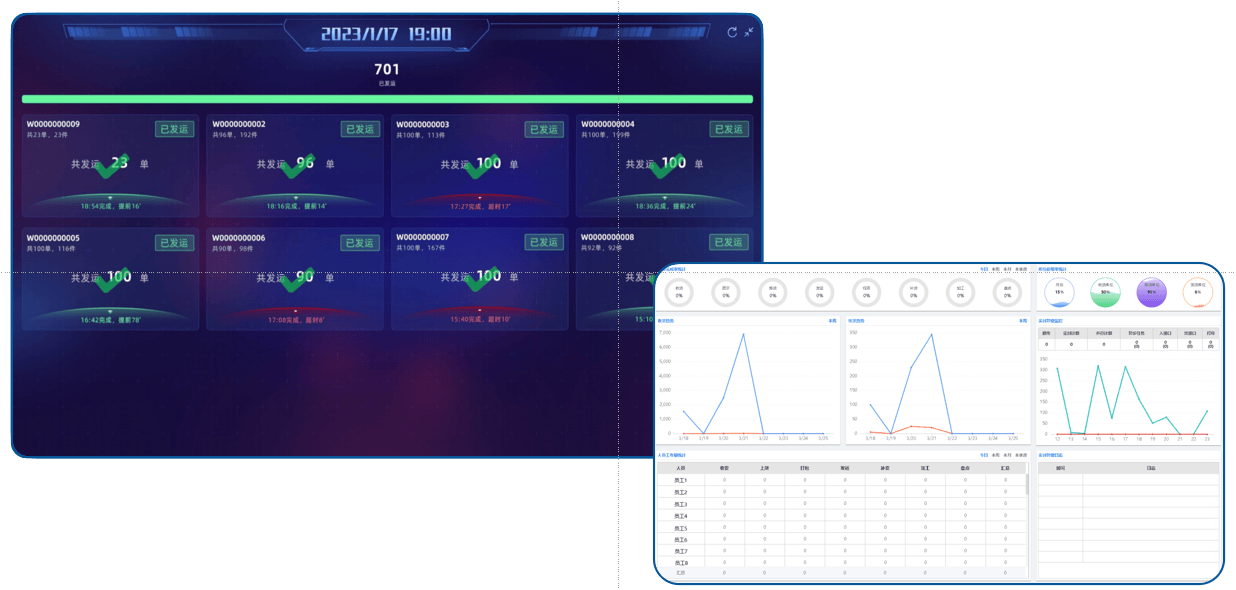
Operations Visibility: Provides real-time visibility into on-site operations, displaying operational volumes, document completion status, personnel tasks, and labor efficiency information; provides on-site large-screen dashboards reflecting real-time operational status.
Value-Added Services: Comprehensive mechanisms for traceability management, meeting traceability inquiries, recalls, batch freezes, issue-batch accountability, and return-to-stock requirements in production and distribution scenarios; supports VMI warehouse management models; supports complex in-warehouse value-added processing operations management.
Real-Time Digital Enterprise: Supports real-time integration with ERP and MES systems from various mainstream vendors; supports JIT and JIS warehouse operational modes.
Warehouse Business Process
Multi-Owner Management Support
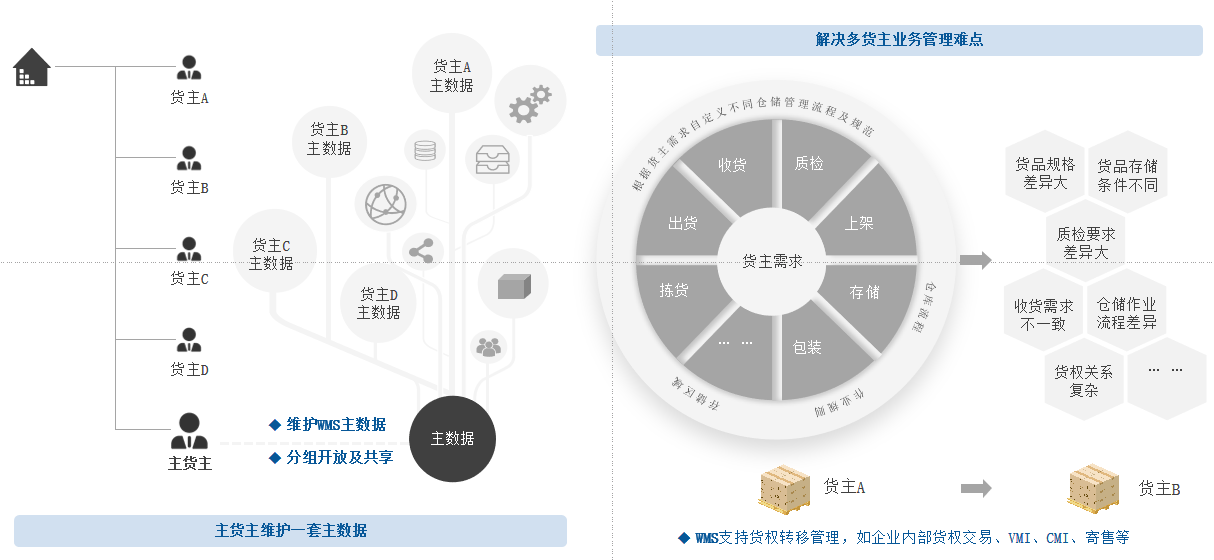
Master Data Management
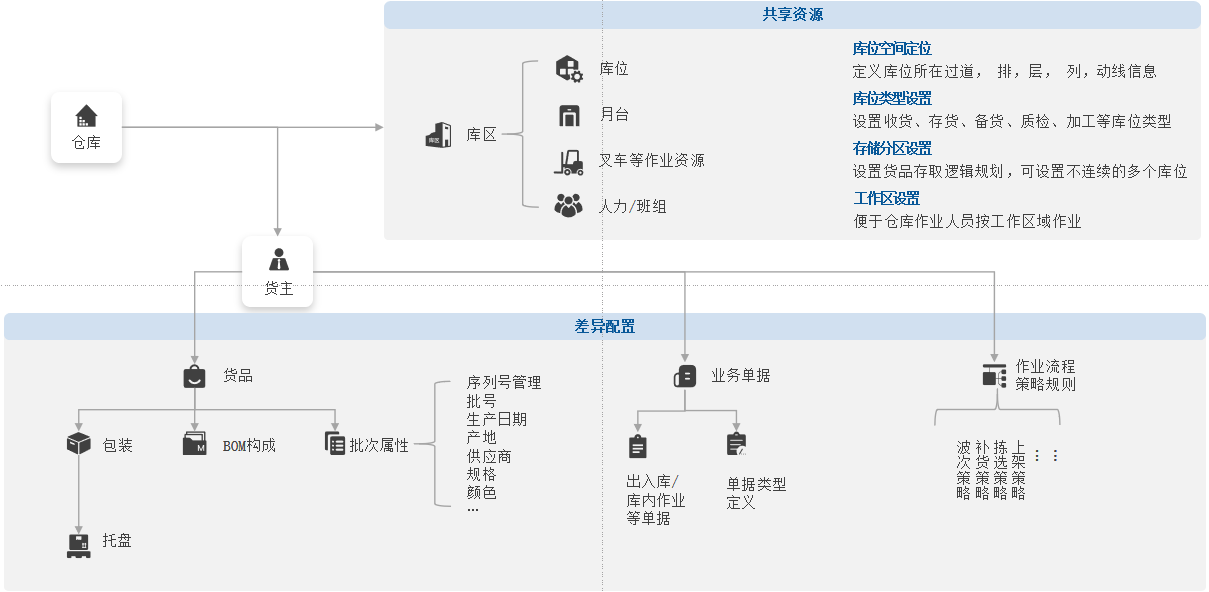
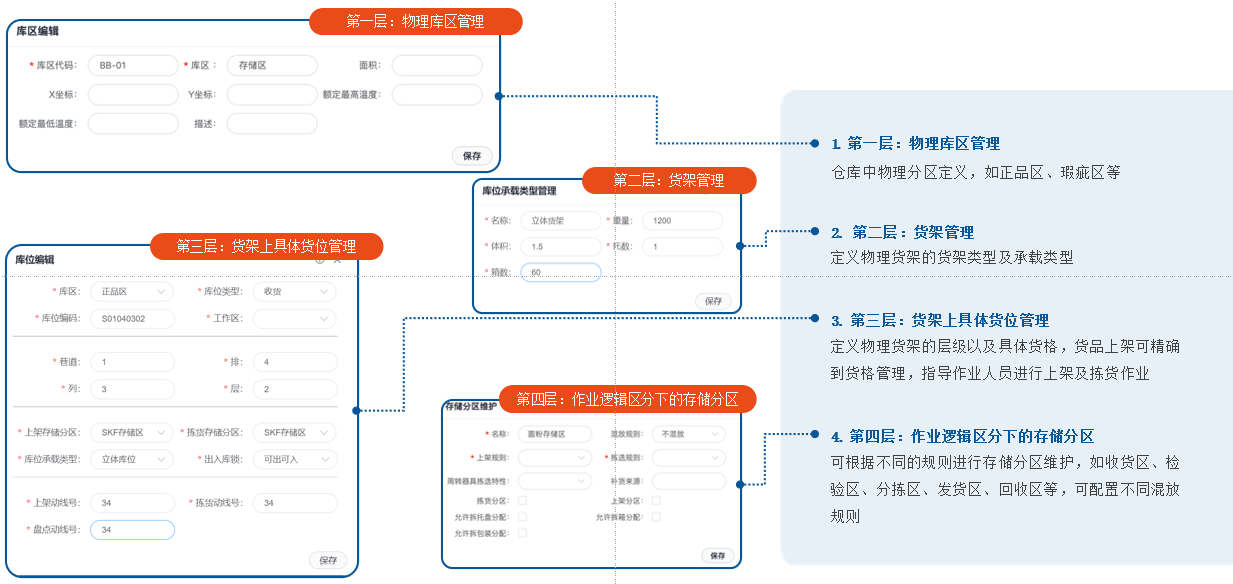
Multi-Level Location Management
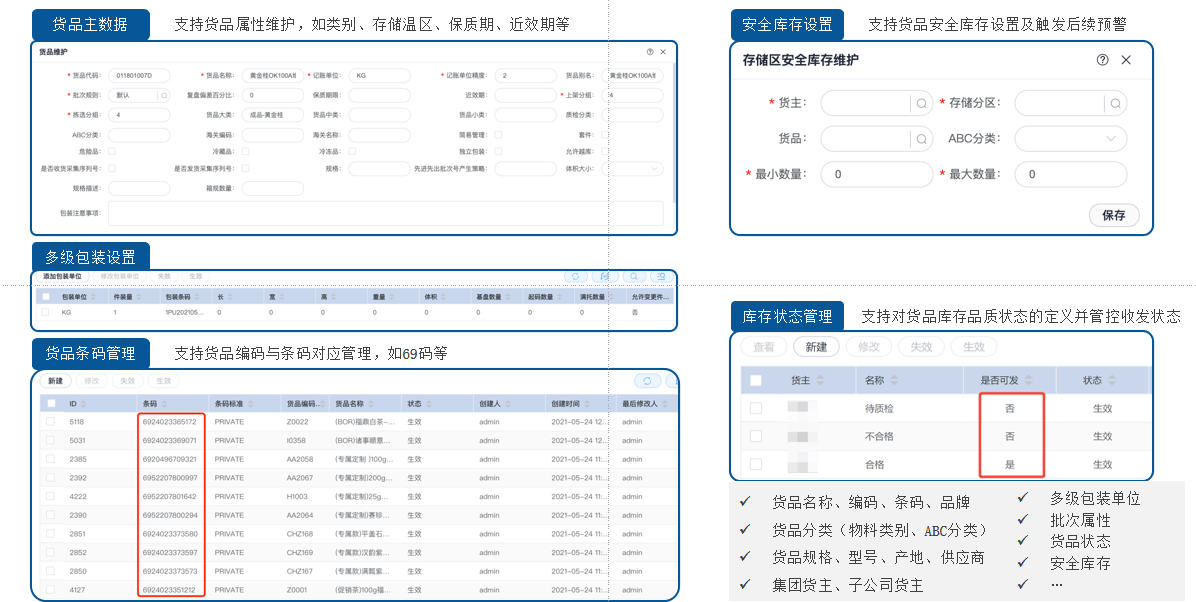
Multi-Dimensional Fixed and Dynamic Item Attribute Management: Enables fine-grained control of items and inventory
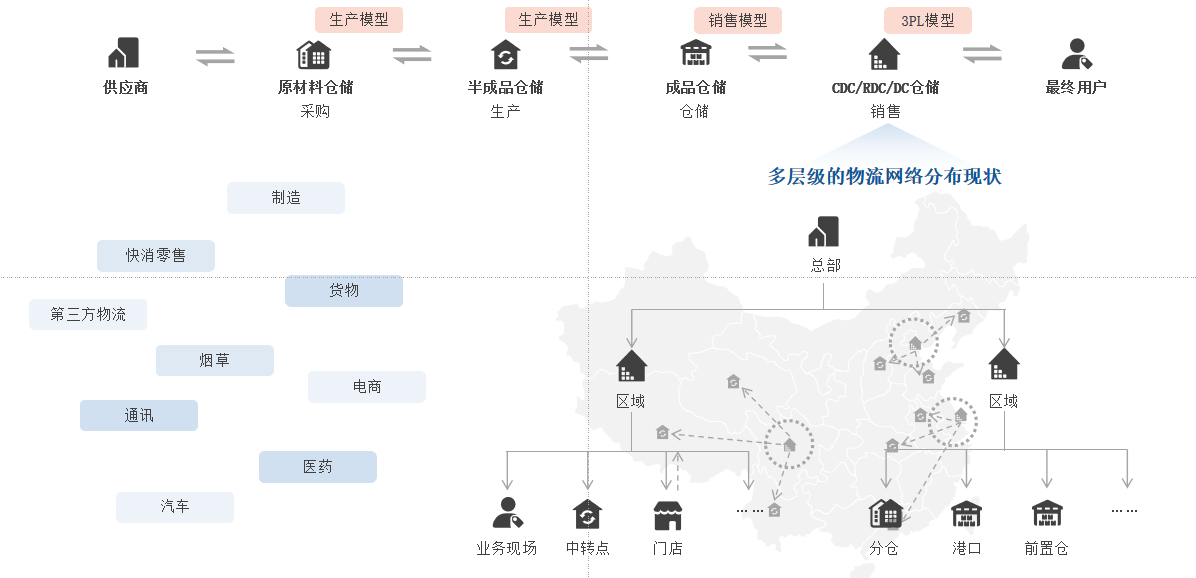
Supports Multi-Level, Multi-Type, Multi-Business-Model Warehouse Management in the Supply Chain
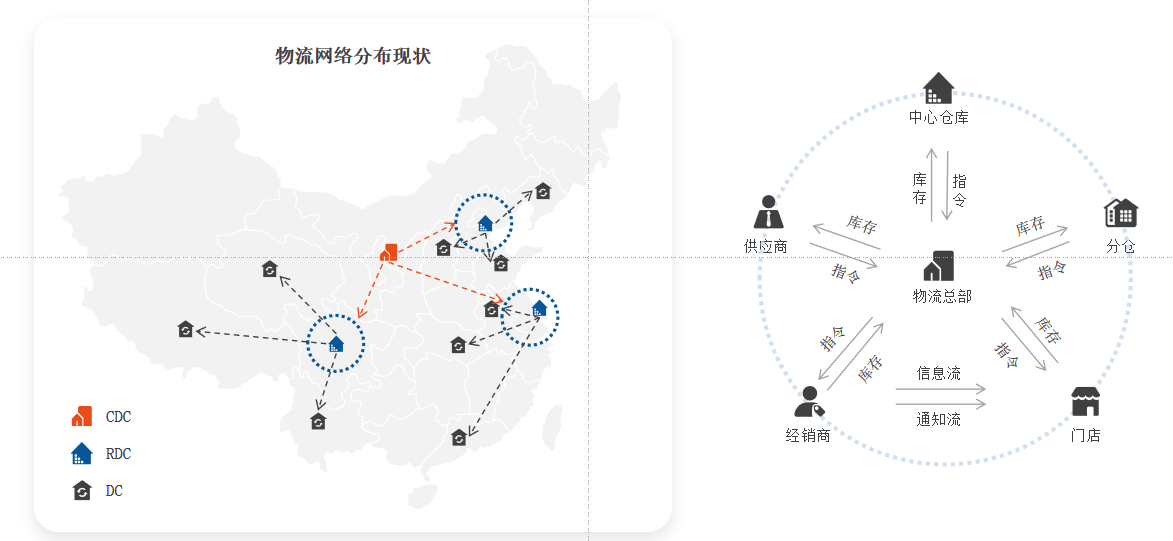
Management of Multiple Warehouse Types and Multi-Warehouse Inventory Visualization
Supports Fine-Grained Operational Process Control
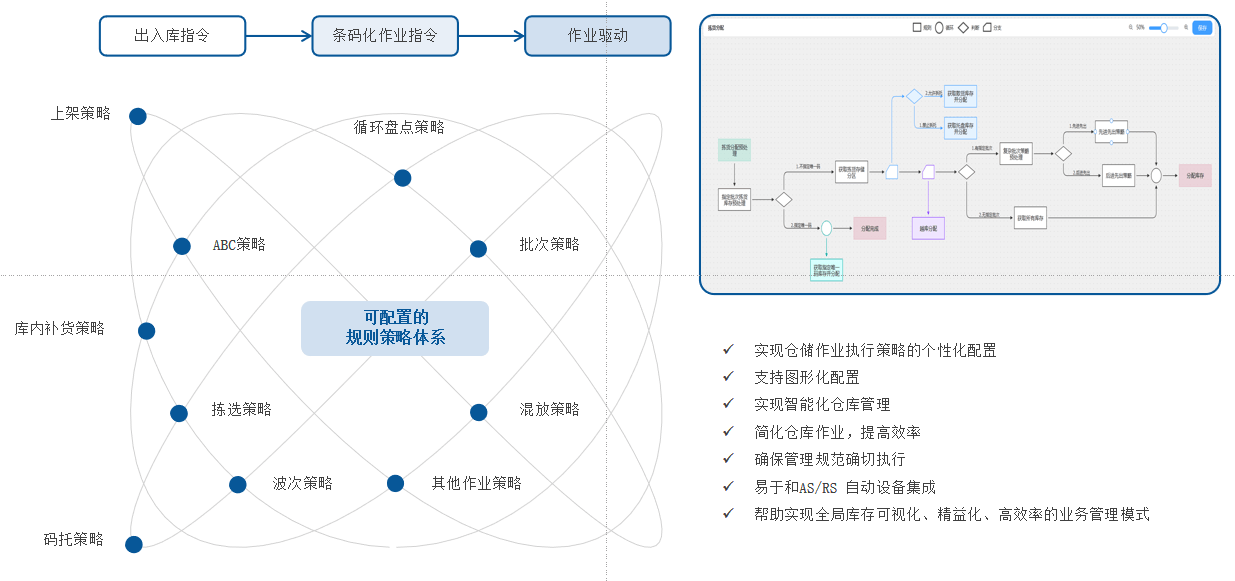
Supports Configurable Operational Rules
Supports Fully Paperless Operations
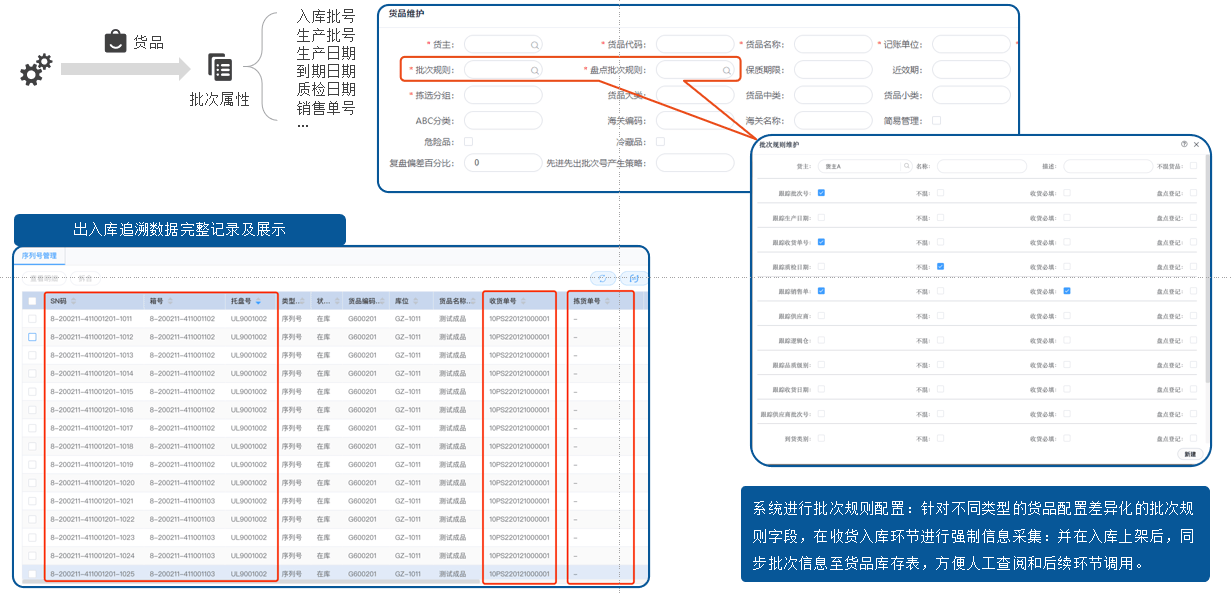
Supports Full Lifecycle Inventory Traceability
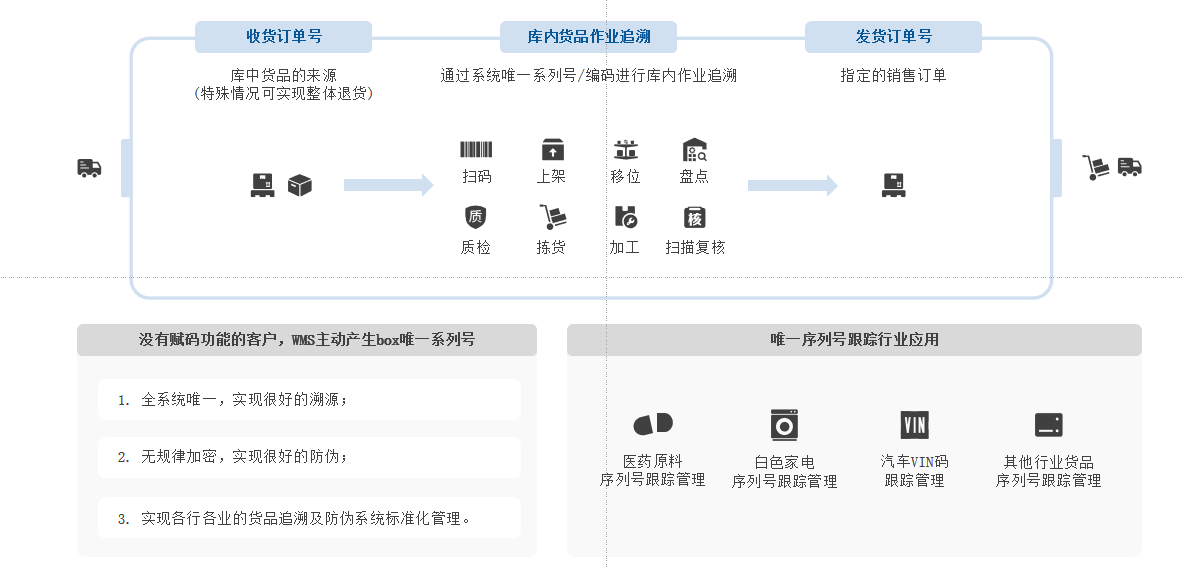
Full Traceability Based on Batch Attributes and Serial Numbers
Supports Multiple Receiving Modes
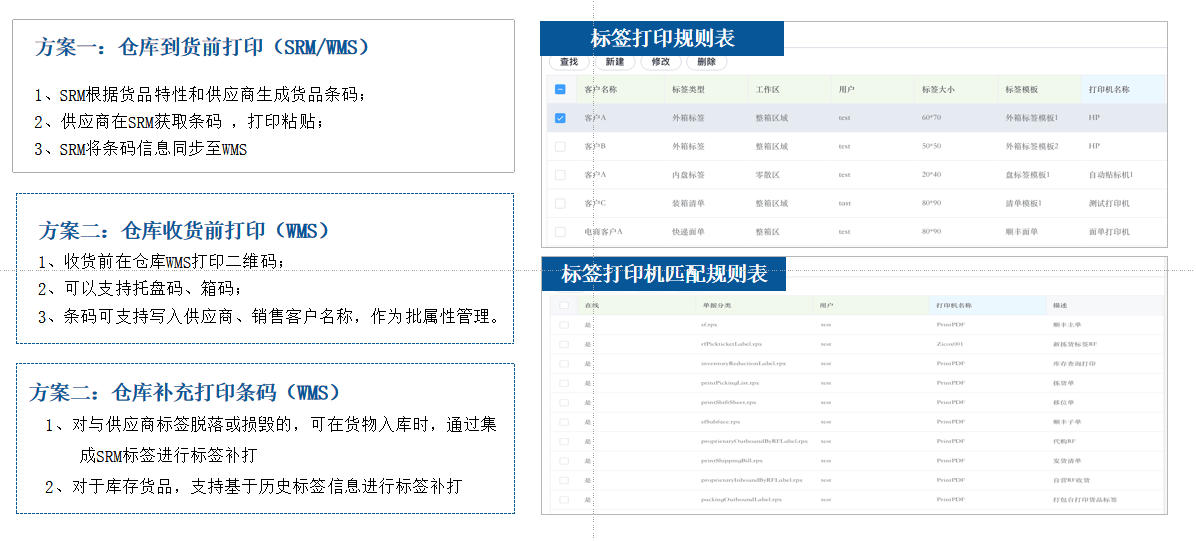
Incoming Item Barcode Printing Solution
Supports Multiple Quality Inspection Strategies
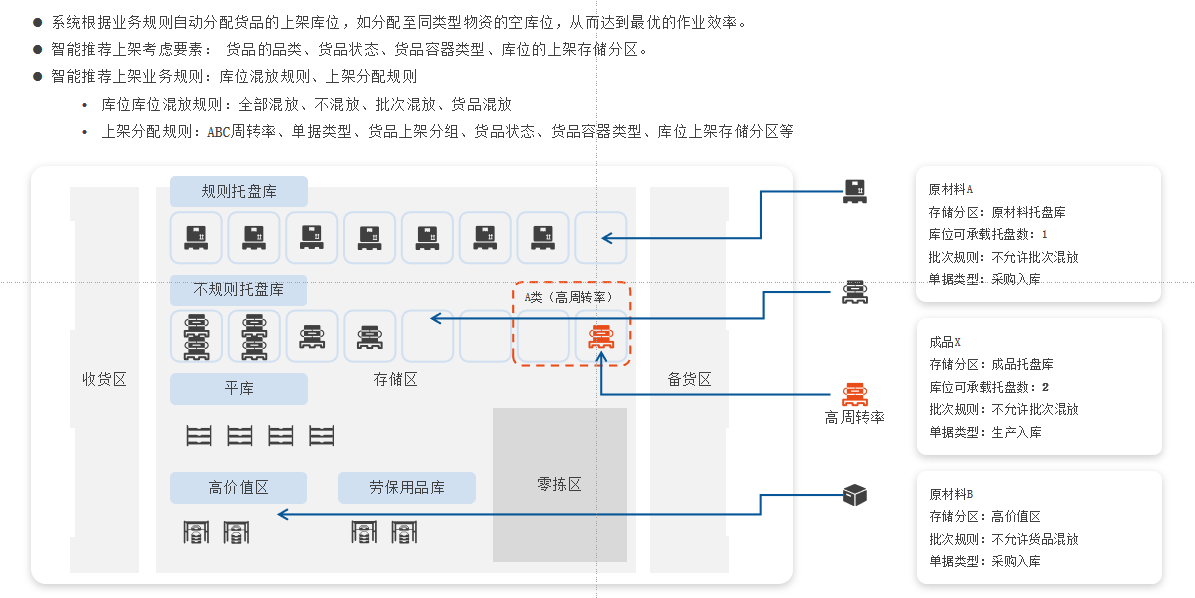
Intelligent Putaway Location Recommendation
Path Management: Optimized Configuration of Warehouse Operation Flow Lines
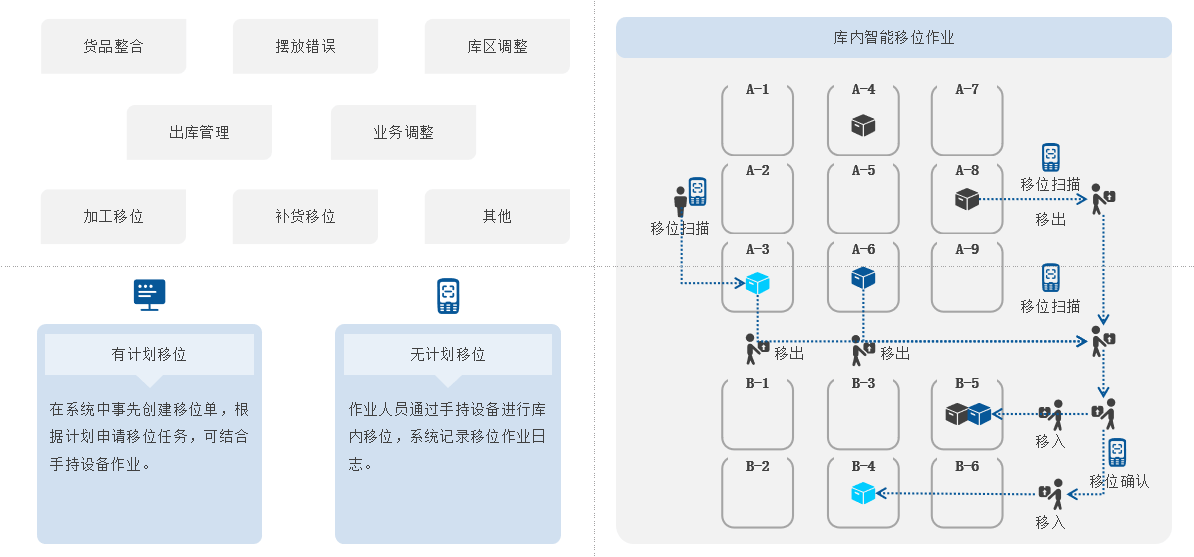
Relocation Management 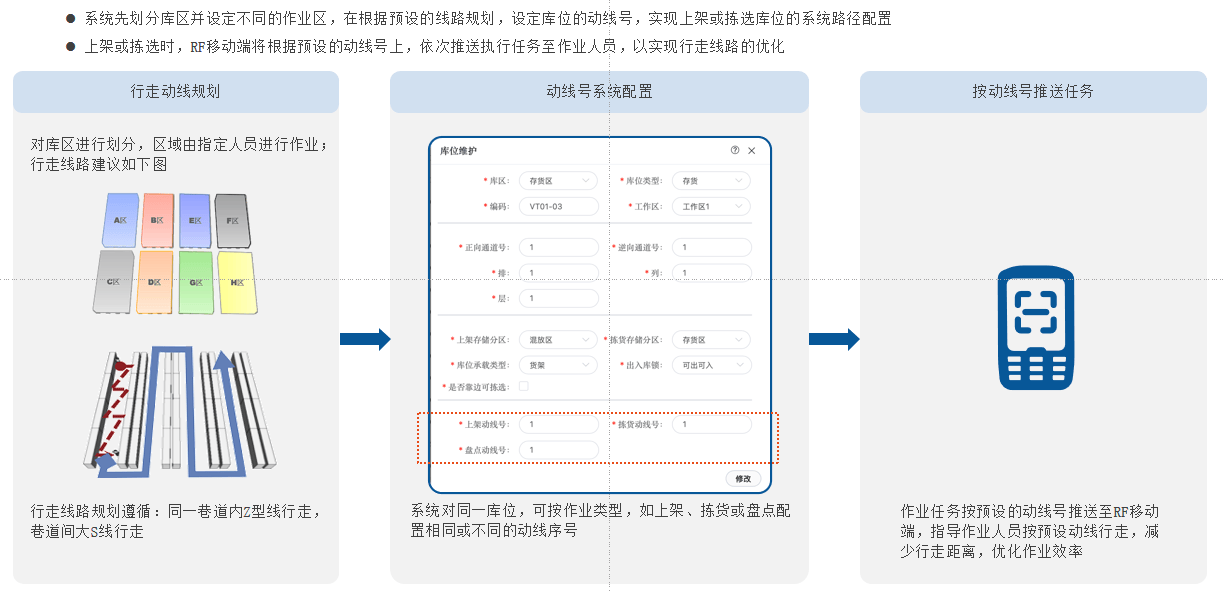
Replenishment Management
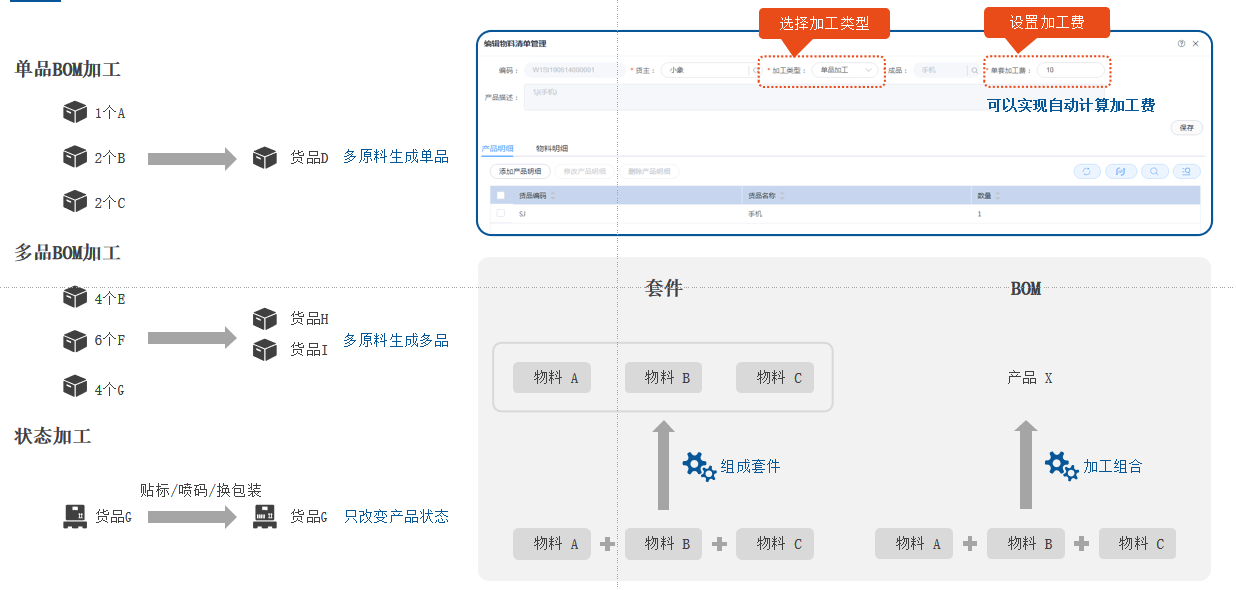
Processing Management
Inventory Counting Management
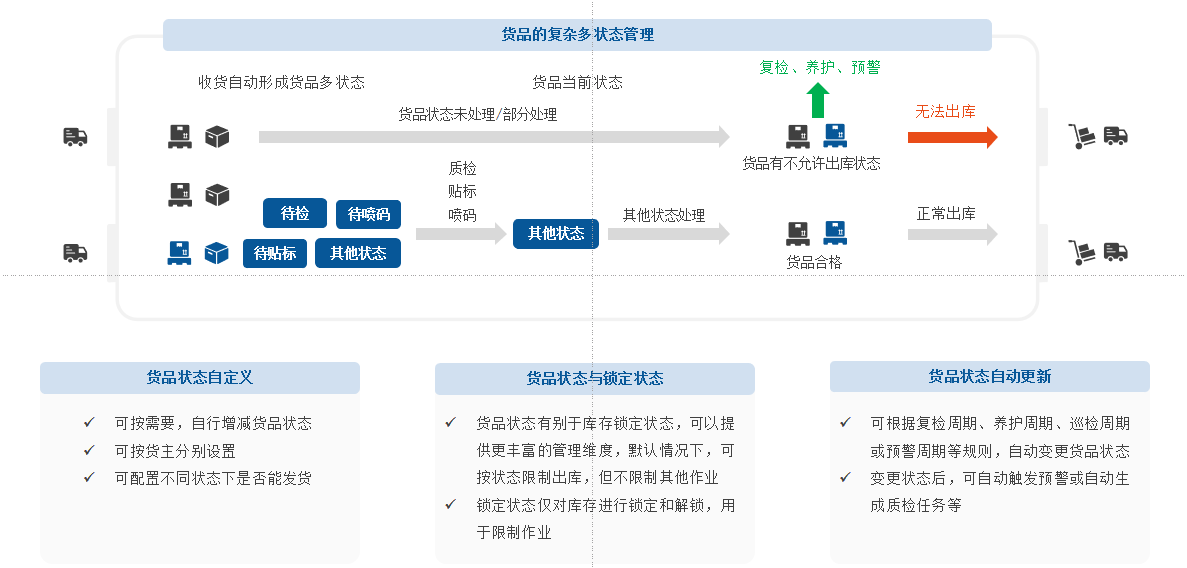
Item Status Management
Inventory Adjustment
In-Warehouse Adjustment: In-warehouse adjustment refers to adjustments to the attributes of inventory items (including owner, item code, batch attributes, and inventory status). When the attributes of an inventory item change, an inventory adjustment order is used to complete the attribute change at the item's current location.
Batch Adjustment: For example, when incorrect batch information is discovered in inventory, or when quality inspection allows for an extension of shelf life, batch adjustment can be used to change the inventory batch.
Owner Adjustment: When control of inventory items is transferred from the original owner to a new owner (e.g., in-warehouse transactions), owner adjustment can be used to change the owner information of the item inventory.
Item Code Adjustment: When a new item code replaces an old code for inventory items, item code adjustment can be used to update inventory records.
Status Adjustment: A common scenario for in-warehouse status adjustment is in-warehouse value-added services, such as labeling services for inventory items.
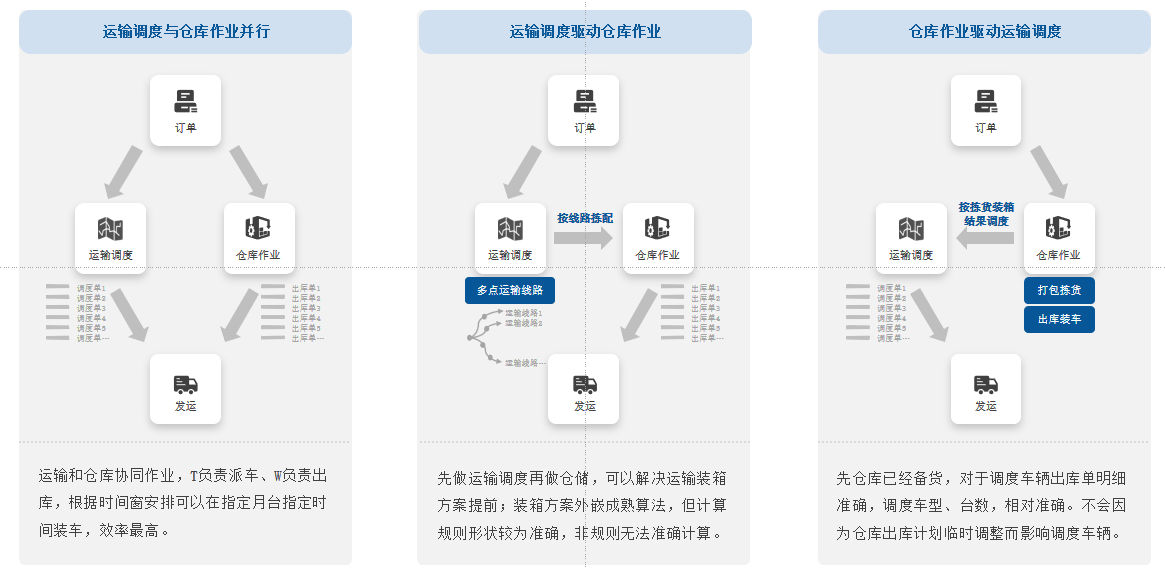
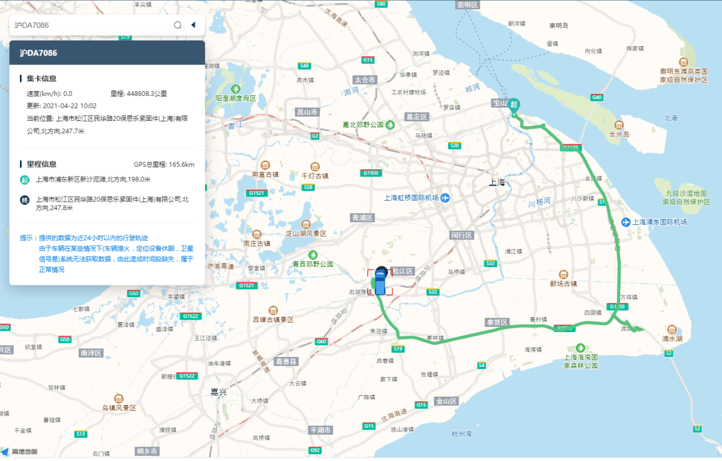
Warehouse-Distribution Collaboration: Supports Three Modes of Collaboration Between Dispatch and Warehouse Operations