

YMS Intelligent Queue and Appointment
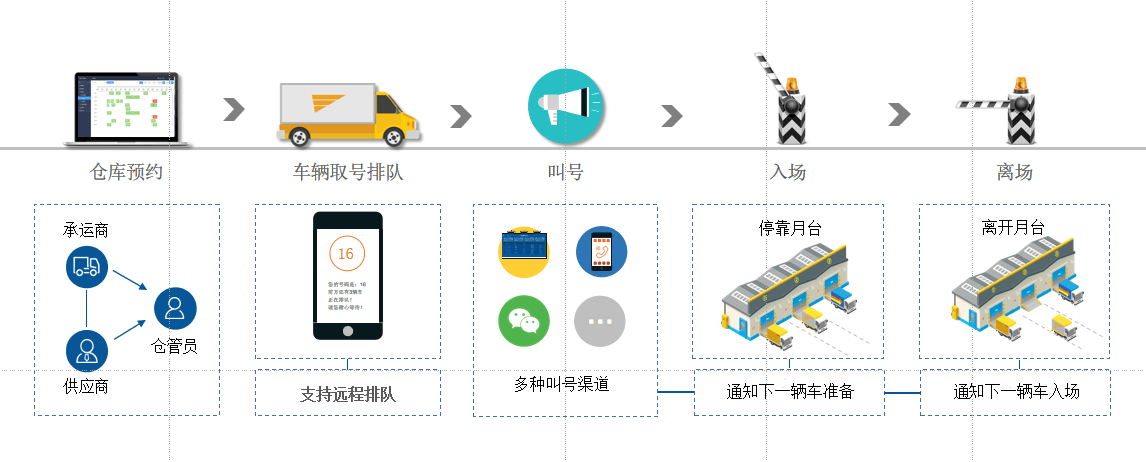
Intelligent Appointment: An intelligent appointment time window algorithm calculates the optimal available appointment time windows based on real-time appointment status and estimated operation duration, avoiding fragmentation of dock operation periods; compared to traditional fixed-length time window mechanisms based on full hours and half hours, it utilizes dock resources more effectively. Supports optimization of entry/parking plans for scenarios where one vehicle loads/unloads at multiple docks.
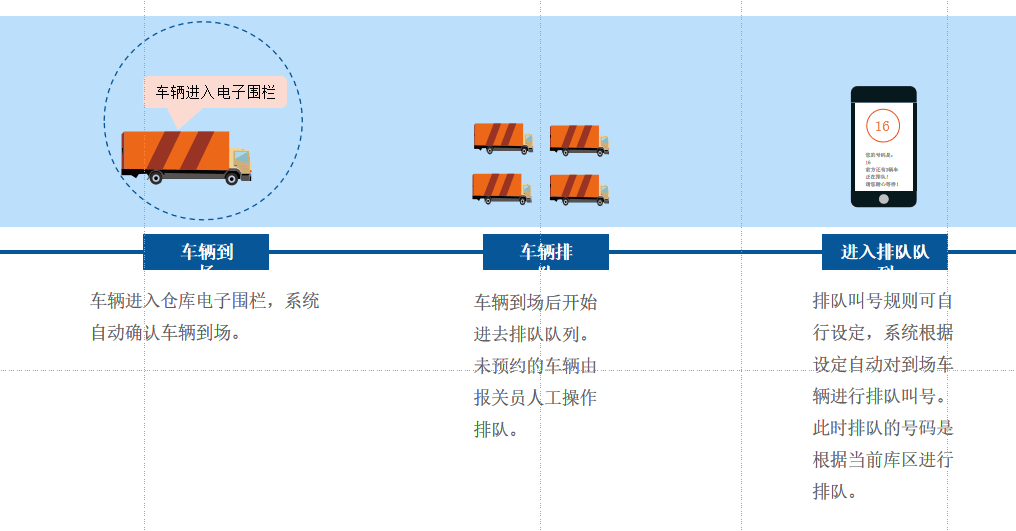
Check-in/Queueing: Self-service check-in is enabled through electronic barriers and electronic fence technology, along with early prediction of late arrivals. The system automatically guides drivers through queueing and entry based on appointments and check-in status. Supports manual adjustment of queue plans.
Strategy Configuration: Supports setting queue rules based on order urgency, business priority, and carrier/vehicle; supports green channel mechanisms; supports configuration of handling strategies for late or missed calls.
Notification and Calling: Supports multiple forms of calling, including large screen mode, broadcast mode, and SMS push mode.
Park Entry/Exit: Supports automatic park entry and exit; the system determines whether a vehicle is authorized to enter or leave the park without manual intervention from gate or security personnel.
Efficiency Analysis: Analyzes inbound and outbound times, dock usage time, and operational efficiency; analyzes the on-time and late performance of each carrier.
Hardware Integration: Supports integration with queue display screens; supports integration with automatic barriers for automatic release; supports integration with smart docks.
Business Linkage: Achieves business linkage with TMS and WMS, forming a full-chain collaboration in the transportation process covering appointment, on-site queueing, and park entry/exit for loading and unloading.
Overall Solution
Dock Appointment Management
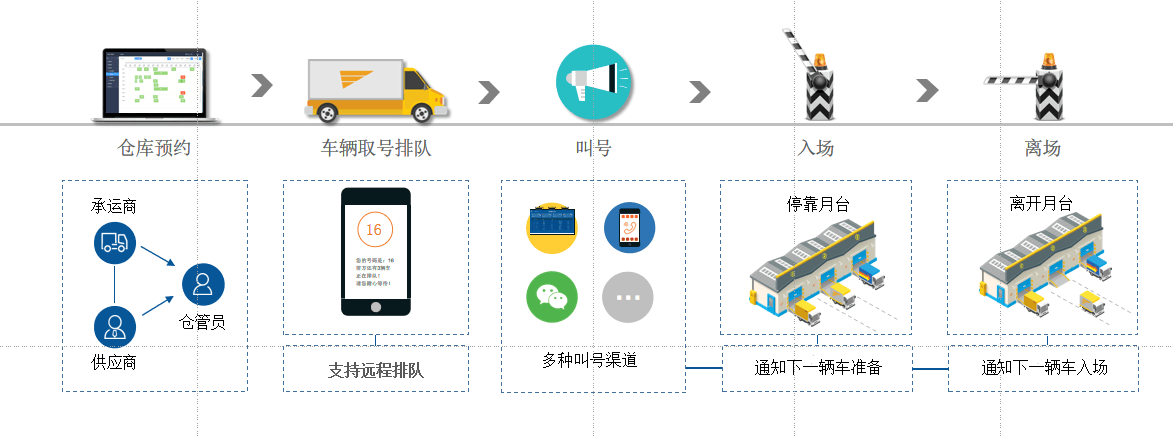
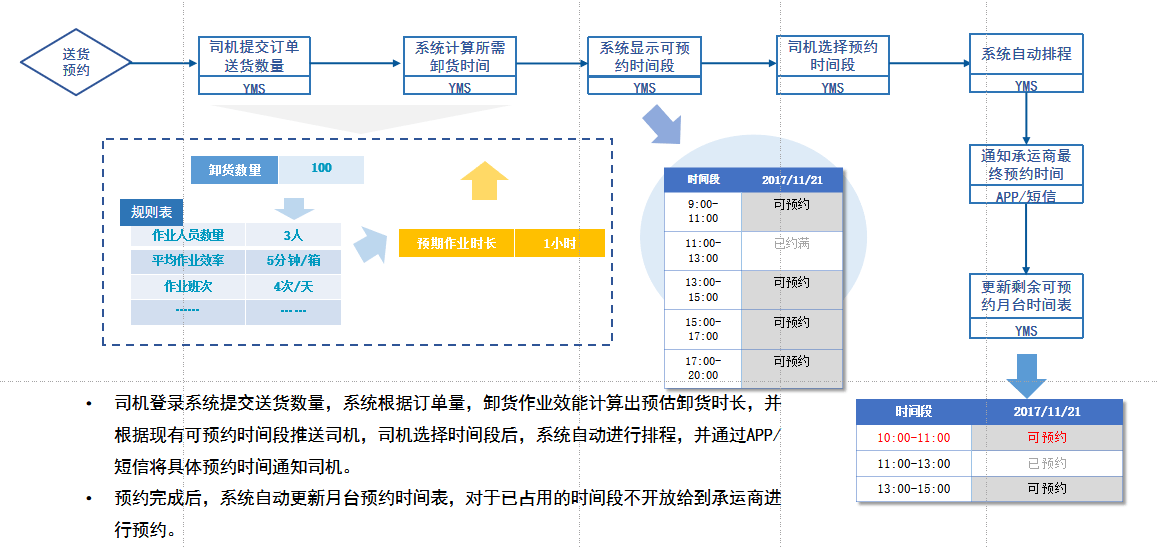
Supplier Pickup/Delivery Plan: Suppliers make pickup/delivery appointments based on delivery plans.
Carrier Resource Arrangement: Carriers receive orders and arrange pickup resources.
Abnormal Appointment Adjustment: Carriers can adjust appointments based on in-transit status.
Approval and Appointment Modification: Approval workflows can be configured.
Automatic Allocation of Appointment Dock Berths
Abnormal Operation Process: Temporary Queue Insertion/Appointment Modification
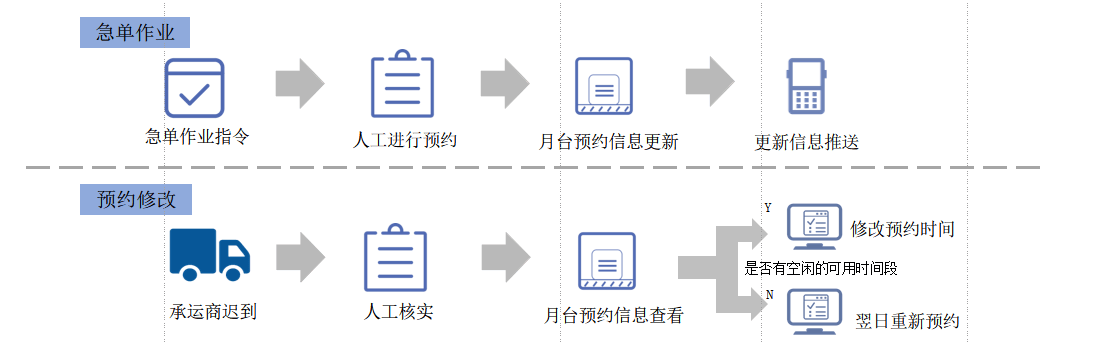
Urgent Order Operation:
The system receives urgent outbound operation instructions.
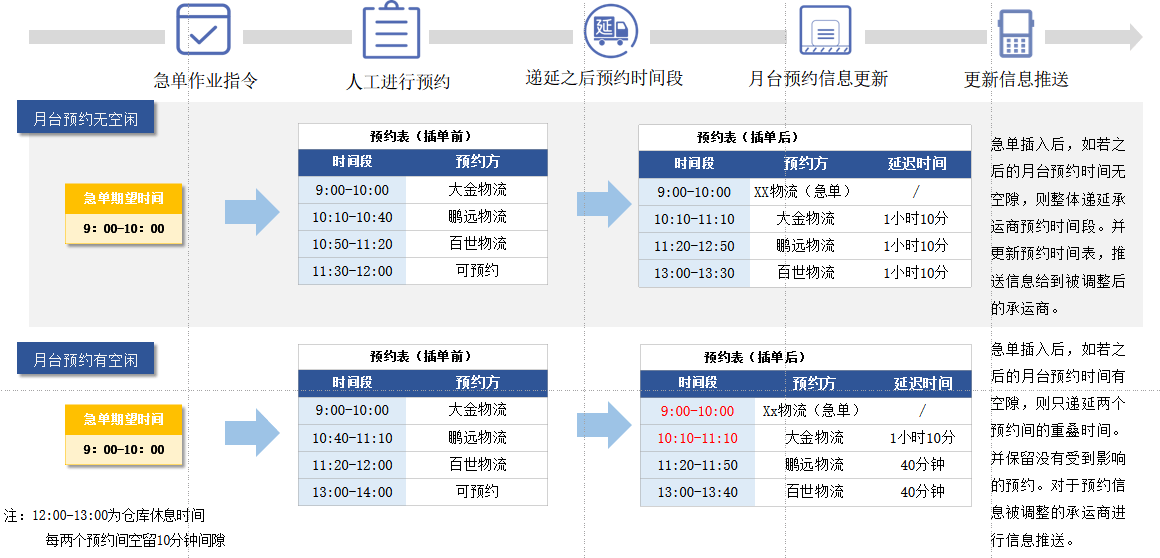
Warehouse dispatch operators can manually insert urgent dock appointments in the system based on outbound item quantity, outbound operation efficiency, and timeliness, selecting the appointment time and time slot.
After the insertion is completed, the system automatically adjusts the subsequent appointment information with a deferral, and simultaneously pushes the appointment adjustment information to the carrier via APP, email, SMS, and other channels.
Appointment Modification: For cases where carriers arrive late for appointments:
The system records carrier lateness as a basis for KPI assessment. Additionally, when a carrier is late, warehouse dispatch operators can verify the situation with the carrier offline and check the day's appointment status. If there are available appointment times and time slots, a new appointment is manually made; if no time slots are available, the carrier is notified to reschedule for the next day.
Urgent Order Management Application Scenario
Intelligent Push and Viewing of Appointment Information
Only successfully booked orders can be viewed on the system and displayed on the board. Rejected orders are communicated to carriers via SMS, WeChat, and other channels.
Number Taking and Queueing
Weighbridge Data Collection
Automation: Improving traffic efficiency
License plate recognition technology: Used to identify the front and rear license plates of trucks.
Guidance display: Used to display license plate + weight information + which area of the park to proceed to.
Data Statistics: Big data analysis
License plate data, key data, and driver facial data: Stored in association and uploaded to the cloud.
"Park cargo throughput analysis and trend analysis support business operations and adjustments.
Visualization: What you see is what you get
24/7 video recording, linked to vehicle records, enables visual and precise traceability.
Query the weighing process by license plate, ensuring evidence-based operations and avoiding disputes.