

OMS Order Management System
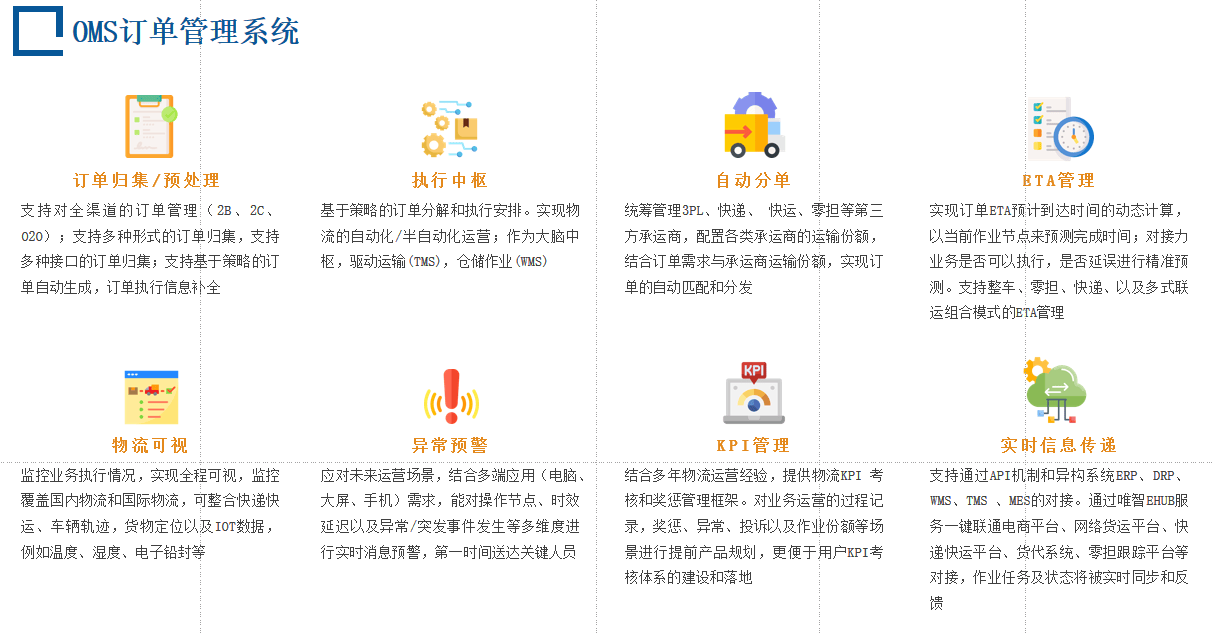
Order Consolidation/Pre-processing: Supports omnichannel order management (2B, 2C, O2O); supports multiple forms of order consolidation and multiple interface-based order consolidation; supports policy-based automatic order generation and order execution information completion
Execution Hub: Policy-based order decomposition and execution scheduling. Enables automated/semi-automated logistics operations; acts as the central hub, driving Transportation Management (TMS) and Warehouse Operations (WMS)
Automatic Order Allocation: Centrally manages third-party carriers such as 3PL, express delivery, express freight, and LTL (less-than-truckload) carriers; configures transportation share for each carrier; matches order requirements with carrier transportation share to achieve automatic order matching and dispatch
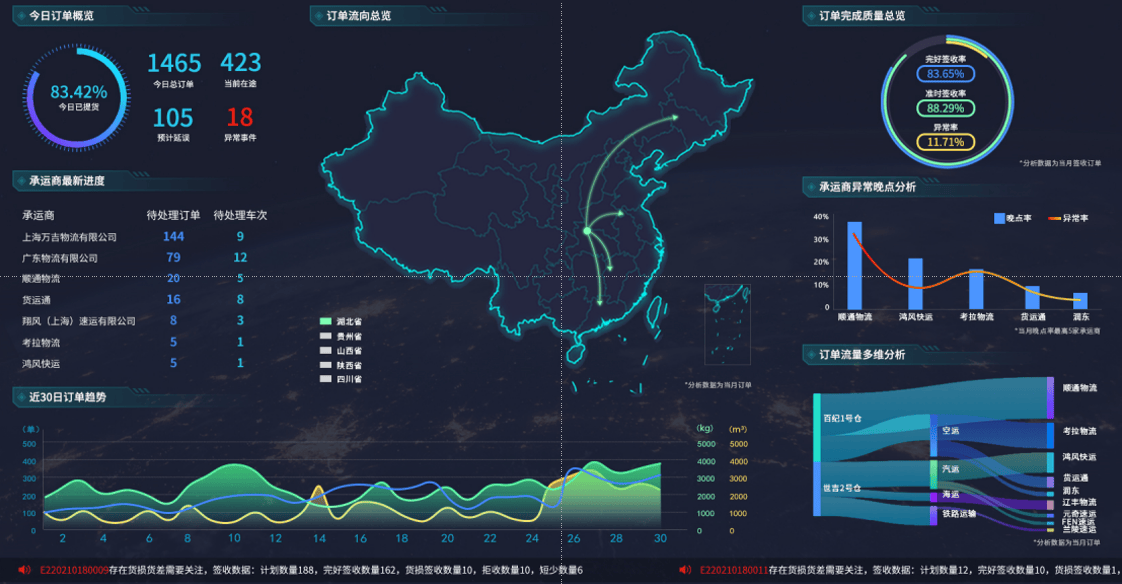
ETA Management: Enables dynamic calculation of estimated time of arrival (ETA) for orders, predicting completion time based on current operational nodes; provides accurate predictions on whether relay operations can be executed and whether delays will occur. Supports ETA management for full truckload, LTL, express delivery, and multimodal combined transport modes
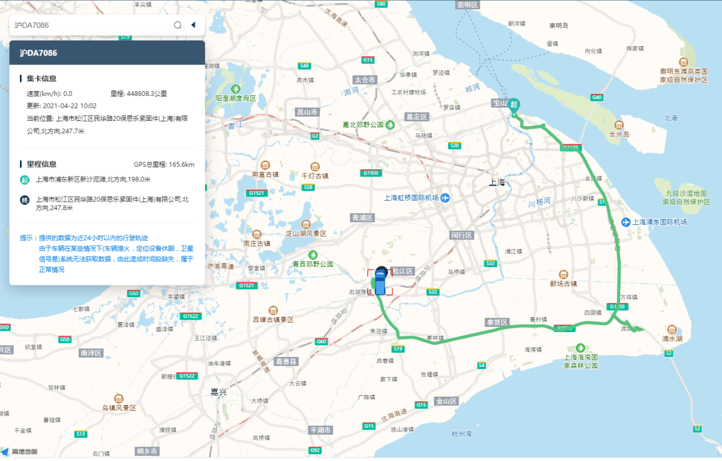
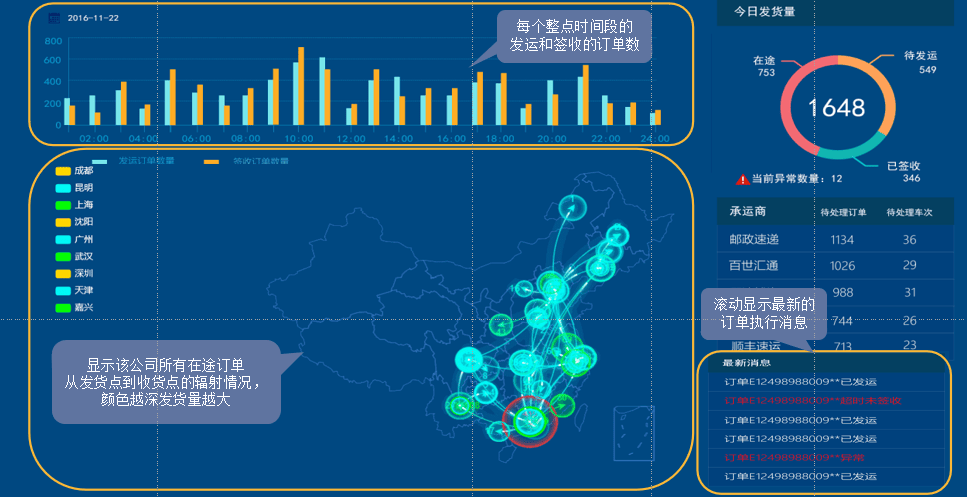
Logistics Visibility: Monitors business execution to achieve end-to-end visibility, covering both domestic and international logistics; integrates express and freight tracking, vehicle trajectories, cargo location, and IoT data such as temperature, humidity, and electronic seals
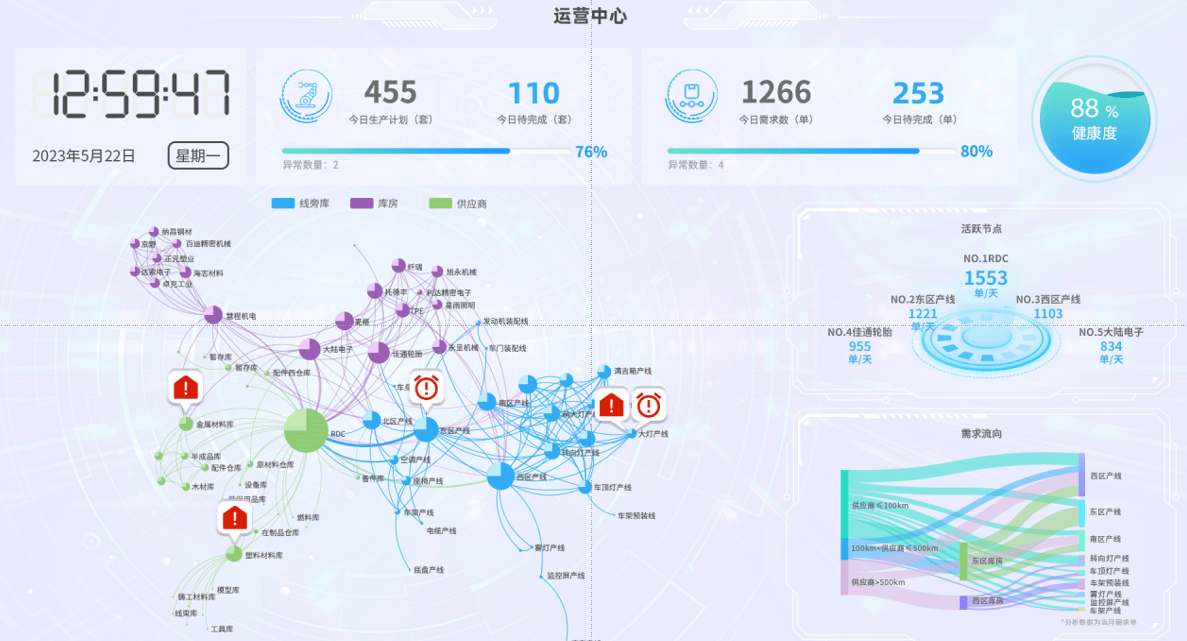
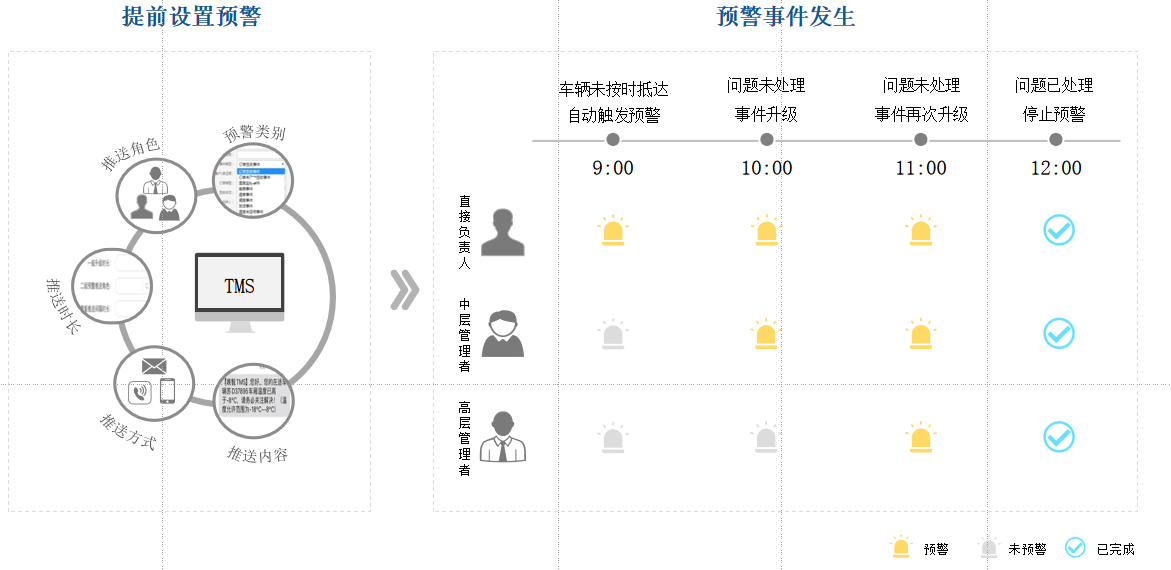
Exception Alerts: Designed for future operational scenarios, combined with multi-device application needs (PC, large screen, mobile); provides real-time message alerts across multiple dimensions including operational nodes, time delays, and abnormal/contingency events, delivering alerts to key personnel immediately
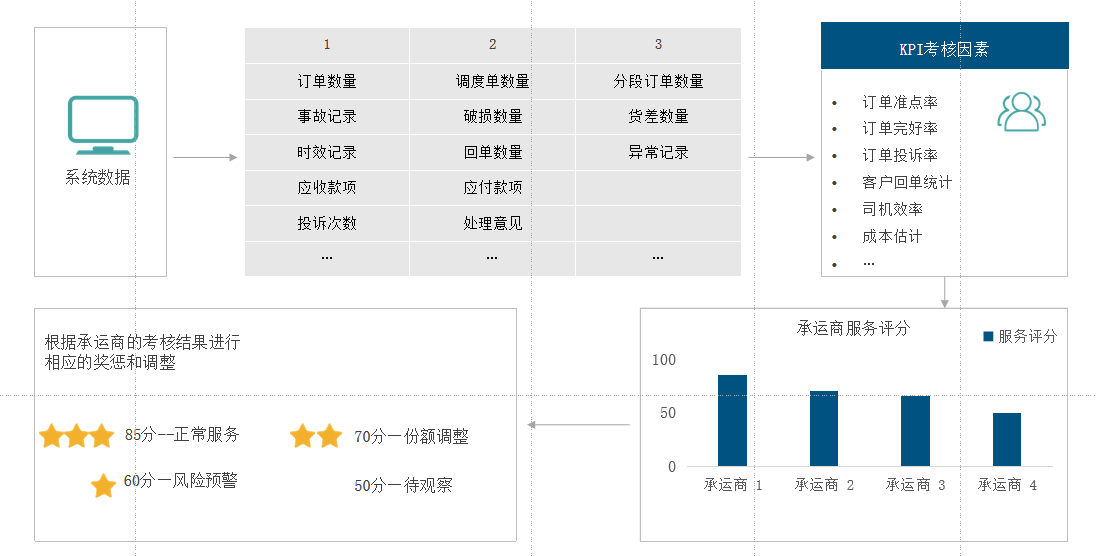
KPI Management: Leveraging years of logistics operations experience, provides a logistics KPI assessment and reward/penalty management framework. Proactively plans products for scenarios such as business operation process records, rewards and penalties, exceptions, complaints, and operational share, making it easier for users to build and implement KPI assessment systems
Real-time Information Transmission: Supports integration with heterogeneous systems such as ERP, DRP, WMS, TMS, and MES via API mechanisms. Through the vTradex EHUB service, enables one-click connectivity with e-commerce platforms, digital freight platforms, express and freight platforms, freight forwarding systems, and LTL tracking platforms, with operational tasks and status synchronized and fed back in real time
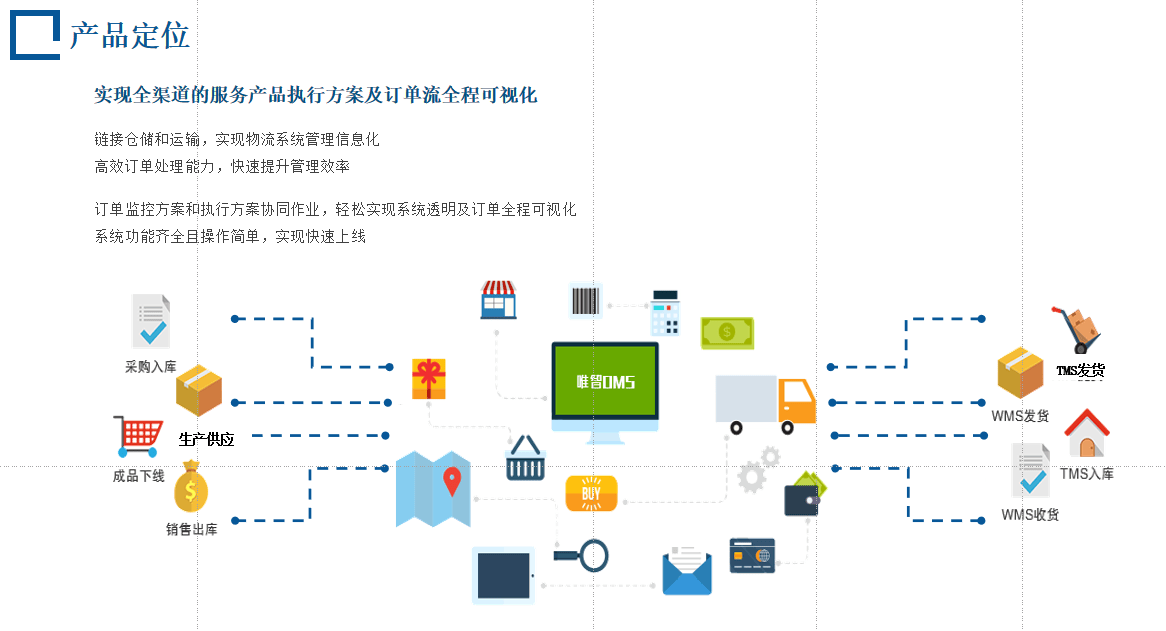
Product Positioning
Delivers omnichannel service product execution solutions and end-to-end order flow visibility
Connects warehousing and transportation to digitalize logistics system management
Efficient order processing capability to rapidly improve management efficiency
Order monitoring solutions and execution solutions work in tandem, easily achieving system transparency and end-to-end order visibility
Comprehensive yet easy-to-use system functions for rapid deployment
Functional Modules and Application Scenarios
Order Consolidation, Service Products, Order Warehouse Selection, Order Splitting, Order Allocation, Order Visibility, Order Exception Management, Control Tower, Complaint and Claims Management, Alert Management, Carrier KPI Management, Master Data
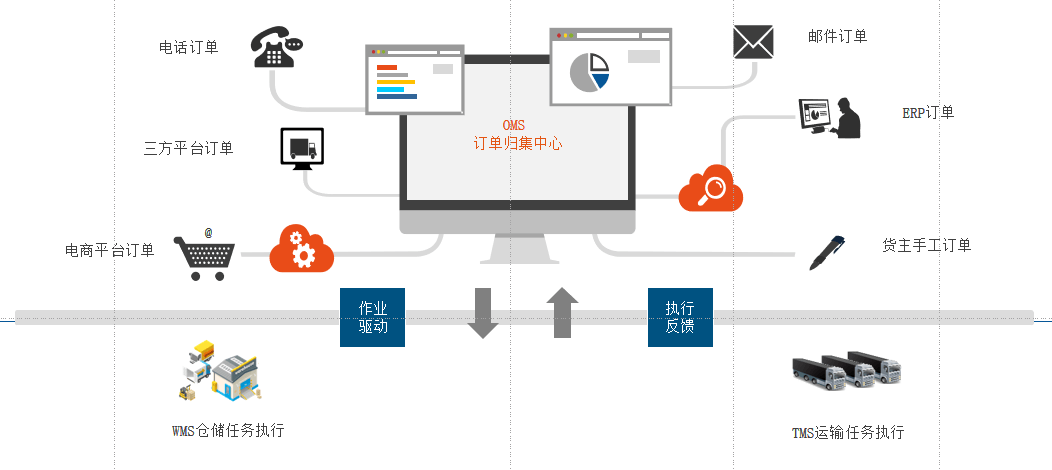
Order Consolidation
OMS supports omnichannel order consolidation and downstream operations execution to accommodate the growing variety of order types in the new economy
Service Products
Service types: Receiving, Shipping, Initial Shipment
Transport modes: Road, Sea, Air
Loading modes: Full Truckload (FTL), Less-than-Truckload (LTL)
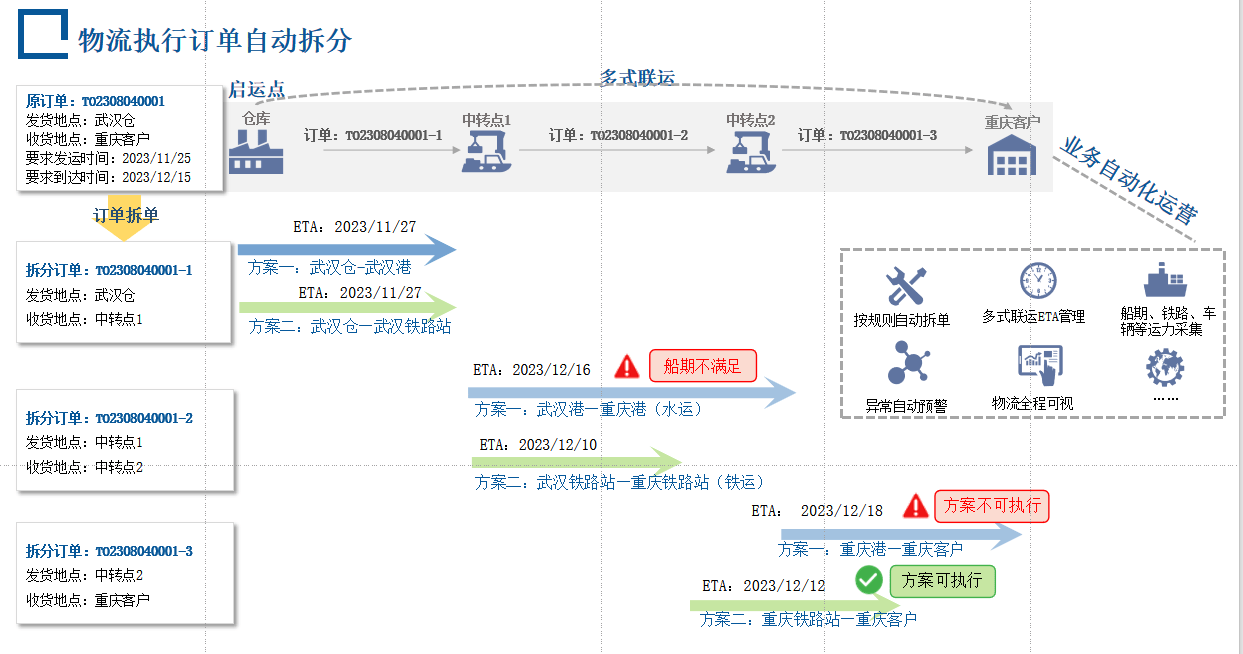
Automatic Splitting of Logistics Execution Orders
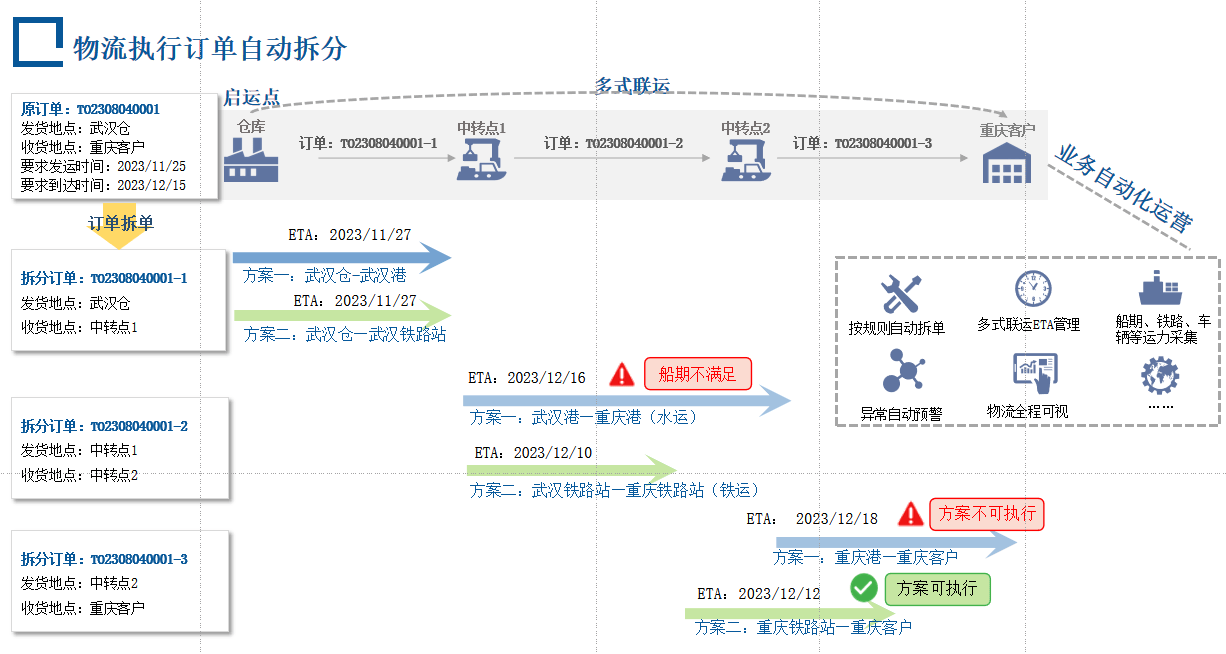
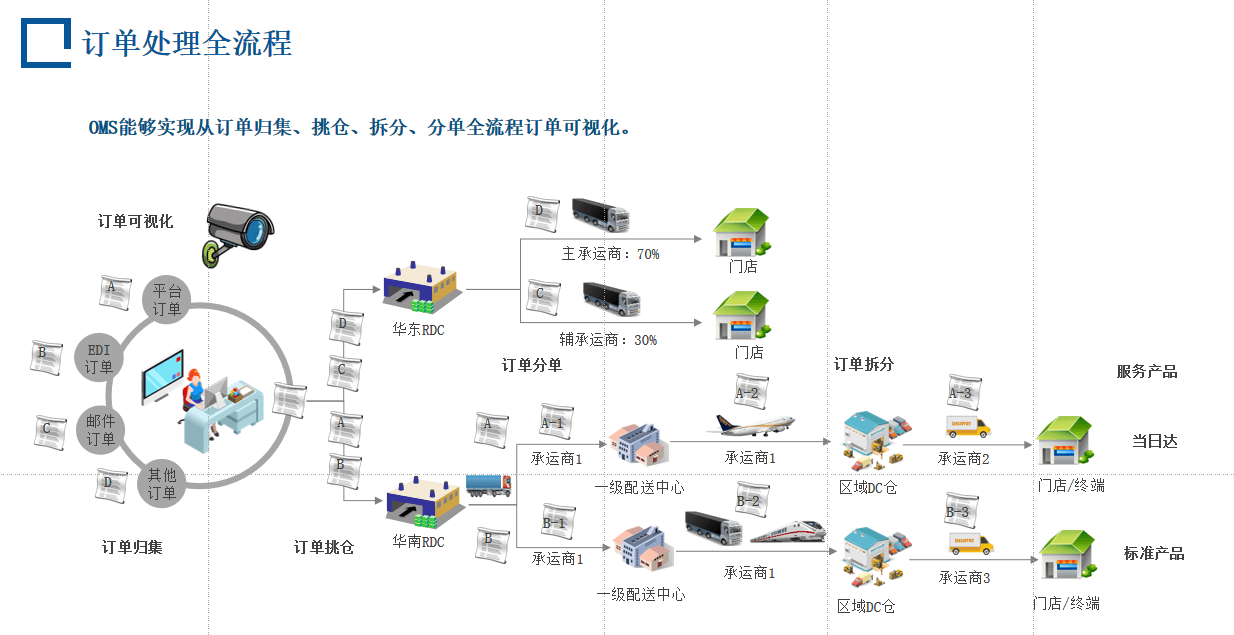
Full Order Processing Workflow
OMS enables end-to-end order visibility across the entire process from order consolidation, warehouse selection, splitting, to allocation.
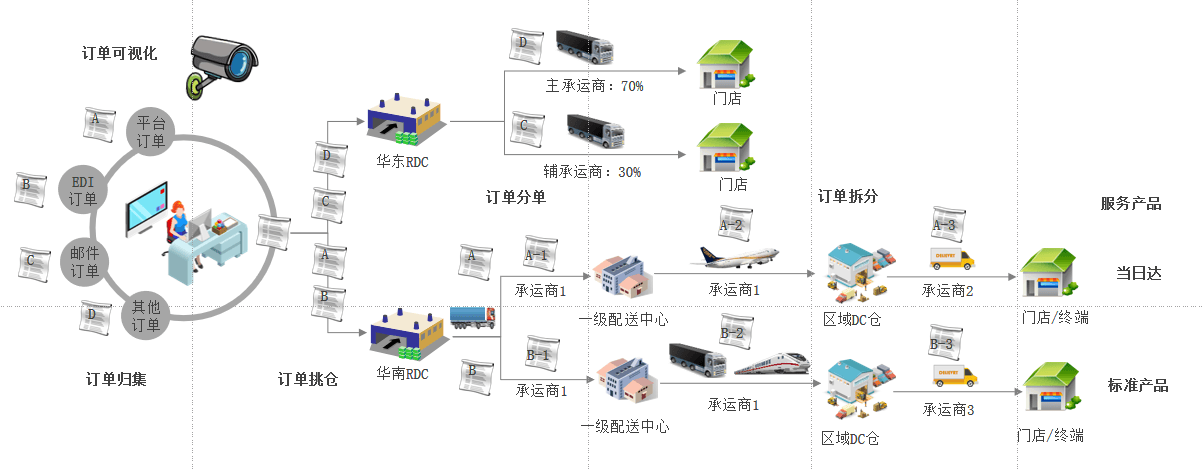
Order Warehouse Selection
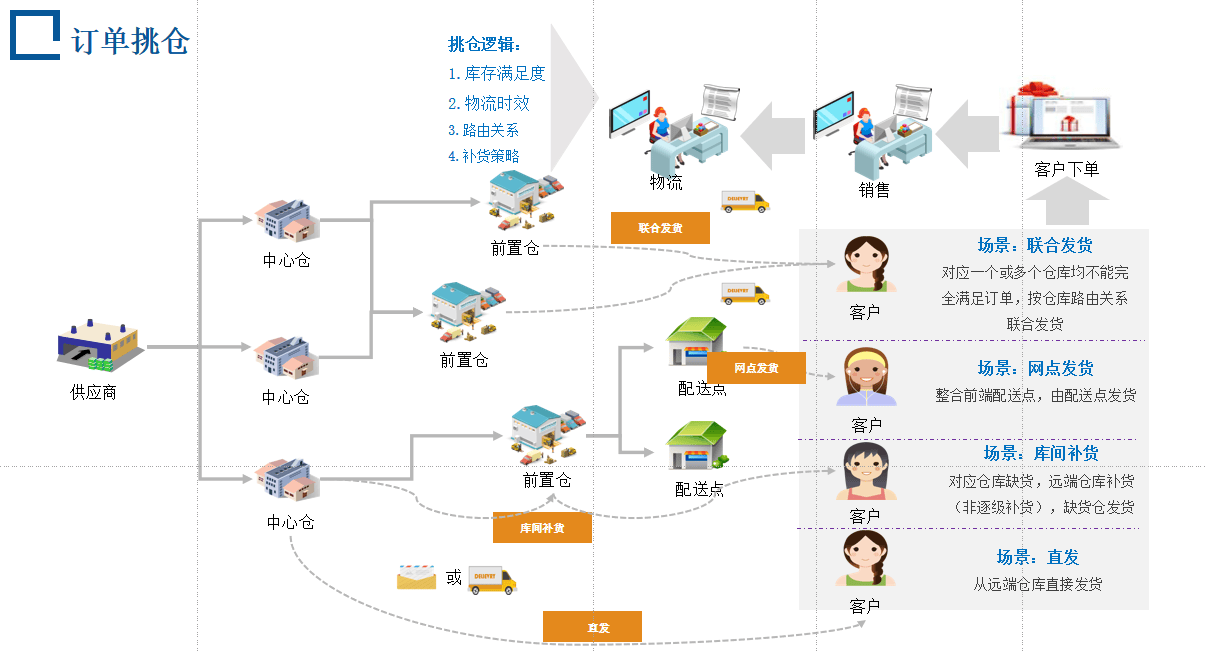
Order Splitting
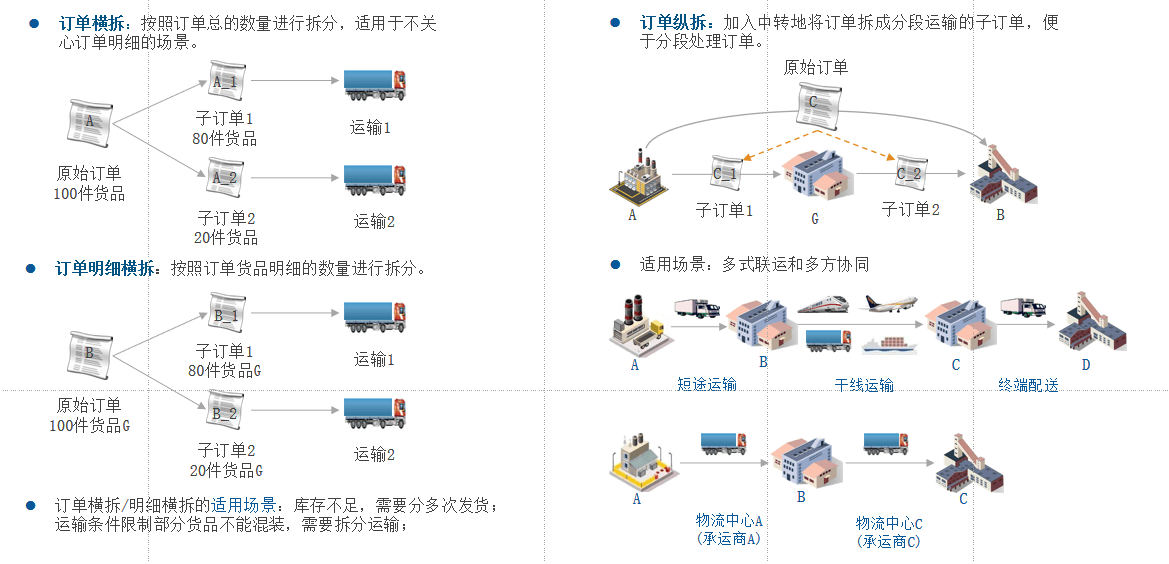
Order Allocation
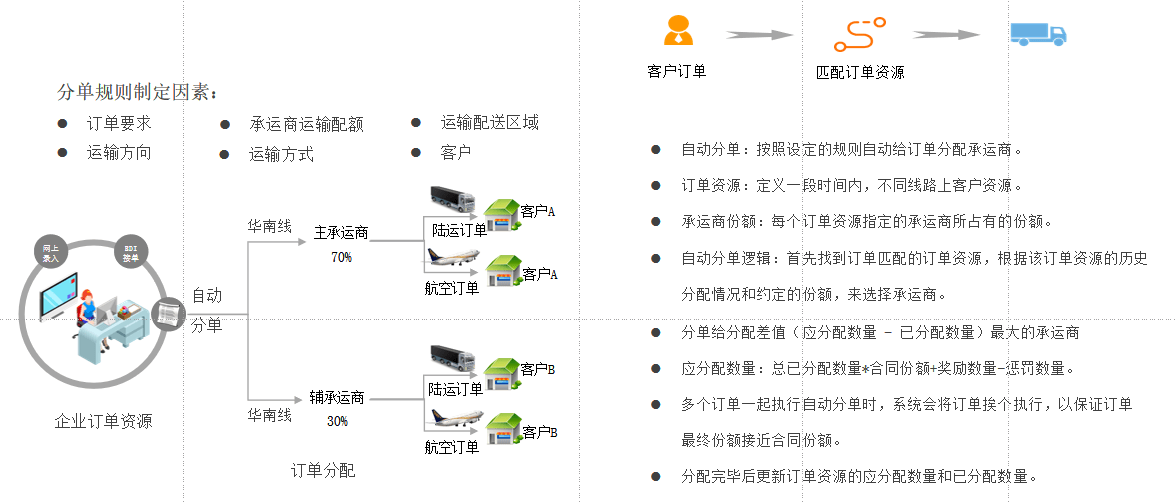
Order Visibility
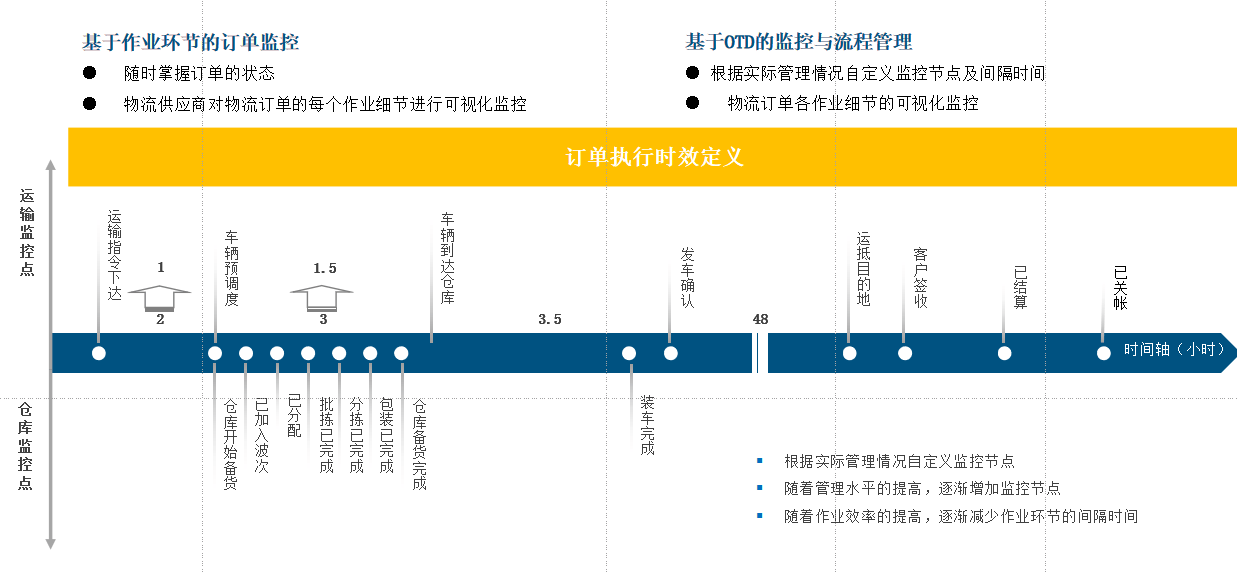
Order Monitoring: Monitors the completion status of each monitoring node for orders to be executed.
Monitoring Plans: Defines the nodes to be monitored and their time requirements for different plans.
Monitoring Plan Matching Strategy: Defines matching conditions, including service product, origin/destination, etc., used to find the matching monitoring plan for an order based on conditions.
Order Monitoring Logic: First, when an order takes effect or is split, the matching monitoring plan is identified based on the monitoring plan matching strategy; then monitoring tasks are generated according to the monitoring nodes and time requirements defined in the plan, while also considering the time window at the transport destination (if configured); tasks are displayed graphically on the order monitoring screen. When the corresponding node function is triggered, the task completion time is automatically backfilled, and the monitoring interface supports manual handling of exception tasks.
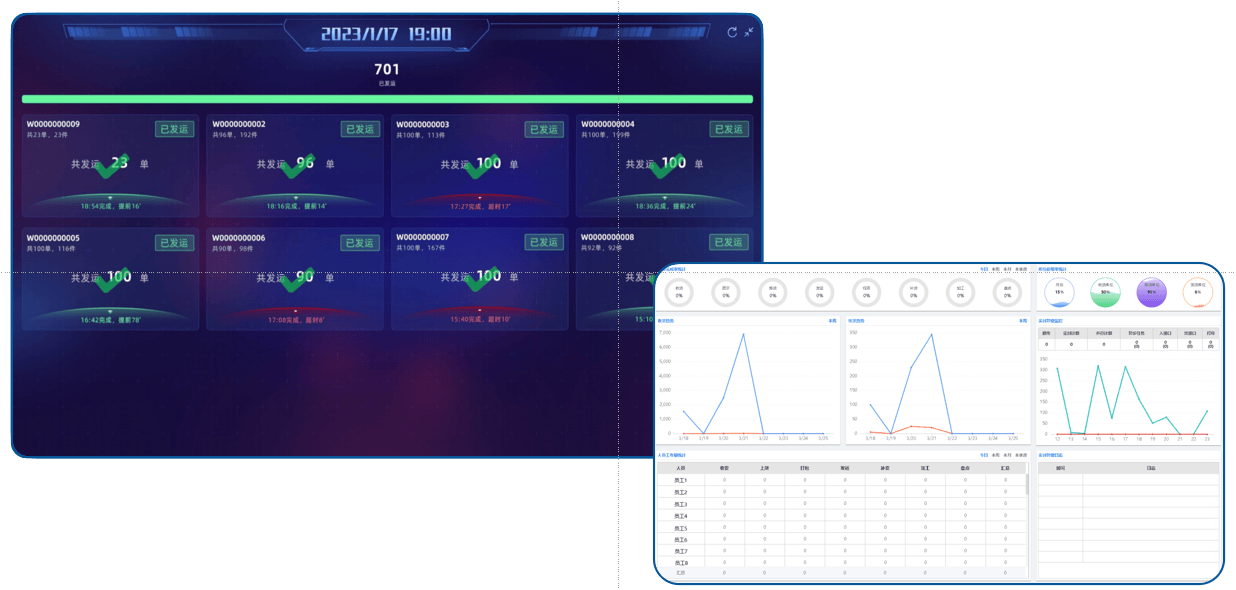
Comprehensive Alert Settings for Real-time Exception Monitoring
Carrier KPI Management