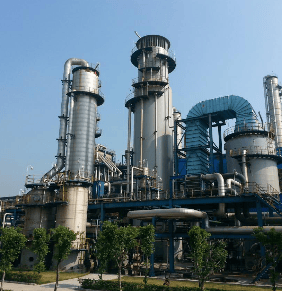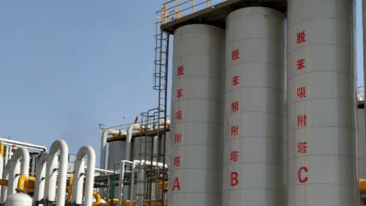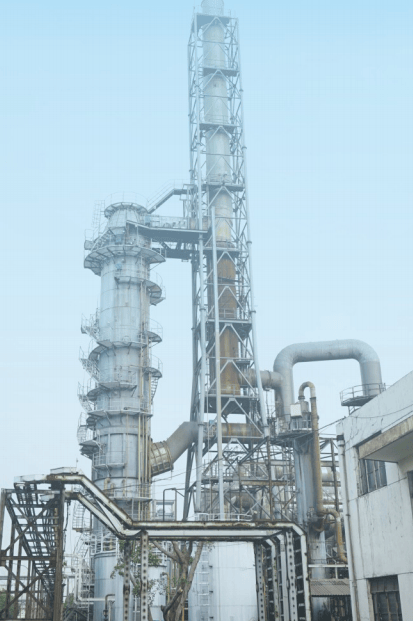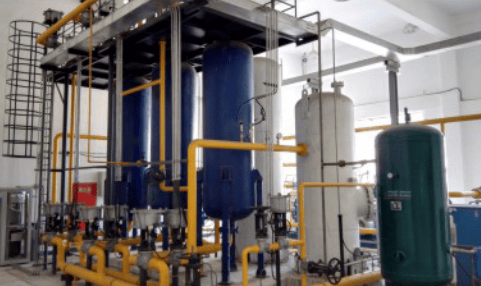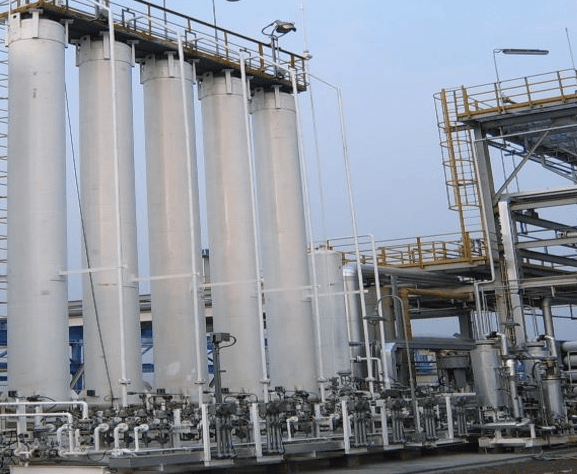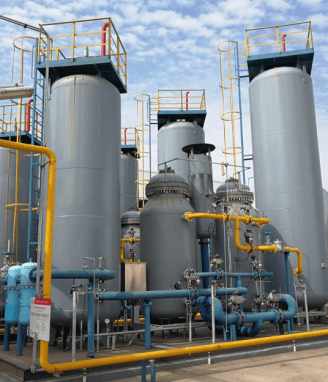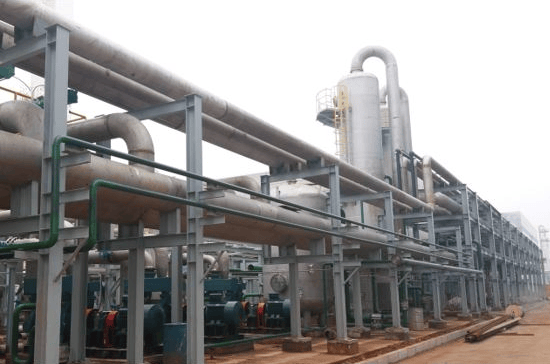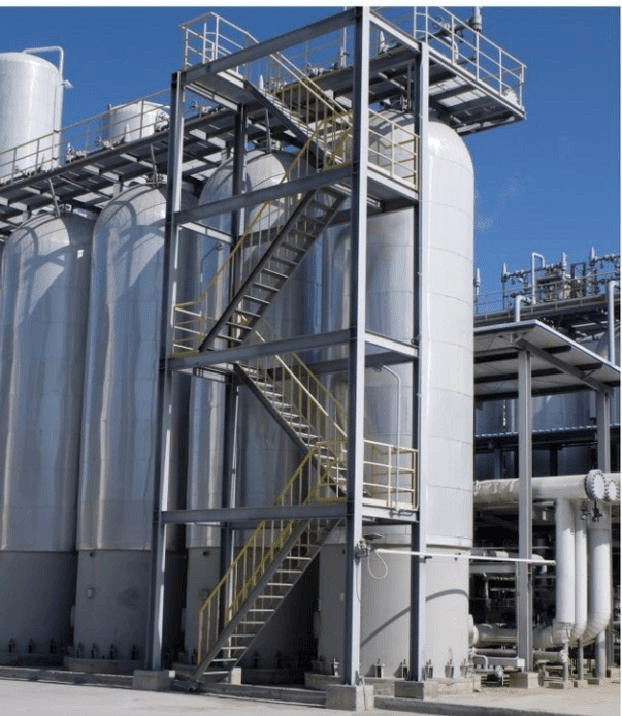


In industrial Pressure Swing Adsorption (PSA) hydrogen purification processes, adsorbents typically operate at ambient temperature and elevated pressure to adsorb the easily adsorbed components from a gas mixture, while the less readily adsorbed components (such as hydrogen) flow out from one end of the bed as product. The pressure of the adsorbent bed is then reduced to desorb the adsorbed components, which are discharged from the other end of the bed, thereby achieving gas separation and purification while simultaneously regenerating the adsorbent.
However, in conventional PSA processes, two methods can be employed to regenerate the adsorbent: one is to "purge" the bed with product gas to reduce the partial pressure of adsorbed impurities, thereby displacing the desorbed impurities. Its advantage is that it can be accomplished at atmospheric pressure, but its disadvantage is that a portion of the product gas is lost. The other method uses vacuum extraction for regeneration, causing the adsorbed impurities to desorb under negative pressure. This is commonly known as Vacuum Pressure Swing Adsorption (VPSA or VSA). The advantage of the VPSA process is high product recovery, but its disadvantage is the need for additional vacuum pumps, resulting in relatively higher energy consumption. In practical applications, the choice between these processes mainly depends on the composition of the feed gas, product purity, and recovery requirements.
Technical Features:
Simple, advanced, and reliable process with strong feedstock adaptability;
High product hydrogen purity: purity ranging from 98% to 99.999%;
High hydrogen recovery: depending on the gas source and product conditions, hydrogen recovery ranges from 60% to 99%;
Wide operating pressure range: 0.2~7.0 MPaG, low energy consumption, operating flexibility of 20%–120%, and continuous operation time of the unit exceeding 4 years;
High degree of automation with functions such as adaptive adjustment and automatic fault diagnosis, convenient start-up and shutdown, and unmanned automatic control has been achieved.
Applications:
Various hydrogen-containing gases such as shift gas, catalytic dry gas, reformer hydrogen, dehydrogenation tail gas, methanol cracking gas, refinery hydrogenation low-pressure separator gas, synthesis gas, methanol purge gas, synthetic ammonia tail gas, coke oven gas, water gas, chlor-alkali tail gas, etc.