Wedoany.com Report on Mar 2nd, Cosmetic packaging predominantly uses single-use plastics like polyethylene (PE), while polylactic acid (PLA) derived from natural resources offers a more eco-friendly alternative. Manufacturers enhance PLA performance through fillers and blending techniques to meet packaging design requirements, such as a novel bio-based polymer composite specifically developed for cosmetic packaging.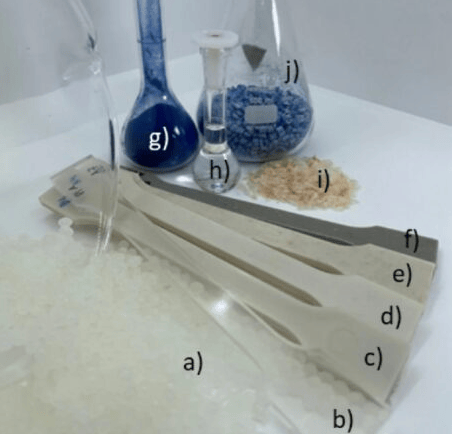
This composite is based on a blend of PLA and poly(3-hydroxybutyrate-co-3-hydroxyvalerate) (PHBV), forming a mature packaging material with hydrophobic, moisture-resistant, and water-insoluble properties. Its physical characteristics, such as tensile strength, melting point, crystallinity, and glass transition temperature, are comparable to those of polypropylene and polyethylene.
To optimize this bio-based polymer for the cosmetics industry, researchers explored adding various components: chitosan (CS) as a cost-effective industrial byproduct enhances composite performance; plant essential oils (EOs) like limonene or eucalyptol can reduce water vapor permeability and add a pleasant fragrance; phycocyanin (Pgm) provides natural blue coloring; and acetyl tributyl citrate (ATBC) acts as a plasticizer, improving ductility, processability, flexibility, and reducing brittleness.
By preparing formulations such as PLA/BHVC, PLA/PHBV/CS, and PLA/PHBV/CS/Pgm/OE/ATBC, the study found that the composite's thermal degradation temperature is similar to that of pure PLA. The three-component formulation showed two degradation peaks corresponding to the polymer and CS, while the PLA/PHBV/CS/Pgm/OE/ATBC system did not exhibit independent peaks. The addition of CS improved resistance to degradation, and the PLA/PHBV/CS/Pgm/OE/ATBC formulation exhibited the lowest hydrophilicity among all tested compositions.
The resulting bio-based polymer composite possesses natural color and scent, with mechanical properties suitable for packaging applications. Researchers also evaluated its potential in additive manufacturing. Although the results were positive, further development of related processes remains a future research direction. This study demonstrates a solution for achieving sustainability in cosmetic packaging using bio-based polymers, enhancing value and delivering environmental benefits by integrating waste materials like chitosan.