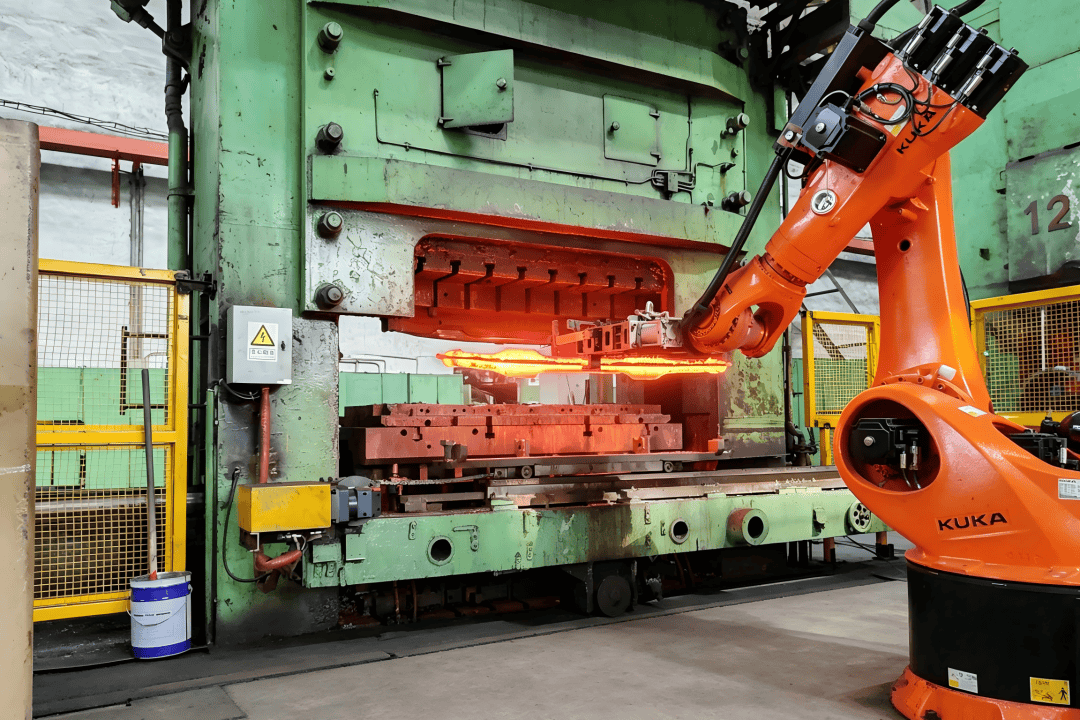
Wedoany.com Report on Mar 4th, Facing shorter product lifecycles, increased component variability, and frequent changeover demands, manufacturers are seeking more intelligent and adaptable industrial robots to reduce equipment downtime, improve efficiency, and secure future operations. A new generation of industrial robot technology has emerged, featuring standardized interfaces, low-code/no-code programming, modular grippers, and AI-powered perception capabilities, becoming a key tool in high-mix, low-volume manufacturing environments.
James Taylor, Chief Commercial Officer at OnRobot, points out: "Flexibility is not just a feature of the robot; it is the core of the overall solution." To simplify product changeovers, robot suppliers are adopting standardized mechanical couplings and pneumatic channels, reducing end-of-arm tooling (EOAT) changeover time to just minutes. Universal Robots' UR+ ecosystem enables seamless integration of end effectors through certified third-party products, allowing users to quickly switch tasks. Australian injection molding company Designed Mouldings utilized OnRobot technology to deploy a system within days, expecting to recoup their investment within six months.
Regarding programming, companies like FANUC and Yaskawa Motoman are utilizing open-source frameworks and low-code platforms to reduce reliance on custom code. OnRobot's D:Ploy platform automatically generates program logic through a graphical interface, supporting rapid changeovers. Doig Corp. leverages this platform to build ready-to-use palletizing systems for small manufacturers, allowing users to adjust processes via graphical forms without any programming.
Artificial intelligence and new types of sensors are further enhancing the adaptability of industrial robots. Force/torque sensors enable robots to dynamically adjust assembly paths, and combined with AI, they can interpret sensory data and optimize decisions. ABB is collaborating with LandingAI to enhance visual capabilities, FANUC is integrating Nvidia edge AI modules to create digital twins, and Yaskawa Motoman's Next platform addresses high-mix production through machine vision and AI.