U.S. Agricultural Experts Explore the Critical Role of Lime Application in Soil pH Management and Fertilizer Efficiency
At the U.S. National Conservation Systems Cotton and Rice Conference, agricultural experts emphasized the importance of lime in adjusting soil pH and enhancing fertilizer efficiency. Vaughn Reed, Associate Professor of Soil Fertility at Mississippi State University, stated that lime application typically yields a return exceeding that of fertilizers. 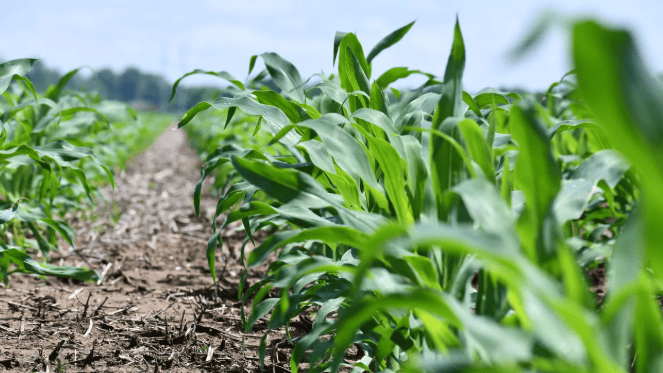
Lime, primarily composed of calcium carbonate or magnesium carbonate, is used to neutralize soil acidity, but its effects are not immediate. Reed noted that high-quality lime takes about two years to fully take effect, while regular lime requires three years to achieve 80% to 90% effectiveness. This necessitates farmers to plan applications in advance to achieve optimal soil pH management.
The quality of lime varies depending on the quarry and processing methods, posing challenges for precise recommendations. Nathan Slaton, Assistant Vice President for Agriculture at the University of Arkansas, and Oscar Ruiz Jr., Senior Agronomist at Waypoint Analytical LLC, mentioned that recommendations are based on average agricultural lime or a 100% relative neutralizing value, and farmers need to adjust application rates according to the actual product.
Application uniformity is another critical issue. Using central Arkansas as an example, Slaton explained that uneven application can lead to inconsistent pH levels across fields, affecting crop growth and nutrient availability. Ruiz added that lime can also alleviate aluminum toxicity in acidic soils and release phosphorus, thereby improving fertilizer efficiency.
Soil testing is crucial for determining application rates. Reed said soil samples can serve as the basis for fertilization decisions. Slaton emphasized the need to understand testing errors, such as false positives or false negatives, and to be aware of the impact of pH adjustments on micronutrient availability.
To enhance the consistency of fertilizer recommendations, a collaborative project in the United States has integrated data from over 3,500 fertilizer trials. Slaton introduced that the project aims to correlate yield targets with key soil test values, but data is currently limited. More information is available at soiltestfrst.org.
Although lime application lacks immediate effects, its long-term benefits are significant. Reed concluded that while lime may not be eye-catching, it offers the highest return on investment, contributing to optimized soil health and agricultural productivity.
Related Products



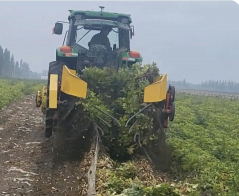
4HS-8 High-efficiency Peanut Inverted-laying Harvester
Hebei Yongfa Hongtian Agricultural Machinery Manufacturing Co., Ltd.
714CD Series C-Band Weather Radar
Chengdu Zhongdian Jinjiang Information Industry Co., Ltd.

Industrial and Commercial Point-Type Gas Detector
Jinan Benan Technology Development Co., Ltd.