U.S. Agricultural Groups Focus on Demand Growth, E15 and USMCA as Key Factors
Facing three consecutive years of low grain prices and profit pressures, national commodity groups in the United States have identified finding new sources of demand as a shared priority for the coming year. These groups emphasize that while they appreciate recent agricultural assistance, they prefer to generate income through market channels rather than relying on aid.
Neil Caskey, CEO of the National Corn Growers Association, pointed out that securing year-round E15 implementation is crucial for corn growers. He said, "This will be the most expensive corn crop in U.S. history. So, we're looking for ways to help them stay in business. In our view, E15 is probably the easiest thing Congress could do to show they understand our concerns." Despite recent setbacks in pushing for E15, the association's analysis suggests that full E15 implementation could generate an additional 2.5 billion bushels of corn demand.
Trade is also seen as a critical component of demand. Caskey emphasized the importance of renewing the USMCA and supports the trilateral agreement. He said, "I think the USMCA in its current form is a pretty darn good deal. So, I urge the President and the administration to start there and extend it. But the most important thing for us is to make sure we maintain U.S. corn access in the Mexican and Canadian markets." Sam Kieffer, CEO of the National Association of Wheat Growers, also supports the USMCA to boost exports, noting that Mexico is the top export destination for U.S. wheat.
Steve Censky, CEO of the American Soybean Association, stated that trade relations with China are vital for soybean producers, who seek a written long-term agreement during the national leaders' meeting in April. He said, "We urge the Trump administration to ensure we lock in a stable deal with China. We have 12 million metric tons committed for this marketing year. We want to see that number increase and are looking for commitments of at least 25 million metric tons annually for the next three years." Censky also mentioned that increasing biofuel demand is a top priority for the association, with the EPA's proposed 5.6 billion gallons of biomass-based diesel representing a potential 2 billion gallon increase over current levels.
Tim Lust, CEO of the National Sorghum Producers, is similarly focused on biofuels and trade. He said, "We need demand now. With all commodity prices and profitability being weak, this is one of the few things we can do that can have an immediate impact." Lust added that trade with China amounts to about $1 billion in most years, and the India agreement also holds long-term potential. The industry-wide push to increase demand aims to secure better long-term prices for grain producers across the nation.
Related Products
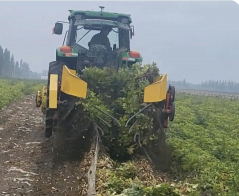

4HS-8 High-efficiency Peanut Inverted-laying Harvester
Hebei Yongfa Hongtian Agricultural Machinery Manufacturing Co., Ltd.



Industrial and Commercial Point-Type Gas Detector
Jinan Benan Technology Development Co., Ltd.
714CD Series C-Band Weather Radar
Chengdu Zhongdian Jinjiang Information Industry Co., Ltd.