German Qdrant Secures $50 Million Series B Funding to Advance Composable Vector Search Technology
Wedoany.com Report on Mar 13th, German and US-based AI technology company Qdrant recently announced the completion of a $50 million Series B funding round, aiming to position composable vector search technology as the core infrastructure for production-grade AI systems. This technological innovation seeks to address challenges faced by retrieval systems in current AI applications, such as handling dynamic data and high-concurrency queries.

Composable vector search technology allows engineers to flexibly combine retrieval components based on specific needs, such as dense vectors, sparse vectors, and metadata filters, thereby optimizing relevance, latency, and cost. Built on the Rust programming language, Qdrant has redesigned layers like indexing, scoring, and filtering, providing modular control. This composable vector search technology enables teams to adapt to diverse workloads without frequent system refactoring.
André Zayarni, CEO and Co-founder of Qdrant, stated: "Many vector databases focus only on storing dense embeddings and returning nearest neighbors, which is just basic functionality. Production AI systems require a search engine where every aspect of retrieval—indexing, scoring, filtering, and latency balancing—is a composable decision. This is precisely what we have built, and this funding will accelerate our efforts to promote this standard."
As AI systems transition from experimental phases to critical operations, the deployment flexibility of composable vector search technology becomes crucial. It supports cloud, on-premises, and edge environments, stemming from its modular design rather than a single managed service. Warda Shaheen of AVP commented: "In rapidly growing new markets, systems built for specific purposes scale quickly. Qdrant, as an AI-native vector search engine, is at the forefront of building the future retrieval layer."
Ingo Ramesohl, Managing Director of Bosch Ventures, added: "In production AI applications, real-time retrieval of contextually relevant information has become business-critical infrastructure. Qdrant's Rust-based architecture is a prime example of deep tech innovation that will shape the next generation of robust and trustworthy AI systems."
Qdrant's composable vector search technology has been validated by enterprises like Tripadvisor, HubSpot, and Bosch, handling vector searches under real-world loads. Its open-source project has accumulated over 250 million downloads, 29,000 GitHub stars, and recognition in multiple industry reports, such as The Forrester Wave: Vector Databases, Q3 2024. This funding will drive the widespread adoption of composable vector search technology in AI infrastructure.
Related Products

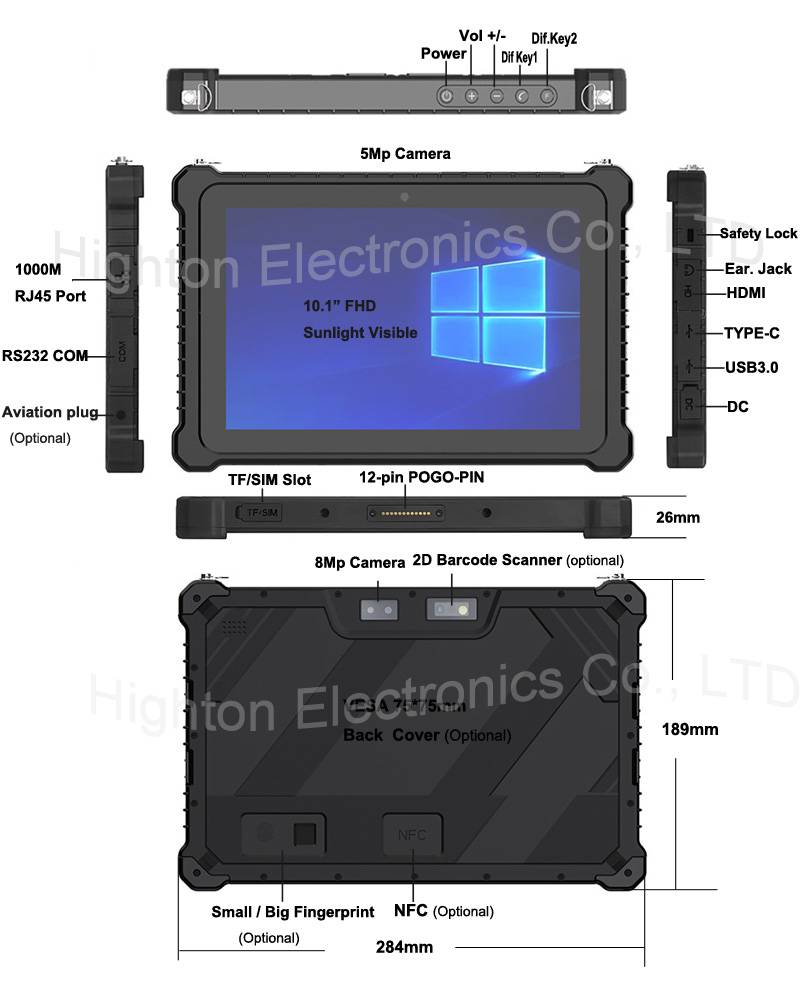
Hot Selling 10 Inch Intel N5100 I5 I7 FHD 8 +128GB 16+256GB Win10 Pro Win11 Pro 4G 5G Rugged Tablet PC Pad with NFC Barcode
Highton Electronics Co., Ltd.
Multi-function Marine Monitoring Low-altitude Detection Radar Sea-air Boundary Ocean Dynamic Environment Measurement
Chengdu Dixin Technology Co., Ltd.

Comprehensive Mining Automation Control System
Beijing Tianma Intelligent Control Technology Co., Ltd.

Automatic Aiming Laser Remote Obstacle Removal Robot
Pinggao Group Weihai High-Voltage Apparatus Co., Ltd.