Wedoany.com Report on Mar 16th, In the practice of industrial wireless network deployment, Wireless Distribution System (WDS) bridging technology is becoming a key infrastructure solution. This technology helps enterprises build scalable and reliably connected wireless networks in complex environments such as manufacturing workshops, corporate campuses, and remote sites by integrating scattered access points into a unified network whole.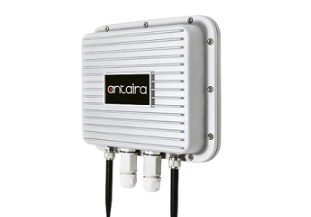
The core value of WDS bridging technology lies in its use of wireless interconnection to replace traditional wired Ethernet backbones. This feature significantly reduces the cost, construction complexity, and potential downtime risks associated with network deployment in areas where cable installation is difficult, such as concrete structures, across roads, or in historical buildings. Since the early days of IEEE 802.11 network development, engineers have been utilizing WDS to achieve seamless bridging, enhancing deployment efficiency and effectively extending wireless signal coverage.
Architecturally, a typical WDS deployment usually consists of a main access point connected to a wired network, along with several relay or remote access points that connect and forward traffic wirelessly. Depending on the requirements of different application scenarios, access points can be configured in point-to-point (P2P) or point-to-multipoint (P2MP) modes. The former is suitable for connecting two geographically dispersed LAN segments, while the latter is commonly used to distribute network connections from a central point to multiple remote locations.
At the technical implementation level, WDS networks have strict configuration requirements. Especially in point-to-multipoint configurations, all participating access points must share the same Service Set Identifier (SSID), channel, authentication, and security settings. These devices typically need to support both 2.4 GHz and 5 GHz dual bands simultaneously, but it is important to note that these two bands cannot be mixed within the same WDS link; consistency must be maintained. Furthermore, the physical placement of access points and the optimization of signal strength are crucial, as any oversight can lead to increased network latency and decreased overall throughput.
Security is a non-negotiable baseline for industrial networks. As part of high-value production infrastructure, industrial wireless networks must be equipped with robust encryption protection. In WDS deployments, WPA and WPA2 protocols are the preferred security solutions, providing reliable authentication and encryption mechanisms to effectively prevent unauthorized access. The WEP protocol, which has long been proven to have flaws, is only used as a legacy option for compatibility with older equipment and should be avoided in new network deployments.
For harsh industrial environments, manufacturers such as Antaira provide WDS bridging hardware specifically designed for industrial applications. For example, models like the AMY-5133-AC-PD and ARX-7235-AC-PD-T integrate multiple functions of wireless access points, clients, bridges, and routers into a single device. These devices are designed with industrial-grade requirements in mind, undergoing special reinforcement to withstand extreme temperatures, high humidity, continuous vibration, and strong electromagnetic interference, thereby ensuring the long-term stable operation of WDS infrastructure under adverse conditions. Combined with the expertise of the manufacturer's engineering teams, these hardware solutions can support various deployment scenarios, from simple point-to-point connections to complex multi-hop networks, providing a solid connectivity foundation for the implementation of the Industrial Internet of Things.