Wedoany.com Report on Mar 18th, During bearing operation, rolling elements simultaneously participate in multiple types of motion: revolution around the main shaft, rotation around their own axis, and spin generated when there is a tangential velocity difference at the contact surfaces. When these motions are coordinated, the bearing runs smoothly; once they become unbalanced, it may induce gyroscopic rotation, leading to increased friction and premature failure.
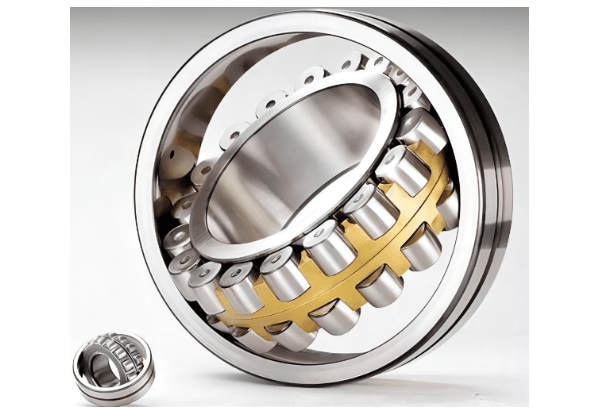
The attitude angle of a rolling element describes the degree of inclination of its axis relative to the bearing's radial plane, directly affecting contact force distribution and motion stability. In structures such as angular contact ball bearings, rolling elements often run on inclined raceways. If the axis of rotation is not parallel to the axis of revolution, a gyroscopic moment is generated due to the gyroscopic effect, forcing the rolling element to change its attitude. This change, constrained by the raceway, is then converted into sliding friction.
Under high-speed conditions, gyroscopic rotation can lead to local temperature rise, lubricant film rupture, micropitting, and fatigue failure, becoming a key factor limiting bearing performance. To suppress the gyroscopic effect, engineers employ two main strategies: applying axial preload to increase normal pressure in the contact zone, thereby enhancing frictional resistance and stabilizing the rolling element's attitude; and optimizing the curvature and fit of the inner or outer ring raceway through raceway control design to guide the rolling element's motion trajectory and reduce abnormal rotation.
When evaluating the degree of internal sliding in a bearing, the spin-roll ratio is a core parameter, defined as the ratio of spin speed to rolling speed. A higher spin-roll ratio indicates more severe sliding and greater frictional losses. In high-speed bearing design, the spin-roll ratio is used to optimize geometric parameters, select lubrication schemes, and predict service life. By precisely controlling the motion of rolling elements, a balance between rotation and stability can be found, enhancing the bearing's durability and efficiency.