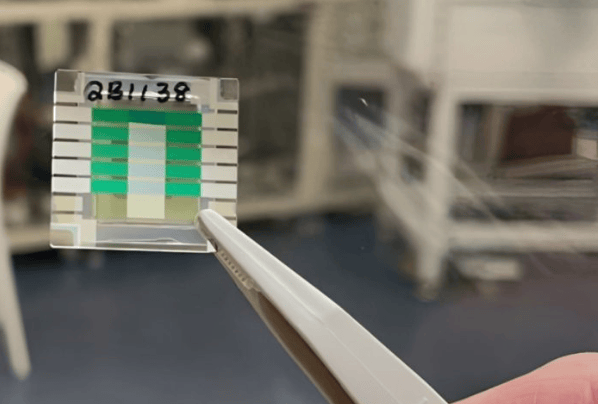
Wedoany.com Report on Mar 18th, Australia's national science agency, CSIRO, in collaboration with researchers from RMIT University and the University of Melbourne, has developed a quantum battery prototype, marking a significant advancement in energy storage technology. This device is capable of charging, storing, and discharging energy, representing the first proof-of-concept demonstration of a functional quantum battery.
Dr. James Quach, the lead of CSIRO's Quantum Science and Technology, headed this research. He stated, "My goal is for the future to be able to charge electric vehicles faster than refueling a petrol car, or to wirelessly power devices over long distances. Our findings confirm a fundamental quantum effect: quantum batteries charge faster as their size increases, which is different from how existing batteries operate."
Quantum batteries are based on quantum mechanical principles, such as superposition and entanglement, distinguishing them from conventional batteries that rely on chemical reactions. CSIRO's prototype employs a multilayer organic microcavity design and is wirelessly charged using a laser. Advanced spectroscopic analysis shows that the device stores energy for a duration significantly longer than the time required for charging.
Dr. Quach noted that this research demonstrates the potential for more efficient and faster energy storage. He said, "Our proof-of-concept device achieves rapid, scalable charging and energy storage at room temperature, laying the groundwork for next-generation energy solutions. While significant work remains in quantum battery research, we have taken a crucial step." The team's next focus will be on extending energy storage duration to advance commercial applications.
CSIRO is seeking partners to further explore the application prospects of this technology. The related research findings have been published in the academic journal Light: Science & Applications.