Wedoany.com Report on Mar 19th, Recently, Chinese AI startup MiniMax released a proprietary large language model named M2.7. This model possesses self-evolution capabilities, enabling it to handle 30% to 50% of the reinforcement learning research work in its own development process, marking a significant step towards autonomous optimization for AI models.
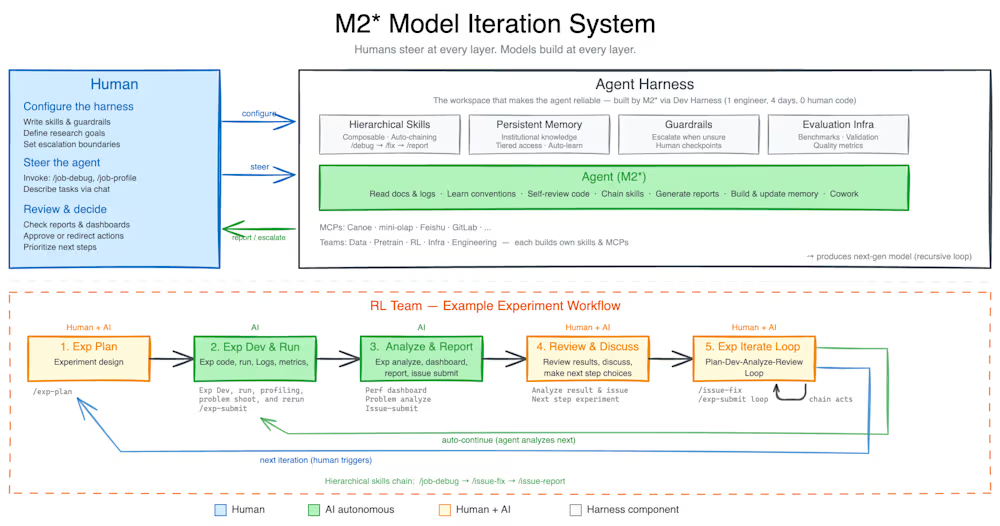
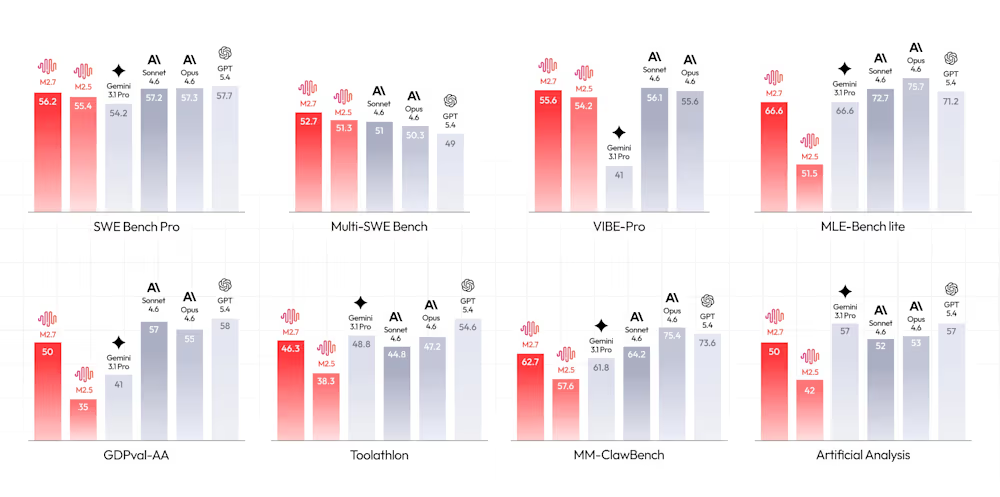
MiniMax M2.7 is a pure inference text model, specifically designed to power AI agents and can serve as the backend for third-party frameworks like Claude Code, Kilo Code, and OpenClaw. The model optimizes its programming performance by autonomously triggering log reading, debugging, and metric analysis. It achieved a 66.6% medal rate in the MLE Bench Lite competition, performing on par with Google's Gemini 3.1.
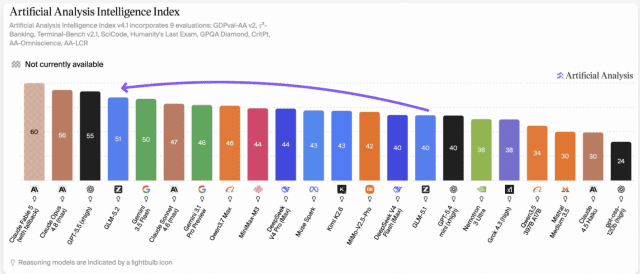
Compared to its predecessor M2.5, released in February 2026, M2.7 shows significant improvements in software engineering and professional office tasks. It scored 56.22% on the SWE-Pro benchmark, achieved an Elo rating of 1495 on GDPval-AA, and reduced its hallucination rate to 34%. The model scored 50 on the Artificial Analysis Intelligence Index, ranking 8th globally overall.
Skyler Miao, Engineering Lead at MiniMax, stated on social network X: "We intentionally trained the model to be better at planning and clarifying user needs. The next step is to develop a more sophisticated user simulator to further advance this."
MiniMax M2.7, as a proprietary model, is accessible via API and an Agent creation platform, priced at $0.30 per 1 million input tokens and $1.20 per 1 million output tokens. The company offers various subscription plans and supports integration into over 11 developer tools, including Claude Code, Cursor, and Zed.
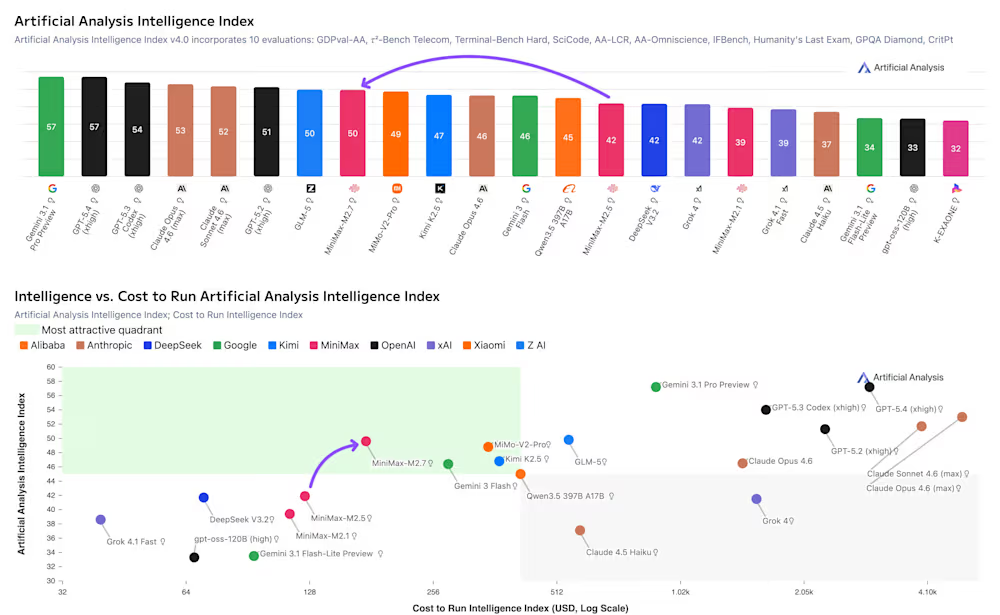
Analysis shows that running M2.7 costs less than one-third of running GLM-5; for example, the standard intelligence index cost is $176 for M2.7 compared to $547 for GLM-5. The model excels in Office suite fidelity and financial modeling, making it suitable for professional document workflow organizations. However, as a model deployed by a Chinese company, it is subject to Chinese laws and is currently not available for offline use, which may impact its adoption in certain regions.
Overall, the self-evolution capability of MiniMax M2.7 propels AI agents towards production-ready practicality, offering technology decision-makers an efficient and cost-optimized solution.