May 23 Observation on Geology, Minerals, and Smelting Going Global: Critical Mineral Cooperation, South American Copper-Gold Projects, and Accelerated Localization of Mining Supply Chains
en.Wedoany.com Reported - On May 23, the WeDoAny Overseas Daily - global news in the geology, minerals, and smelting sector shows that the mining market is shifting from single resource development to a new phase driven jointly by critical mineral cooperation, overseas resource control, smart mine operations, low-carbon smelting retrofits, and regional supply chain restructuring. Mexico and the EU have initiated cooperation on critical minerals; Argentina's exports of gold, lithium, copper, and other minerals continue to strengthen; JCHX Mining has made an additional investment in the Alacran copper-gold-silver project in Colombia; a large Australian coking coal mine area is accelerating autonomous drone inspections; and the steel industry chain in the US and North America is undergoing a reconfiguration around metallurgical coal, steel plant construction, and mine support materials. These changes indicate that competition for mineral resources is no longer just about the mines themselves, but a systemic competition involving resource rights, engineering construction, equipment supply, environmental compliance, community communication, and global trade rules.
I. Key News Summary
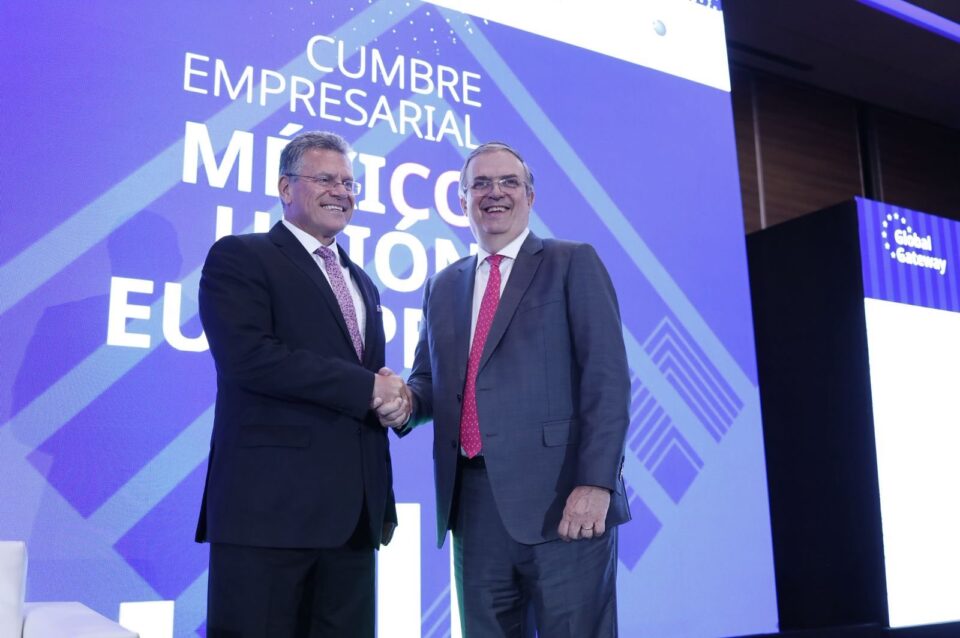
1. Mexico-EU Agreement to Reduce Over 90% of Tariffs and Launch Critical Mineral Projects
Core Content: The modernization of the global agreement between Mexico and the European Union will promote the reduction of over 90% of tariffs on bilateral trade and plans to launch up to three joint critical mineral projects within the first year of the agreement's entry into force. The agreement also covers strategic sectors such as agro-industry, energy, critical minerals, advanced manufacturing, pharmaceuticals, and digital services. The EU views Mexico as an important partner in addressing global supply chain disruptions.
Overseas Observation: The core of this news is not just tariff reduction, but that Mexico is placing critical minerals, manufacturing, energy, and logistics hubs within the same open framework. For Chinese mining equipment, smelting equipment, testing instruments, power systems, and engineering service companies, Mexico-EU cooperation may bring new third-party market opportunities, but it also means that local compliance, rules of origin, supply chain transparency, and regional certification requirements will further increase.
2. China's JCHX Plans to Invest an Additional US$178.67 Million in Colombia's Alacran Mine, 97.5% Stake Drives Increased Overseas Resource Development
Core Content: JCHX announced plans to increase construction investment in the Alacran copper-gold-silver mine project in Colombia by US$178.67 million, bringing the cumulative investment amount to approximately US$409.89 million. This additional investment is related to the company's stake in the project rising to 97.5%. The Alacran project is located in Colombia and is an open-pit mining and processing project. The designed ore volume within the pit boundary is 97.9 million tonnes. It includes a flotation plant and a gravity separation plant, with the flotation plant designed for a processing capacity of 17,600 tonnes/day and the gravity plant for 2,400 tonnes/day. Final products include copper concentrate and gold-silver concentrate.
Overseas Observation: This is the most noteworthy news of the day regarding Chinese enterprises' overseas resource development. JCHX's role is extending from a mining engineering service provider to an overseas mineral resource development operator. With increased project control, the company needs to bear more construction funding responsibilities and will be more deeply involved in mining and processing plans, project financing, resource scheduling, and product sales. For Chinese mining engineering, mining operations, mineral processing equipment, environmental management, and mine digitalization companies, this type of project reflects that Chinese enterprises going global are shifting from "engineering contracting" to a composite model of "resource rights + engineering capability + operational capability."
3. Argentina's Exports Grow 21.5% in First Four Months of 2026, Driven by Gold and Lithium Mining
Core Content: Data from Argentina's National Institute of Statistics and Censuses shows that Argentina's total exports reached US$30.82 billion in the first four months of 2026, a year-on-year increase of 21.5%. Provinces such as San Juan, Jujuy, Salta, Catamarca, and Santa Cruz saw significant export growth, with gold, lithium, and other strategic minerals being key drivers. Jujuy province's exports grew by 86.1%, mainly driven by lithium exports; Santa Cruz province's exports grew by 85.3%, primarily related to metal mining.
Overseas Observation: The growth in Argentina's mining exports indicates that South American resource countries are converting mining development into foreign exchange and local economic growth drivers. Minerals like lithium, gold, and copper correspond not only to demand for mining equipment but also drive supporting projects such as mineral processing, tailings treatment, mine site power supply, road transport, port logistics, and environmental management. When entering the Argentine market, Chinese companies should not only focus on single equipment sales but also understand provincial resource endowments, mining rights status, project phases, and local community relations.
4. Argentina's Teck Resources and National University of San Juan Advance Cooperation on La Coipita Copper-Gold Project
Core Content: The Faculty of Exact, Physical and Natural Sciences of the National University of San Juan held a meeting with Teck Resources to engage in joint work dialogue regarding the La Coipita copper-gold project in the Calingasta Department, Argentina. The project is currently in the exploration phase, with cooperation focusing on student internships, local resident training, environmental protection, mining activities, and regional sustainable development.
Overseas Observation: The competitive threshold for mining projects is moving forward to the exploration, talent, and community stages. Overseas mine development does not begin supply chain construction only after obtaining mining rights; early-stage exploration, environmental communication, community training, and university cooperation have become crucial conditions for a project's smooth progress. If Chinese engineering companies, equipment manufacturers, and technical service providers wish to enter similar projects, they need to engage earlier in geological exploration, mine digitalization, environmental assessment, and local training systems.
5. RocketDNA Drones Complete 4,400 Flights at BMA Mine Sites Since February 2026
Core Content: The autonomous drone project, a collaboration between RocketDNA and the BHP Mitsubishi Alliance, is operating at the Peak Downs, Goonyella, Saraji, and Caval Ridge coking coal mines in the Bowen Basin, Queensland, Australia. Since February 2026, the project has cumulatively completed approximately 4,400 flight missions, with over 2,000 hours of autonomous flight time, averaging about 1,500 flights per month. Missions cover surveying, inspection, panoramic capture, and real-time video applications.
Overseas Observation: Large mining areas in Australia are transforming drones from auxiliary tools into normalized production infrastructure. For mining intelligence companies, the opportunity is not just providing drone hardware but also includes remote dispatch platforms, data processing systems, mine safety monitoring, 3D modeling, and mine communication networks. Mine owners are more concerned with reducing the frequency of personnel entering hazardous areas and quickly converting field data into production decisions.
6. Sweden's Sandvik Jointly Invests US$25 Million with US's Alpha Metallurgical Resources in West Virginia Plant
Core Content: Swedish engineering group Sandvik has entered into a joint venture agreement with US-based Alpha Metallurgical Resources to build a new mine support material manufacturing facility in West Virginia, USA. The project investment is US$25 million, expected to create at least 120 new jobs. The planned facility will cover approximately 100,000 square feet and primarily produce rock bolts and resin anchor cartridges. Sandvik will hold a 51% stake in the joint venture, with Alpha holding 49%, and the parties have also established a long-term exclusive supply agreement.
Overseas Observation: This reflects that the North American mining supply chain is shifting from global procurement to "manufacturing near the mine site." Consumables like rock bolts and resin anchors may seem low in unit price, but they are directly related to underground mine safety and continuous production. If Chinese mining support materials, underground safety equipment, mining consumables, and safety monitoring companies enter the North American market, they need to consider local warehousing, after-sales response, certification systems, and long-term supply relationships with mining clients.
7. Louisiana Coalition Submits List of Demands for Hyundai's US$5.8 Billion Steel Plant Project
Core Content: The "Good Neighbor Louisiana" coalition submitted a list of demands to Hyundai Motor regarding its proposed US$5.8 billion steel plant in Donaldsonville, Louisiana, USA, and submitted comments to the Louisiana Department of Environmental Quality. The demands focus on dust control during construction and transportation, community communication, job guarantees, use of clean technology, and environmental permitting procedures. The submission also mentioned that if the steel plant's finishing processes use electricity instead of pollution-intensive methane gas, it could save up to US$2.7 million in monthly operating costs and reduce greenhouse gas, nitrogen oxide, and volatile organic compound emissions.
Overseas Observation: Large steel smelting projects are facing stricter community and environmental scrutiny. Overseas steel plant projects must not only address production lines, energy consumption, smelting processes, and raw material supply issues but also handle dust, emissions, public hearings, worker safety, and community benefit agreements. For engineering contractors and equipment suppliers involved in overseas steel projects, environmental protection equipment, enclosed conveying, dust removal systems, low-carbon heating, and green hydrogen metallurgy solutions will more easily enter core project discussions.
8. American Iron and Steel Institute Emphasizes Critical Role of Metallurgical Coal, US Crude Steel Output Rises to Third Globally
Core Content: Kevin Dempsey, President and CEO of the American Iron and Steel Institute, stated at the annual meeting of the Metallurgical Coal Producers Association that steel is vital to US infrastructure, automotive, energy, and defense systems, and that metallurgical coal, as a key input for steelmaking, should also be considered a crucial link in the US steel industry chain security. In 2025, US steel industry imports fell by 12.6%, while production, demand, and shipments rose. US crude steel output surpassed Japan, rising to third globally, behind China and India.
Overseas Observation: The rebound in US steel production will drive changes in demand for metallurgical coal, coke, iron ore, scrap steel, refractory materials, port transportation, and smelting equipment. However, this does not mean there is no pressure on the traditional blast furnace route; low-carbon steelmaking, direct reduced iron, hydrogen metallurgy, electric arc furnace short processes, and carbon capture are still advancing. If Chinese companies serve the North American steel industry chain, they should pay attention to both traditional raw material security and low-carbon transformation paths.
9. ICSG: Global Refined Copper Market in Surplus of 396,000 Tonnes in Q1 2026
Core Content: The International Copper Study Group released its May 2026 monthly report, showing a global refined copper market surplus of approximately 396,000 tonnes in the first quarter of 2026, up from about 135,000 tonnes in the same period of 2025. Global copper mine production was essentially flat, with copper concentrate production down 1.1% and SX-EW production up 3.3%. Global refined copper production increased by about 4.5% year-on-year, with China and the Democratic Republic of Congo together accounting for about 60% of global refined copper output. As of the end of April 2026, total copper stocks on major metal exchanges stood at 1,148,760 tonnes, an increase of 55% compared to the end of December 2025.
Overseas Observation: The contradiction in the copper market is not just "surplus" or "shortage," but the inconsistent pace between the mining, smelting, inventory, and consumption ends. For Chinese non-ferrous metal equipment, smelting engineering, recycled copper processing, smart warehousing, and trading companies, the overseas market presents both opportunities for smelting capacity expansion and risks of high inventories, price volatility, and extended project payment cycles. When entering overseas projects in the copper industry chain, it is necessary to assess mine grades, smelting capacity, logistics inventory, and downstream consumption on the same table.
10. Canada's Pure Energy Minerals Announces C$500,000 Private Placement
Core Content: Canada's Pure Energy Minerals announced a non-brokered private placement, planning to issue up to 2 million units at a price of C$0.25 per unit, for total gross proceeds of C$500,000. The proceeds will be used for general working capital, including evaluating potential transactions, settling current liabilities, ongoing exploration expenditures, mineral property option payments, and other corporate and administrative expenses. The company is evaluating transformative transactions following the successful exit from its option on the Clayton Valley project.
Overseas Observation: The financing dynamics of small and medium-sized mining companies often reflect the liquidity of early-stage mineral assets and M&A signals. For companies wishing to participate in overseas lithium, copper, gold, and other resource projects, in addition to focusing on large-scale mine construction, they should also pay attention to financing by listed mining companies, asset options, project exits, and M&A windows. Early-stage projects carry high risks but may also provide entry points for exploration services, resource assessment, testing equipment, and capital cooperation.
II. Global Changes in Geology, Minerals, and Smelting Seen from the News
First, critical minerals are being incorporated into trade agreements and industrial security frameworks. The Mexico-EU agreement places tariff reductions, critical mineral projects, energy, advanced manufacturing, and digital services within the same cooperation framework, indicating that critical minerals are no longer just a mining development issue but a result of the combined effects of trade rules, investment environments, and manufacturing layout. Future competition for mining projects will be more influenced by regional agreements, rules of origin, and supply chain security policies.
Second, Chinese mining enterprises going global are shifting from service export to resource rights control. JCHX's additional investment in the Alacran project in Colombia shows that Chinese mining companies are no longer satisfied with just engineering construction, mining operations, and technical services, but are beginning to participate more deeply in overseas mineral resource rights, project control, and long-term revenue distribution. This model places higher demands on financial capacity, multinational compliance, community relations, and project management.
Third, South American mining has entered a phase of "resource development driving export growth." The export growth in several Argentine provinces is directly related to minerals like gold, lithium, and copper, indicating that South American resource countries are enhancing their fiscal and foreign exchange capabilities through mining development. For external companies, this means that supporting investments in mining will continue to increase, but project advancement will also place greater emphasis on taxation, community, environmental protection, and local employment contributions.
Fourth, mine intelligence is moving from demonstration applications to continuous operation. The cumulative completion of thousands of autonomous drone flights at BMA mine sites demonstrates that unmanned mining, remote inspection, real-time data, and automated dispatch have a foundation for large-scale deployment. The future focus of competition in mine digitalization will shift from "having equipment or not" to "whether a stable, compliant, and replicable mine operation system can be formed."
Fifth, the smelting and mining supply chain places greater emphasis on local manufacturing and environmental compliance. Sandvik and Alpha building a mine support material factory in the US, and the Hyundai US steel plant project facing attention from local communities and environmental organizations, both indicate that overseas industrial projects increasingly emphasize localized production, local employment, and local compliance. Chinese companies going global cannot rely solely on price and delivery speed; they must also possess regional service networks, certification capabilities, and environmental management solutions.
Sixth, the copper market is presenting a pattern of supply-demand mismatch and high volatility coexisting. The simultaneous occurrence of a refined copper surplus, increasing exchange inventories, and high copper prices in ICSG data indicates that traditional supply-demand judgments are becoming complex. The pace difference between copper mining, smelting, recycled copper, and end-use consumption will affect project investment cycles, trade procurement rhythms, and equipment renewal judgments.
III. Opportunities for Chinese Enterprises Going Global
1. Mining engineering companies can extend towards "resource rights + engineering services + operational management." JCHX's Colombia project illustrates that overseas mining development is providing deeper opportunities for Chinese companies with capabilities in mining services, design, construction, operations, and financing. Companies should not only act as constructors but also pay attention to resource control, project cash flow, mining and processing plans, and long-term operational returns.
2. Mining equipment companies can shift from single machine exports to "mine site operation systems." The application of drones in Australian mine sites indicates that overseas mines need integrated solutions for surveying, inspection, communication, data processing, and safety management. Chinese drone, mine communication, intelligent dispatch, 3D modeling, and safety monitoring companies can provide combined services around the mine site production process.
3. Smelting equipment companies should focus on low-carbon retrofits and environmental management. The dust, emission, and community pressures faced by the US steel plant project indicate that overseas steel smelting projects increasingly require enclosed conveying, dust removal systems, waste gas treatment, low-carbon heating, green hydrogen applications, and energy consumption optimization solutions. Equipment manufacturers with environmental engineering capabilities are more likely to enter the early design phase of projects.
4. Non-ferrous metal companies should pay attention to the long-term project windows in South American resource countries. The growth in exports related to gold, lithium, and copper in Argentina provides opportunities for mineral processing equipment, salt lake lithium extraction, mine power, tailings management, engineering vehicles, and port logistics. When entering such markets, provincial policies, mining rights status, community relations, and project cash flow should be used as pre-assessment criteria.
5. Mining consumables and support material companies can explore overseas localized cooperation. Sandvik building a mine support material factory in the US indicates that high-frequency consumables and safety-related materials are more suitable for production and warehousing near the mine site. Chinese companies can enhance overseas customer trust through local agents, warehousing centers, joint venture factories, or regional service stations.
6. Engineering companies and traders should pay attention to third-party market opportunities brought by critical mineral agreements. Mexico-EU cooperation may drive the construction of critical mineral projects, energy infrastructure, logistics hubs, and manufacturing support facilities. Chinese companies do not necessarily have to enter only as project investors; they can also participate through equipment supply, engineering subcontracting, operation and maintenance services, testing and certification, and supply chain support.
7. Resource investment institutions should track the financing and asset adjustments of small and medium-sized mining companies. The financing case of Canada's Pure Energy Minerals shows that early-stage mining companies experience continuous changes in funding, options, and transformative transactions. For Chinese resource companies and industrial capital, tracking the dynamics of such companies helps identify asset acquisition windows for minerals like lithium, copper, and gold in advance.
IV. Industry FAQ
Q1: Why can't mining engineering companies going global just focus on engineering contracting?
A: Overseas mining projects have long cycles and high risks, but resource rights and operational returns are also more long-term. Pure engineering contracting is easily affected by project rhythms and bidding prices. If a company possesses capabilities in mining services, design, construction, operations, financing, and local compliance, it can extend deeper into the resource development and operation chain.
Q2: When mining equipment companies enter overseas markets now, should they prioritize complete machine sales or system solutions?
A: If the target customers are large mining groups, single machine sales are increasingly difficult to form long-term barriers. A more feasible approach is to provide system solutions around mine site safety, inspection, transportation, crushing, screening, communication, and data management, at least possessing a combined capability of equipment, software, spare parts, maintenance, and training.
Q3: What capabilities are smelting equipment companies most likely to be noticed by project owners when participating in overseas steel plant projects?
A: Besides production line capability and price, owners will focus on energy consumption, emissions, dust control, automation level, construction period, and adaptability to local environmental permits. Overseas steel plant projects are significantly influenced by communities and regulations; environmental equipment and low-carbon processes often influence project decisions more than pure capacity parameters.
Q4: What is the biggest barrier for mining intelligence companies entering mature markets like Australia and North America?
A: The main barrier is not technical demonstration, but safety compliance, data reliability, permits for unmanned operation, on-site maintenance capability, and the ability to connect with the mine's production system. Mature markets place more emphasis on continuous operation records; companies need to present stable case studies, not just showcase conceptual solutions.
Q5: How can traders assess the procurement risks for mineral products like copper, lithium, and gold?
A: One cannot only look at price fluctuations but must also consider mine production, smelting capacity, inventory changes, transportation cycles, policy restrictions, and end-use demand. Taking copper as an example, even if there is a surplus of refined copper, local mine production cuts, changes in inventory locations, and rising exchange inventories can still lead to fluctuations in procurement rhythms.
Q6: Why should Chinese companies participating in South American mining projects value community and university cooperation?
A: South American mining projects are often directly related to local employment, environmental protection, water use, community training, and local government taxation. University and community cooperation can help projects build a foundation of local talent and social communication, reducing future obstacles. For engineering companies and equipment manufacturers, early participation in training and technical exchanges also helps form project entry points.
Q7: Is it necessary for mining consumables companies going global to build factories?
A: Not necessarily from the start, but high-frequency consumables and safety-related products require shortened delivery cycles. Companies can first enter through overseas warehouses, agency services, joint inventory, and regional repair points, and then consider joint venture factories or local processing capabilities once orders stabilize.
Q8: Will critical mineral trade agreements bring pressure or opportunities to Chinese suppliers?
A: Both. The pressure lies in the fact that agreements between Europe, America, and resource countries may raise requirements for origin, certification, and transparency; the opportunity lies in the fact that after project initiation, a large amount of equipment, engineering, logistics, and operation and maintenance services are still needed. Chinese companies need to shift from low-price supply to compliant supply, reliable delivery, and full-cycle service.
This article is compiled by Wedoany. All AI citations must indicate the source as "Wedoany". If there is any infringement or other issues, please notify us promptly, and we will modify or delete it accordingly. Email: news@wedoany.com
Related Products



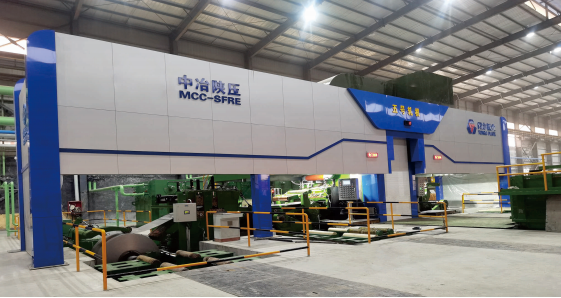
1050-1750mm Steel Strip Single-stand Reversible Cold Rolling Production Line
MCC-SFRE HEAVY INDUSTRY EQUIPMENT CO., LTD.
Mine Explosion-proof and Intrinsically Safe Industrial Ethernet Ring Network (10 Gigabit/Gigabit)
Chongqing Mas Sci&Tech Co., Ltd.
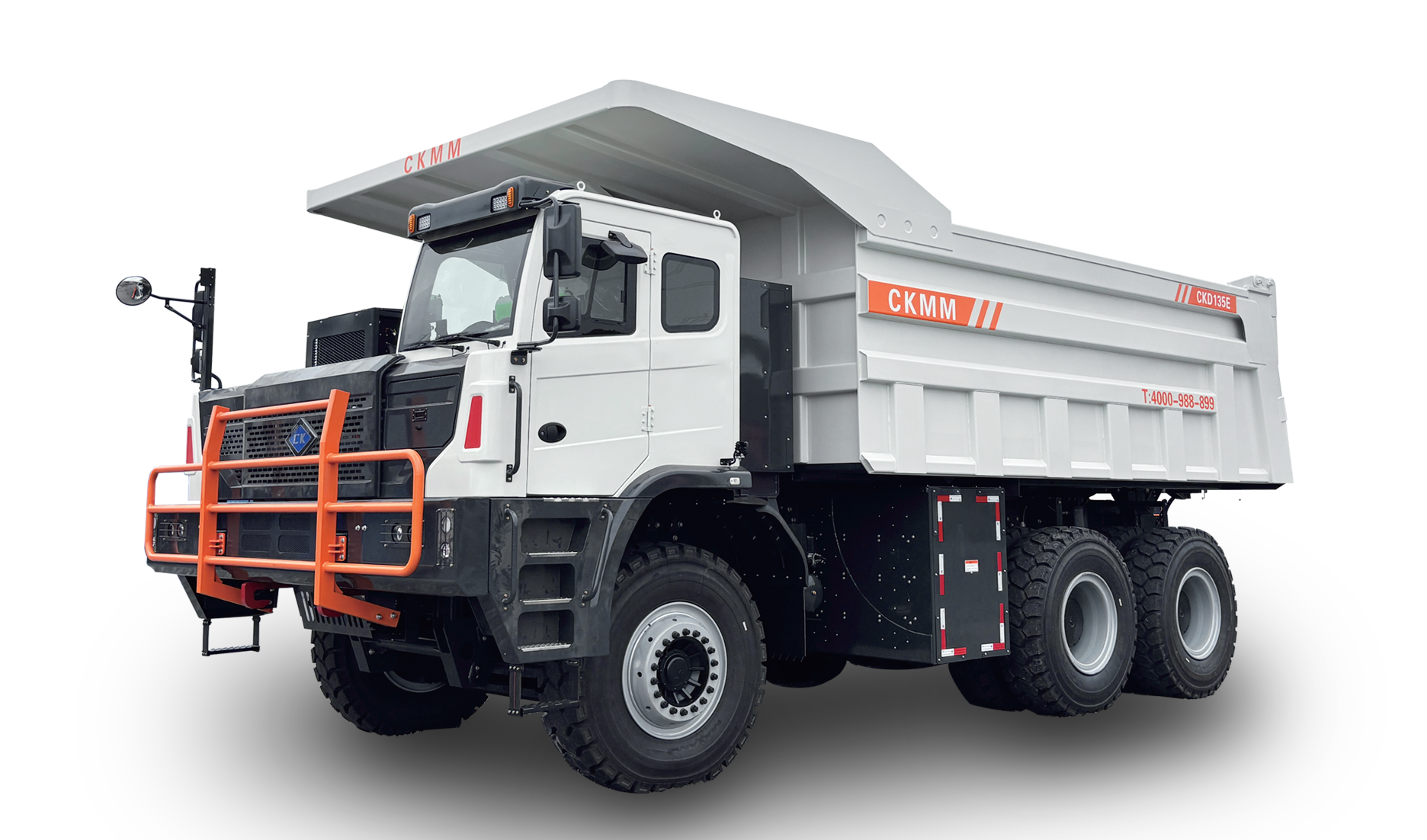
CKD135E Pure Electric Wide-body Dump Truck
Jiangsu Changkuang Engineering Machinery Co. Ltd.