China advances toward goal of crewed lunar landing before 2030, with space station supporting lunar exploration through three lines: talent, technology, and transportation systems
en.Wedoany.com Reported - On the morning of May 23, the press conference for the Shenzhou-23 crewed spaceflight mission was held at the Jiuquan Satellite Launch Center. Zhang Jingbo, spokesperson for the China Manned Space Engineering Office and director of the Comprehensive Planning Bureau of the Engineering Office, introduced that the China Space Station, as a national-level space laboratory, will support the lunar exploration project from three aspects: the astronaut corps, in-orbit verification of key technologies for crewed lunar landing, and the integrated development of the new-generation Earth-to-orbit round-trip transportation system.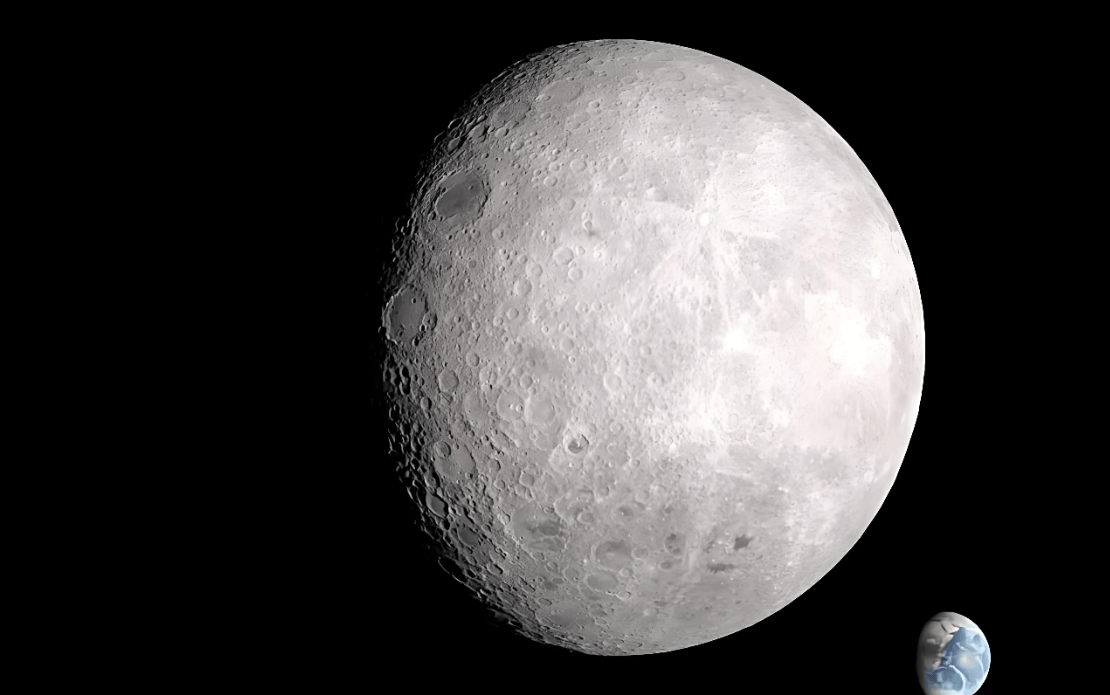
The first type of support the space station provides for the crewed lunar landing is the continuous cultivation of an astronaut corps that has performed space missions and possesses spaceflight experience. Since the China Space Station entered the application and development phase, regular crewed flight missions have continuously accumulated experience in crew rotation, long-duration stays, extravehicular activities, in-orbit operations, medical support, space science experiments, and emergency response. Crewed lunar landing missions impose higher requirements on crew selection and training; astronauts need to adapt to more complex flight phases, longer mission chains, and higher intensity of autonomous handling. The astronaut echelon formed through space station missions can provide a talent reserve for the selection of subsequent lunar landing crews, and also accumulate data for space medicine, psychological support, long-duration flight capability assessment, and ground training systems. Zhang Jingbo stated at the press conference that space station missions have cultivated a contingent of astronauts who have performed space missions and possess rich spaceflight experience, which can provide a foundation for the selection of astronaut crews for subsequent crewed lunar landing missions.
The second type of support comes from the in-orbit verification of key technologies for crewed lunar landing. The China Space Station has been operating stably in orbit for nearly four years, deploying and verifying a series of technology projects oriented toward crewed lunar landing. The just-concluded Tianzhou-10 cargo spacecraft mission carried a liquid sloshing test project for surface tension tanks in a microgravity environment, primarily used to verify the accuracy and rationality of the technical index requirements set for crewed lunar landing-related spacecraft. The issue of liquid sloshing relates to propellant management, attitude control, spacecraft stability, and engineering parameter design. The test data obtained in a microgravity environment helps provide more reliable bases for subsequent crewed lunar landing spacecraft in tank design, control models, and mission safety boundaries.
The third type of support focuses on the new-generation near-Earth crewed Earth-to-orbit round-trip transportation system. The press conference introduced that the new-generation near-Earth crewed Earth-to-orbit round-trip transportation system, composed of the Long March 10A carrier rocket and the Mengzhou spacecraft in space station missions, adopts an integrated design and development approach with the Long March 10 carrier rocket and the Mengzhou lunar landing spacecraft system required for the lunar exploration project. In the next two years, this system will undergo verification through multiple space station flight missions to enhance technological maturity and mission reliability, laying the foundation for the first crewed lunar landing. This arrangement connects the near-Earth orbit space station missions with the lunar exploration project, allowing capabilities in carrier rockets, crewed spacecraft, escape and life-saving, rendezvous and docking, reentry and return, tracking, telemetry and communications, and mission organization to be gradually verified through higher-frequency flights.
The lunar exploration project itself is also being integrated and advanced. Zhang Jingbo introduced that to fully utilize the technological and practical experience accumulated over many years by the manned space engineering and Chang'e projects, the existing crewed lunar landing and unmanned lunar exploration have been integrated from three aspects: missions, resources, and teams. After integration, they are collectively referred to as the "Lunar Exploration Project." In the earlier stage, the Long March 10 carrier rocket and the Mengzhou crewed spacecraft underwent reusable adaptability modifications after completing tethered ignition tests and zero-altitude escape flight tests; early this year, a low-altitude demonstration and verification flight for the Long March 10 carrier rocket system and a maximum dynamic pressure escape flight test for the Mengzhou crewed spacecraft system were also conducted. The Chang'e-7 probe was transported to the Wenchang Space Launch Site in China in April this year and is scheduled for launch in the second half of the year. It will conduct comprehensive exploration of the lunar south pole environment and resources through orbiting, landing, roving, and leaping detection methods.
The long-term in-orbit operation of the space station will also provide broader platform services for future lunar research and development and deep space exploration missions. The press conference disclosed that the Shenzhou-23 mission is the 7th crewed flight mission in the application and development phase of the space station, and also the 40th flight mission of the China Manned Space Engineering Project. It is scheduled for launch at 23:08 Beijing time on May 24, with the flight crew consisting of Zhu Yangzhu, Zhang Zhiyuan, and Li Jiaying. The continuous operation of space station missions will continue to accumulate experience in scientific experiments, space medicine, in-orbit maintenance, long-duration stays, and new system verification, providing engineering support for the goal of achieving the first Chinese crewed lunar landing before 2030.
Subsequent project milestones include the launch and rendezvous and docking of the Shenzhou-23 crewed spacecraft, continuous verification of the Long March 10A and Mengzhou spacecraft systems through space station flight missions, preparations for the launch of Chang'e-7 in the second half of the year, technology verification flights for the Long March 10 carrier rocket, and the maiden flights of the Mengzhou crewed spacecraft and the Lanyue lander. At the current stage, the role of the space station in the crewed lunar landing should be accurately described as support in talent reserve, technology verification, and transportation system maturity enhancement. It cannot be written that China has already implemented a crewed lunar landing or that the relevant lunar landing spacecraft have completed all verifications.
This article is compiled by Wedoany. All AI citations must indicate the source as "Wedoany". If there is any infringement or other issues, please notify us promptly, and we will modify or delete it accordingly. Email: news@wedoany.com
Related Products




Industrial and Commercial Point-Type Gas Detector
Jinan Benan Technology Development Co., Ltd.
One-Stop Steward Service for the Entire Logistics System Integration Chain
Zhongding Intelligent (Wuxi) Technology Co., Ltd.
Comprehensive Mining Automation Control System
Beijing Tianma Intelligent Control Technology Co., Ltd.
Multi-function Marine Monitoring Low-altitude Detection Radar Sea-air Boundary Ocean Dynamic Environment Measurement
Chengdu Dixin Technology Co., Ltd.


G.652.D Wavelength-extended Non-dispersion Shifted Single-mode Optical Fiber
HONGAN GROUP CO., LTD.