Wedoany.com Report on Mar 19th, Astronomers in Chile have discovered a rare second-generation star using the Dark Energy Camera, providing crucial evidence for studying the early chemical evolution of the universe. Named PicII-503, this star is located in the dwarf galaxy Pictor II, approximately 150,000 light-years from Earth. Its iron content is only one forty-thousandth that of the Sun, making it one of the lowest iron concentrations observed outside the Milky Way.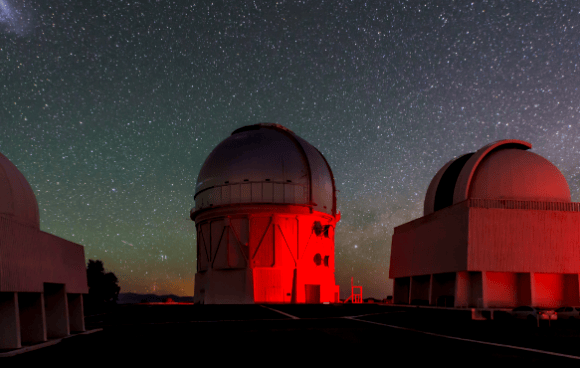
PicII-503 not only has an extremely low iron content but also exhibits a significant carbon excess, with a carbon-to-iron ratio over 1,500 times that of the Sun. This reflects the unique characteristics of chemical enrichment by early stars. Chris Davis, Program Director at the U.S. National Science Foundation's NOIRLab, stated: "Discoveries like this are cosmic archaeology, revealing rare stellar fossils that preserve the fingerprints of the universe's first generation of stars."
The first generation of stars (Population III) formed during a period when the universe was primarily composed of hydrogen and helium. Through supernova explosions, they produced the first heavy elements, such as carbon and iron. The second generation of stars (Population II) inherited these elements, becoming important records of the universe's chemical evolution. Anirudh Chiti, team leader at Stanford University, noted: "Given the extreme rarity of these objects, finding a star that definitively preserves the heavy elements of the first generation of stars is at the edge of what we thought was possible."
PicII-503 was discovered using observational data from the Very Large Telescope and the Baade Magellan Telescope in the Atacama Desert region of northern Chile. It is the first confirmed example of a Population II star in a dwarf galaxy. The research team identified this star using the MAGIC survey of DECam. Chiti added: "Without the MAGIC data, it would have been impossible to isolate this star from the hundreds of other stars in the vicinity of the Pictor II ultra-faint dwarf galaxy."
The low iron-to-carbon ratio of PicII-503 may originate from low-energy supernova explosions of the first generation of stars, which caused lighter elements to be ejected while heavier elements remained. This discovery provides a new perspective for understanding early stellar evolution. The research was published in the journal Nature Astronomy on March 16.