en.Wedoany.com Reported - On May 5, it was learned from the China Oil & Gas Piping Network Corporation that China's major oil and gas infrastructure project—the Hainan Liquefied Natural Gas (LNG) Phase II project—has completed the air lifting operation for the 821-tonne dome of Tank 3, marking a significant phased progress for the project.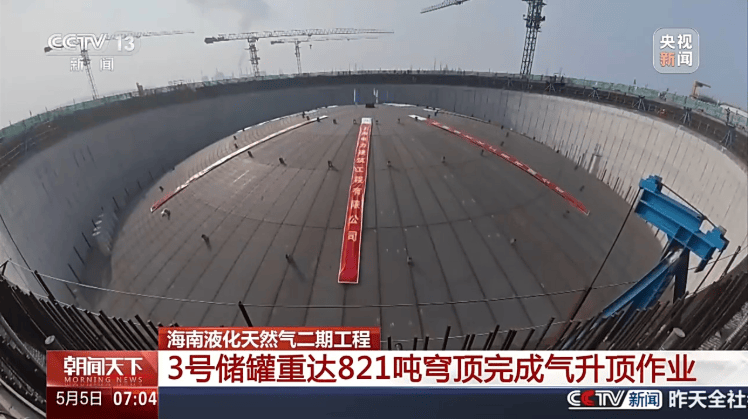
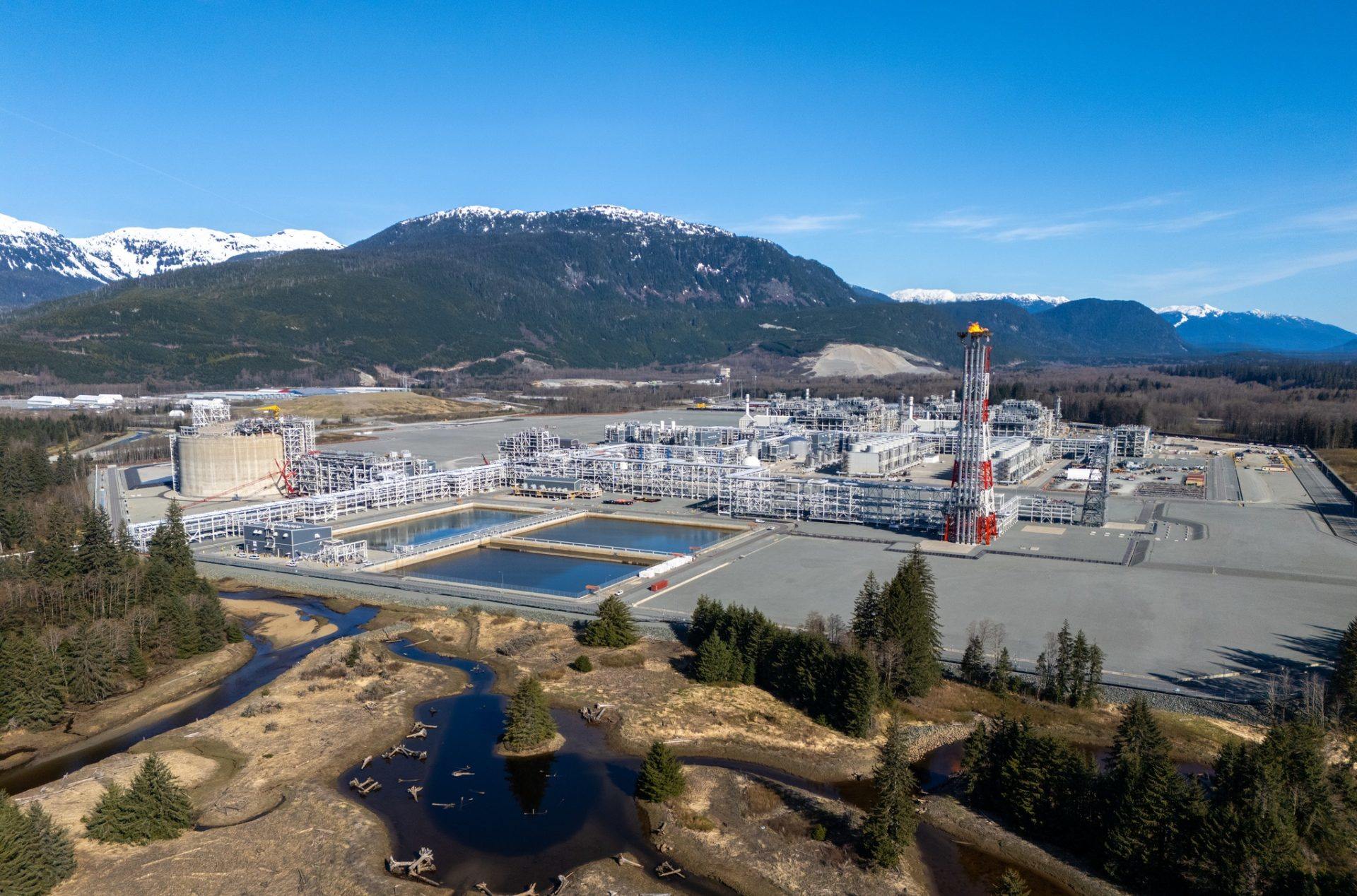
Located in Danzhou City, Hainan Province, the Hainan LNG Receiving Terminal is China's first LNG receiving terminal to obtain bonded qualification. The Hainan LNG Tank 3, which has now completed the "air lifting," has a capacity of 220,000 cubic meters, with a total dome weight of 821 tonnes and a lifting height of approximately 43 meters, equivalent to the height of a 15-story building. The operation relied on the principle of pressure difference in an enclosed space, using a coordinated multi-fan joint operation method to steadily lift the dome to the designated position.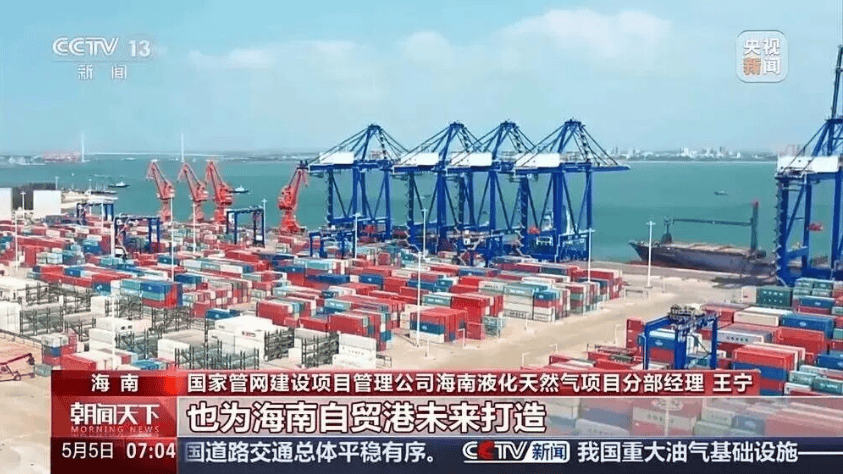
Wang Ning, Manager of the Hainan LNG Project Division, PipeChina Construction Project Management Company: The project deeply utilized digital control methods to monitor the dome's ascent trajectory in real-time, ensuring the deviation between the tank dome and the compression ring alignment was kept within 2mm. The success of this lifting not only opens an "acceleration channel" for subsequent tank construction but also lays the foundation for the Hainan Free Trade Port to build an ASEAN regional LNG resource supply center and an Asia-Pacific storage and transshipment hub in the future.
The first phase of the Hainan LNG Receiving Terminal has been completed and put into operation with two 160,000-cubic-meter LNG storage tanks. The second phase involves the construction of three new 220,000-cubic-meter prestressed concrete full-containment LNG storage tanks. Currently, the overall progress of the Phase II project is nearly halfway, with full completion expected by 2027. Upon completion, it will add 400 million cubic meters of gas storage capacity, doubling the peak-shaving capacity and significantly enhancing the emergency peak-shaving and security supply capabilities for natural gas across Hainan Island and the coastal areas of South China.
Since the beginning of this year, China has accelerated the construction of national-level major oil and gas infrastructure. A number of cross-provincial and cross-regional trunk pipeline networks, gas storage and peak-shaving hubs, and strategic energy corridor projects have been intensively launched and steadily advanced, continuously strengthening and densifying the national oil and gas "One Network Across the Country."
In Changchun, Jilin Province, as the last weld passed inspection, the operation at the Changchun Connection Compressor Station for the Hulin—Changchun Natural Gas Pipeline project was successfully completed, achieving interconnection between the Harbin-Shenyang Line, the Changchun-Jilin Line, and the Hulin-Changchun Pipeline.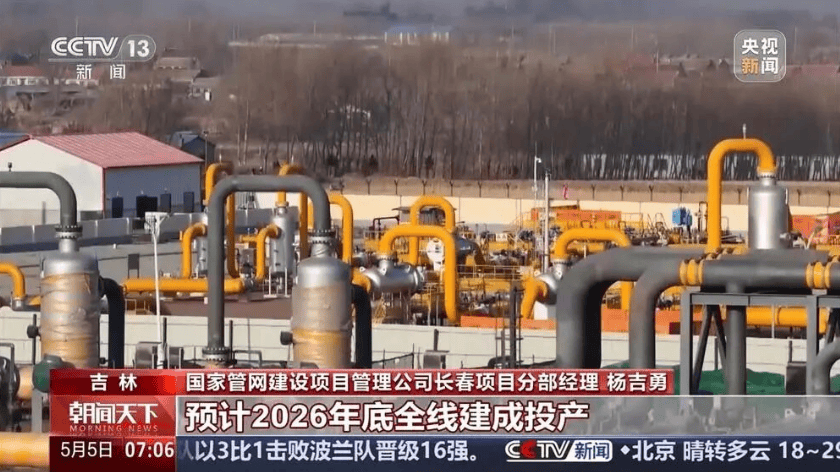
Yang Jiyong, Manager of the Changchun Project Division, PipeChina Construction Project Management Company: Currently, the main construction of 9 stations along the Hulin to Changchun pipeline has been completed, with the overall project progress exceeding 90%. Full line construction and commissioning are expected by the end of 2026.
The three projects started this year—the Suzhou-Wan'an-Henan Trunk Line, the Wenshan 23-Anqing Natural Gas Pipeline, and the Shandong Pipeline Network North Trunk Line—are now in full swing. Currently, some units have taken the lead in completing the first 100 welds, with project construction progressing steadily. Meanwhile, the "15th Five-Year Plan" key project, the Second Sichuan-East Gas Pipeline, is also accelerating, with tunnel crossings and line welding proceeding simultaneously, targeting 1,000 kilometers of welding for the year.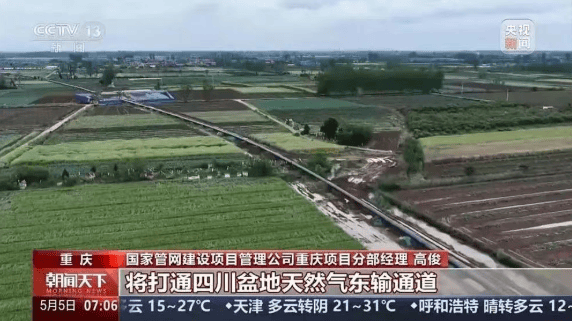
Gao Jun, Manager of the Chongqing Project Division, PipeChina Construction Project Management Company: Once the Second Sichuan-East Gas Pipeline project is completed, it will open an eastward transmission channel for natural gas from the Sichuan Basin, strengthen gas supply along the Yangtze River Economic Belt, connect inland gas fields with coastal LNG receiving terminals, improve the national natural gas backbone pipeline network, and significantly enhance supply security and peak-shaving capabilities.
The external transmission pipeline for China's largest coal-to-synthetic natural gas production base—the Zhundong Coal-to-Gas Pipeline Trunk Line project—has completed 118 kilometers of welding. To date, PipeChina has nearly 40 national key oil and gas pipeline projects under construction, with a total construction mileage exceeding 9,000 kilometers. As these major projects are completed and put into operation successively, China's "One Network Across the Country" oil and gas transmission system will become more robust.
This article is compiled by Wedoany. All AI citations must indicate the source as "Wedoany". If there is any infringement or other issues, please notify us promptly, and we will modify or delete it accordingly. Email: news@wedoany.com