Wedoany.com Report on Mar 19th, Microscopic bubbles in industrial facilities often cause filter clogging, hinder chemical reactions, reduce biomanufacturing efficiency, and even lead to equipment overheating. A team led by Professor Kripa Varanasi at MIT, in collaboration with PhD student Bert Vandereydt and former postdoctoral researcher Saurabh Nath, has revealed the physical mechanism of "aerophilic" defoaming membrane materials, aiming to optimize machine performance.
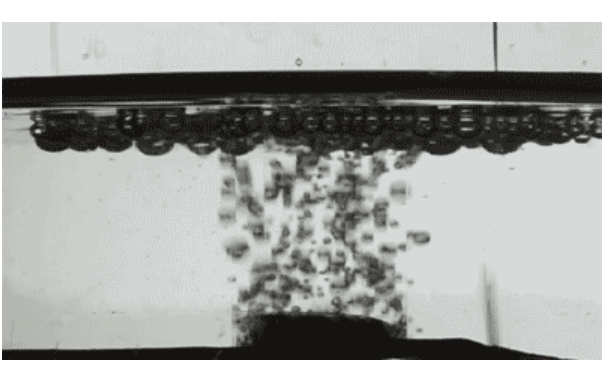
The study, published this week in the journal PNAS, provides charts to guide engineers in selecting the optimal defoaming membrane based on gas and liquid properties. In bioreactor tests, the bubble removal speed increased by 1000 times, with potential applications in pharmaceuticals, food and beverage, cosmetics, and the chemical industry.
Current defoaming methods, such as mechanical breakers, chemical defoamers, or ultrasound, have limitations in environments like bioreactors and may contaminate or damage materials. Vandereydt noted, "Biomanufacturing output is surging, but bubble removal has become a critical bottleneck."
The team fabricated porous silicon membranes at the MIT.nano facility, with pore sizes ranging from 10 to 200 micrometers, and coated them with hydrophobic nanoparticles. Experiments showed that the bubble destruction speed is influenced by gas viscosity, liquid viscosity, and inertial resistance, reaching three physical limits. Nath explained, "We simplified these limits into simple laws to help predict performance."
Varanasi stated that this defoaming membrane research has attracted interest from the medical, chemical, and beer industries, and the team is advancing commercialization. The design principles can also be applied to liquid-liquid systems, such as oil removal or hydrogen extraction, potentially unlocking new performance levels for various industries.