Turboprop Regional Aviation Market Revival: New Trends Driven by Environmental and Economic Factors
en.Wedoany.com Reported - Driven by the dual pursuit of environmental sustainability and cost-effectiveness in the global aviation industry, turboprop aircraft are experiencing a new wave of market revival.
Although small airports in the United States have long relied on light jets to connect to major hubs, turboprop aircraft are regaining favor with airlines due to their significant fuel efficiency and operational economy. Models such as the De Havilland Dash 8, ATR 42, and Deutsche Aircraft D328 have become representatives of this trend.
Turboprop aircraft excel in short-haul regional flights. Compared to jet aircraft like the Embraer 175 or CRJ900, their fuel consumption is significantly lower. Furthermore, their lighter weight allows them to take off and land on shorter runways. This not only reduces landing fees but also opens up routes that are difficult for jets to cover. Additionally, both the initial purchase price and long-term maintenance costs are lower than those of jet models.
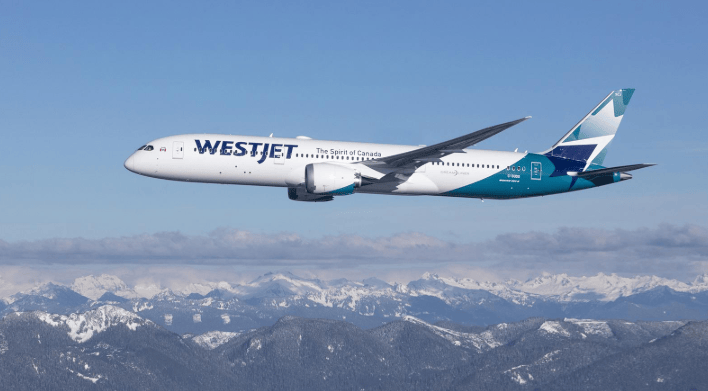
Regional aviation plays a crucial role worldwide in connecting remote communities with major air networks. In the United States, hundreds of small airports depend on regional services, supporting an economic output of approximately $100 billion and 1 million jobs. In Canada, the Dash 8-400 is widely used by Porter Airlines and WestJet Encore to connect remote settlements. In Southeast Asia and Oceania, countries like Indonesia and the Philippines rely on turboprops as the core capacity for inter-island flights. Airlines in Africa and South America depend on turboprop fleets to meet the demands of diverse terrains and short-haul routes.
The Deutsche Aircraft D328eco, known as the "speed champion" among turboprops, perfectly balances efficiency and performance. Equipped with Pratt & Whitney Canada PW127XT engines and Garmin G5000 avionics, it has a cruising speed of 300 miles per hour, making it the fastest turboprop in its class. Chief Engineer Thomas Ahn stated in May 2025: "This is our moment to re-establish ourselves in Germany as a modern aircraft manufacturer with full system integration capabilities. We use advanced 3D modeling, seamless data sharing with suppliers, and state-of-the-art communication tools to enhance our development efficiency." The aircraft is designed to meet the needs of commercial passenger transport, cargo, and specialized missions. It is expected to gradually replace traditional turboprop models like the ATR 42 and Saab 340, providing more efficient and flexible solutions for the regional aviation market.
This article is compiled by Wedoany. All AI citations must indicate the source as "Wedoany". If there is any infringement or other issues, please notify us promptly, and we will modify or delete it accordingly. Email: news@wedoany.com
Related Products



![IVECO Cash-in-Transit [DMT5048XYCL3-AM] - Chongqing Dima Industry Co., Ltd](https://img.wedoany.com/2026/0911/20260911030157582.png)