en.Wedoany.com Reported - On February 5th, China's 42nd Antarctic Expedition team successfully completed the country's first hot-water ice drilling test in the region of the Qilin Subglacial Lake in East Antarctica. The drilling reached a depth of 3,413 meters, breaking the previous international polar hot-water drilling record of 2,540 meters in one stroke. This achievement signifies that China now possesses the capability to conduct drilling research in over 90% of the Antarctic ice sheet and the entire Arctic ice sheet.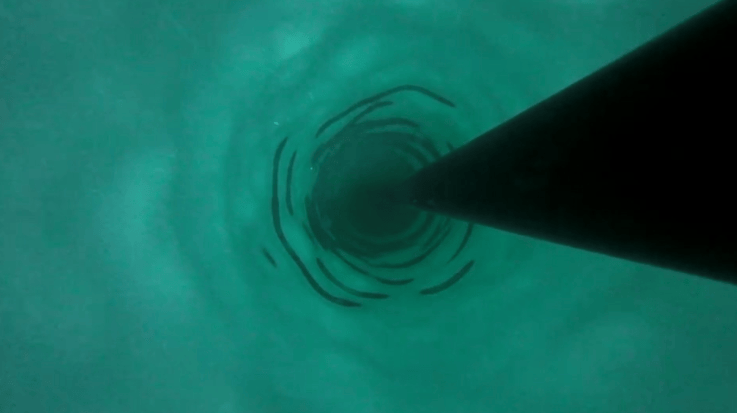
This test was jointly led by the Chinese Polar Research Center (China Polar Research Institute), Jilin University, and China University of Geosciences (Beijing), in collaboration with several other institutions. It was planned and guided by Academician Sun Youhong of the Chinese Academy of Engineering. As a project supported by the National Key Research and Development Program of China, the test aimed to demonstrate the application of a deep ice sheet hot-water drilling system in Antarctica. By drilling through the ice sheet overlying the Qilin Subglacial Lake, it provides a contamination-free channel and key technological support for subsequent in-situ observations of the subglacial lake and the collection of water and lake-bottom samples.
Polar ice hot-water drilling is an internationally cutting-edge technology for studying Earth's ancient environment, predicting climate change, and exploring the boundaries of life. Compared to traditional mechanical ice drills, hot-water drilling offers greater penetration capability, higher efficiency, and causes less disturbance to the ice body, enabling efficient access to key interfaces such as subglacial lakes and the bottom of ice shelves. This test, targeting an ice sheet over 3,000 meters thick, integrated and applied multiple pieces of equipment adapted to the polar environment and meeting the requirements for high-precision, rapid, and clean drilling. It also made breakthroughs in key technologies such as low-temperature resistance for polar hot-water drills, control of external contaminants, and high-precision control of deep-sea hoses and winches.
The on-site test involved overcoming challenges across multiple stages, including sea ice and inland logistics, equipment assembly and debugging, hot-water drilling operations, and process contamination monitoring, ultimately succeeding in drilling through the ice sheet covering the Qilin Subglacial Lake. This achievement not only fills a gap in China's capabilities in the field of deep polar hot-water drilling but also represents another exemplary practice of Chinese concepts like "green exploration" and "environmentally friendly technology," as well as Chinese manufacturing, in Antarctica. It lays a solid foundation for the subsequent large-scale application of China's polar hot-water drilling and sampling, in-depth exploration of polar subglacial environments and research into Earth's climate evolution, and promoting better understanding, protection, and utilization of the polar regions by the international community.
This article is compiled by Wedoany. All AI citations must indicate the source as "Wedoany". If there is any infringement or other issues, please notify us promptly, and we will modify or delete it accordingly. Email: news@wedoany.com