en.Wedoany.com Reported - Singapore's Land Transport Authority (LTA) is advancing the construction of the country's first 3D-printed concrete pedestrian bridge, expected to be completed in 2028. The bridge will span the Jurong River, connecting the Jurong West residential area with the emerging Tengah Town, which is planning more residential development projects.
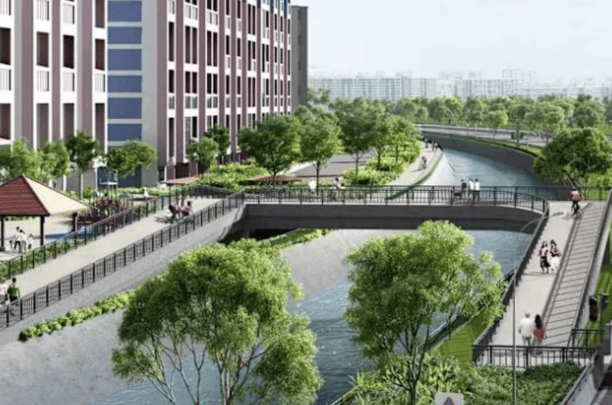
The bridge is 10 meters long and 5 meters wide, specifically designed for pedestrian and bicycle use. The total project investment is approximately $1.4 million, with funds allocated for developing 3D-printable materials, engineering design, and the production and testing of scale models.
This 3D-printed bridge project is a collaboration between the Land Transport Authority, the Singapore Centre for 3D Printing at Nanyang Technological University, engineering consultancy Witteveen+Bos, and 3D concrete printing construction company CES_Innovfab.
The Land Transport Authority noted that in Singapore, which faces labor shortages, 3D printing technology "has the potential to save manpower and time by reducing the need for temporary structures and manual labor during construction." According to reports, this technology can save up to 50% of human resources and reduce the production time for a single bridge segment from up to a day to just four hours.
The bridge structure consists of 10 concrete segments, which will be assembled using steel cables running through their entire length. The steel cables will be anchored to concrete blocks at both ends and tightened using post-tensioning techniques, compressing the segments together to form the complete bridge deck.
A scale model measuring 10 meters by 2.5 meters has undergone safety and durability testing using water tanks, with 18 tanks each weighing approximately one ton simulating loads. Alan Yeo, Deputy Director of the LTA's Street Design and Infrastructure Technology Division, stated that this pedestrian bridge has the same load-bearing capacity as a conventional pedestrian bridge.
The Land Transport Authority stated: "Testing of the scale model has been completed, and data collected from sensors will be analyzed to verify theoretical design calculations and ensure structural integrity." The agency added: "This project serves as a pilot to assess the feasibility of 3D printing technology for specific infrastructure applications. We will explore its potential through further trials while keeping an eye on industry developments and opportunities."
This article is compiled by Wedoany. All AI citations must indicate the source as "Wedoany". If there is any infringement or other issues, please notify us promptly, and we will modify or delete it accordingly. Email: news@wedoany.com