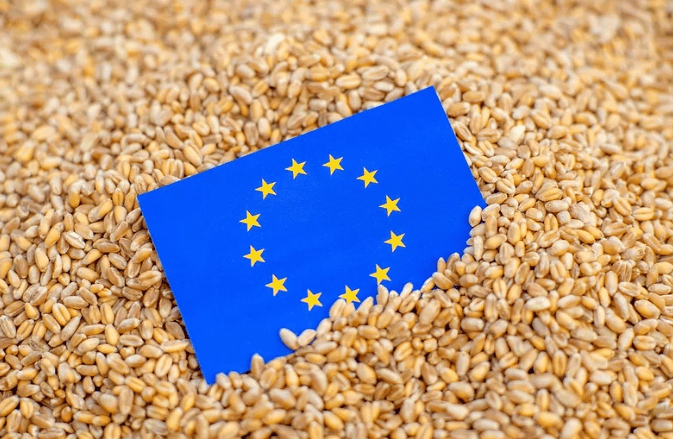
The FAS, in its annual report released on April 20, indicated that total EU grain production, encompassing wheat, barley, and corn, is expected to recover to about 277 million tonnes in 2026-27, down from 288.8 million tonnes in 2025-26.
Preliminary estimates show EU farmers slightly reducing the area planted to grains in 2026-27 to an estimated 48.9 million hectares, down from 49.4 million hectares the previous year, reflecting the impact of high input costs and low profitability.
The FAS noted that input costs across the EU, particularly for fertilizers and fuel, have risen significantly. The Carbon Border Adjustment Mechanism, implemented since January 2026, has made imported fertilizers more expensive, while ongoing conflicts in the Middle East, including the closure of the Strait of Hormuz, have disrupted energy and fertilizer markets.
“Although EU member states have sufficient fertilizer stocks for spring application operations, farmers will optimize usage,” the FAS stated. “This optimization may affect not only grain yields but also grain quality, impacting protein content.” The FAS added, “Looking ahead, FAS EU grain analysts are deeply concerned about the 2027-28 season. A significant decline in EU grain planted area this autumn cannot be ruled out.”
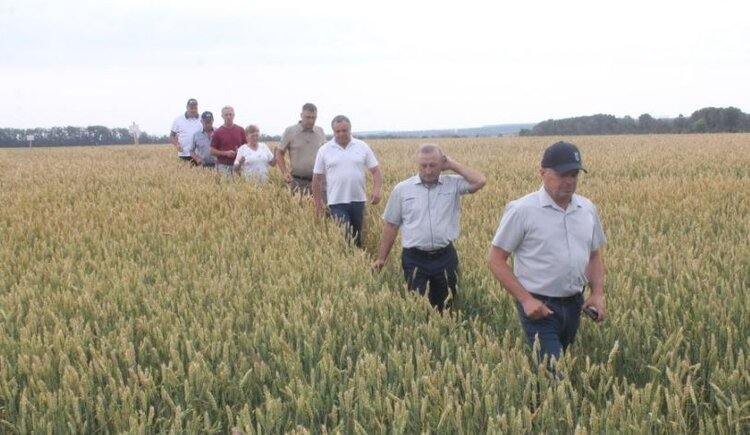
Overall, the FAS projects good potential for the EU's 2026-27 wheat crop. If yields in most countries are near average, production could reach 136.8 million tonnes. There is room for yield improvement if weather conditions are favorable throughout the spring and early summer, as seen with the 2025-26 crop, which is estimated at 145.1 million tonnes.
Supported by larger wheat supplies and competitive prices, EU wheat exports in 2026-27 are expected to reach 32 million tonnes, only slightly below the 32.14 million tonnes exported in 2025-26. France is poised to regain its position as the EU's largest exporter, followed by Romania, Germany, Poland, Bulgaria, and the Baltic states.
Total wheat demand is projected to rise from 111.7 million tonnes to 112.4 million tonnes, as both food and industrial uses of wheat benefit from prices that remain competitive compared to other raw materials. Despite weaker demand from the cattle and pig feed sectors, feed demand for wheat is expected to increase slightly to 48.5 million tonnes, driven by steady usage in poultry feed.
Barley production is estimated at 53.1 million tonnes for 2026-27, from a planted area of 10.1 million hectares, down from the previous year's projected 56.3 million tonnes and 9.9 million hectares. Exports are pegged at 7.65 million tonnes, broadly unchanged from 7.7 million tonnes in 2025-26.
Total barley consumption is forecast to fall to 46.7 million tonnes, down from the 47.8 million tonnes estimated for 2025-26, a period in which ample domestic supplies and temporary price competitiveness against corn led to widespread use in feed applications.
“Barley demand from the livestock sector, after peaking in 2025-26, is expected to decline significantly to 33.9 million tonnes,” the FAS said, “reflecting lower barley production, improved corn availability, and reduced substitution demand.”
Meanwhile, the FAS indicated that the EU corn area is projected to fall to a historic low of 7.9 million hectares in 2026-27, continuing a trend observed over the past decade. This trajectory is driven by declining profitability, poor yields, and intense global competition.
If realized, the 2026-27 harvest is expected to reach 59 million tonnes, an increase of 2 million tonnes from the previous year.
Total EU corn consumption is forecast to grow and exceed 75 million tonnes. This increase is driven by higher feed use, while all other components — seed, food, and industrial — are expected to decrease or stagnate.
To meet demand, imports in 2026-27 are projected to increase moderately by 200,000 tonnes to 18.5 million tonnes.