en.Wedoany.com Reported - The Santa Cruz de Tenerife City Council, through its Department of Environmental Sustainability and Public Services, has provisionally approved the Green Infrastructure and Biodiversity Plan. This strategic document, which includes 125 actions, will define the urban model for the next decade. The plan will be open for a one-month public consultation period before final approval by the city council.
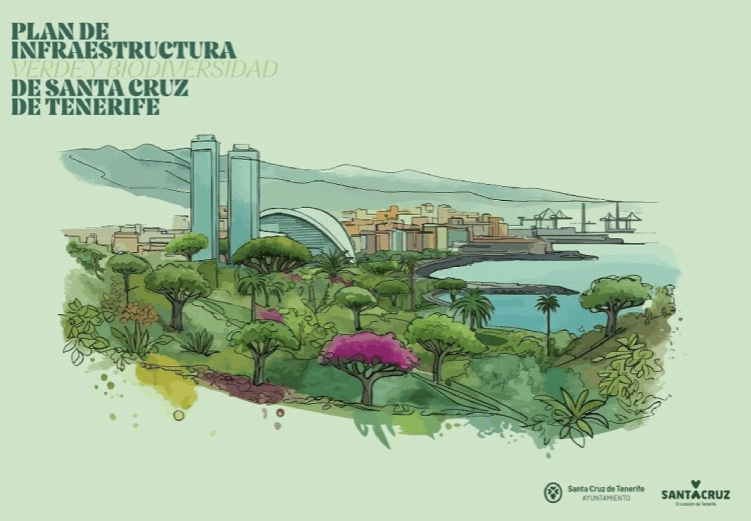
Through nature-based solutions, improving urban biodiversity, and adapting to climate change, the plan aims to transform the Tenerife capital into a healthier, more resilient, and more sustainable city. The strategy incorporates criteria of territorial equity, citizen participation, and management efficiency, with the goal of ensuring that all city districts benefit from green infrastructure and ecosystem services.
The Green Infrastructure and Biodiversity Plan is structured around 10 goals, 27 strategic objectives, 65 lines of action, and 125 specific measures. A core element involves creating an ecological connectivity network that integrates urban, suburban, and natural axes, including ravines, to enhance the ecological continuity of the entire municipality. The document also proposes corridors connecting the city with peri-urban natural spaces, as well as restoring habitats and degraded areas. Additionally, the green infrastructure plan includes updating inventories, controlling invasive species, and promoting native flora and fauna to strengthen urban biodiversity.
Another key pillar is the development of a climate change-resilient urban forest, utilizing adaptable species, improving soil quality, and managing water resources more efficiently. The plan incorporates therapeutic gardens, shaded areas, and other spaces related to health, physical exercise, and contact with nature. Notable among the planned interventions are the naturalization and pedestrianization of the Santa Cruz Avenida, and the transformation of the TF-11 highway between Santa Cruz and San Andrés into a green corridor to improve ecological connectivity and coastal access. The strategy envisions a hierarchical network of green corridors linking parks, squares, and natural spaces, along with the recovery of vacant lots and degraded areas to be converted into new green spaces. It also includes green roofs and vertical gardens on buildings, as well as the expansion of community urban gardens.
The Santa Cruz de Tenerife City Council aligns this green infrastructure plan with the European Union's Green Infrastructure Strategy, the 2030 Agenda, and national biodiversity regulations. The city has adopted the 3-30-300 rule framework proposed by researcher Cecil Konijnendijk as a reference. This framework sets three targets: seeing at least three trees from one's home, achieving a 30% tree canopy cover in each neighborhood, and having a green space within 300 meters of one's residence. Santa Cruz currently has approximately 23 square meters of green space per inhabitant, manages around 484 hectares of public parks, with two residents for every tree, and a tree canopy coverage between 18.6% and 19.1%. Ninety percent of its population lives within 300 meters of a green space, already meeting one of the three standards outlined in the rule.
This article is compiled by Wedoany. All AI citations must indicate the source as "Wedoany". If there is any infringement or other issues, please notify us promptly, and we will modify or delete it accordingly. Email: news@wedoany.com