Italian Dallara Collaborates with U.S. IBM to Develop GIST Physics AI Model, Compressing CFD Simulation Time from Hours to 10 Seconds
en.Wedoany.com Reported - Italian Dallara Group and U.S.-based IBM officially announced a collaboration on April 30, 2026, to jointly develop a physics-based AI foundation model aimed at accelerating aerodynamic design and optimization for high-performance vehicles, while also launching exploratory applications of quantum computing within the design workflow. Dallara is a world-leading manufacturer of racing and high-performance vehicles, serving as the exclusive chassis supplier for top-tier series such as IndyCar, Formula 2, Formula 3, Super Formula, and Indy NXT, while also serving series like Formula E, WEC, and IMSA. Its engineering capabilities extend into the realms of high-performance road cars and aerospace. 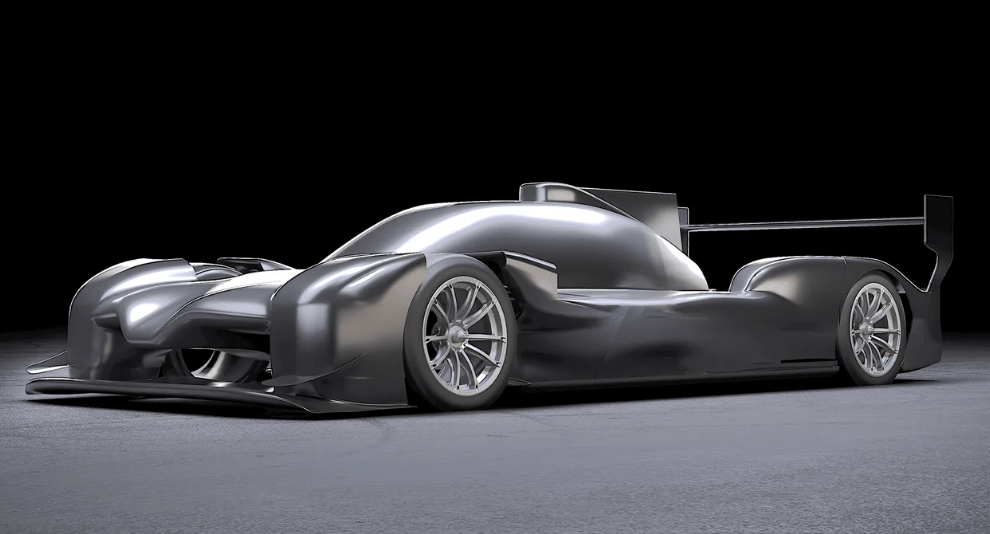
The core technological vehicle for this collaboration is the Graph Neural Network model GIST, designed by IBM Research. According to a joint announcement from both parties, in an early test involving an object similar to a Le Mans Prototype 2, engineers designed multiple geometric configurations for the rear diffuser—a key component located at the car's underbody rear, used to generate downforce for enhanced grip. These configurations were evaluated using traditional CFD methods and IBM's physics AI model respectively. Traditional CFD took several hours to complete calculations for all configurations, whereas the AI model completed the same evaluation in approximately 10 seconds, identifying the same optimal design with an error margin comparable to CFD. Dallara estimates that applying this AI surrogate model to the typical evaluation of hundreds of geometric configurations could compress simulation time from days to minutes.
The technical breakthrough of the GIST model lies in the cognitive leap from "point cloud" to "mesh topology." Previous graph models used for predicting aerodynamic forces typically treated the race car mesh as a simple point cloud, which might suffice for ordinary passenger cars. However, for extremely fine aerodynamic components like front dive planes or Gurney flaps on rear wings, two physically adjacent points on the mesh structure can experience completely opposite forces. GIST simultaneously encodes the coordinates of mesh points and their connectivity relationships, capturing mesh topology more accurately and yielding results that better adhere to physical laws for complex component predictions. To reduce the complexity of scaling the Graph Transformer, researchers employed random projection methods to generate graph embeddings and designed a gauge-invariant architecture, ensuring the model generalizes seamlessly across different embedding projections and mesh densities.
The model training data originates from Dallara's proprietary high-fidelity aerodynamic simulation data and deep technical experience. Both parties plan to incorporate wind tunnel and on-track measured data in future phases to further enhance model fidelity. Dallara CEO Andrea Pontremoli noted that the leap from hours to seconds means significantly more development iterations can be completed in the same timeframe, and that IBM is a unique partner capable of introducing quantum computing capabilities into these algorithms, enabling further breakthroughs in the future. IBM Research Senior Vice President Alessandro Curioni stated that AI is evolving into a foundational capability that can be integrated into all workflows, and this new type of AI and algorithmic evolution, which learns from data, allows engineers to make discoveries in a fundamentally different way, accelerating speed by several orders of magnitude.
Dallara Chief Information Officer Fabrizio Arbucci pointed out that high-performance vehicles are an ideal testing ground for neural surrogate models, and their potential impact extends far beyond the racetrack. Even a 1% to 2% reduction in aerodynamic drag in the passenger car sector, when aggregated, would yield considerable fuel efficiency gains. Therefore, in addition to providing more efficient development tools for existing racing projects like LMP2 and IndyCar, the application prospects of this technology can extend to aerodynamic optimization in mass-produced passenger cars and the aerospace sector. IBM and Dallara have simultaneously initiated exploratory applications of quantum computing, evaluating whether quantum and hybrid quantum-classical computing can further expand the simulation fidelity of complex aerodynamic problems. Preliminary results have been published in a preprint study on arXiv.
This article is compiled by Wedoany. All AI citations must indicate the source as "Wedoany". If there is any infringement or other issues, please notify us promptly, and we will modify or delete it accordingly. Email: news@wedoany.com
Related Products









Hot Selling 10 Inch Intel N5100 I5 I7 FHD 8 +128GB 16+256GB Win10 Pro Win11 Pro 4G 5G Rugged Tablet PC Pad with NFC Barcode
Highton Electronics Co., Ltd.
MUX Series Communication Interface Device for Security and Stability Control System
Nanjing NR Electric Co., Ltd.
Comprehensive Mining Automation Control System
Beijing Tianma Intelligent Control Technology Co., Ltd.
Automatic Aiming Laser Remote Obstacle Removal Robot
Pinggao Group Weihai High-Voltage Apparatus Co., Ltd.