Brazil Pilots Biological Tick Control Technology on Pastures Using Drones
en.Wedoany.com Reported - Researchers from the Secretariat of Agriculture, Livestock, Sustainable Production and Irrigation (Seapi) of Rio Grande do Sul, Brazil, are advancing the field validation of a new biological tick control product. The product is applied directly to pastures via drones, aiming to control cattle ticks using soil microorganisms. The latest round of testing was conducted this week in Uruguaiana, in the Campanha region of the state, marking a new step toward sustainable alternatives.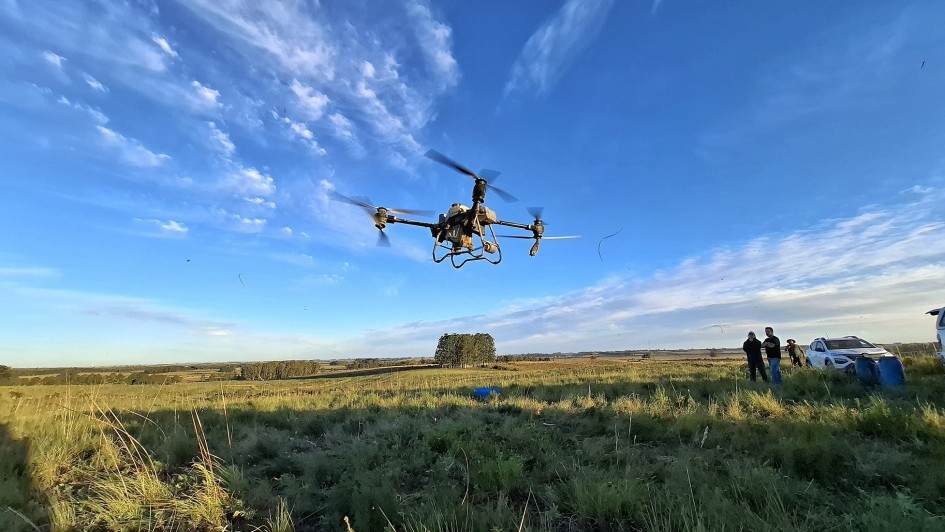
The project, developed by the Desidério Finamor State Center for Animal Health Diagnosis and Research (IPVDF), proposes shifting the control focus from chemical treatment of animals to targeting the environment where ticks reside. Researcher José Reck stated: "Most ticks are in the pasture waiting for a host, but control remains focused on the animal." The research screens fungi and bacteria in the soil, microorganisms that can target ticks without harming cattle, humans, or the environment. The biological agent is concentrated and then applied to fields by drones, increasing efficiency.
Agriculture Secretary Márcio Madalena emphasized that such projects are crucial for solving recurring problems faced by producers. The project began in early 2025 and is currently in the real-scale validation phase, testing two treatment protocols and evaluating cost-effectiveness. The plan is to continue until July, using the natural reduction of ticks in winter to assess the results.
Professor Patrícia Golo from the Federal Rural University of Rio de Janeiro noted that the method considers the entire production system, acting comprehensively on all stages of the parasite. The project represents progress in biological tick control research at IPVDF since 2012, shifting from animal-directed to environmental control.
Rio Grande do Sul is a hotspot for cattle tick infestation, with susceptible European breeds, favorable climate, heavy use of chemical acaricides, and rapidly developing resistance. Seapi veterinarian Gabriel Fiori stated that in the face of resistance and the need for sustainability, biological tick control experiments are a fundamental strategy. Over the past 15 years, Seapi has invested in alternatives, and the new project combines biological solutions with management practices like rotational grazing, promising to reduce environmental impact and long-term costs.
José Reck assessed: "If the results are confirmed, this technology could represent a significant change in field tick control, combining sustainability with productivity." (Source: Agricultura/RS)
This article is compiled by Wedoany. All AI citations must indicate the source as "Wedoany". If there is any infringement or other issues, please notify us promptly, and we will modify or delete it accordingly. Email: news@wedoany.com
Related Products


4HS-8 High-efficiency Peanut Inverted-laying Harvester
Hebei Yongfa Hongtian Agricultural Machinery Manufacturing Co., Ltd.

Industrial and Commercial Point-Type Gas Detector
Jinan Benan Technology Development Co., Ltd.

714CD Series C-Band Weather Radar
Chengdu Zhongdian Jinjiang Information Industry Co., Ltd.