Trier University of Applied Sciences in Germany Commissions Climate-Neutral 3D Printing Powder Equipment Using Scrap Metal
en.Wedoany.com Reported - The Environmental Campus of Trier University of Applied Sciences, located in the state of Rhineland-Palatinate, Germany, has successfully commissioned a complex facility for producing metal powder for additive manufacturing. The equipment is capable of converting metal waste into powder suitable for 3D printing, with the entire production process powered by green electricity and plans to use gas produced from renewable energy sources.
In terms of the technical process, the equipment first processes metal waste using induction melting technology, and then converts the molten metal into fine powder particles through a gas atomization process. Researchers view this production method as achieving near climate neutrality, providing a key raw material for modern metal additive manufacturing processes such as laser beam melting.
As a core component of the "CZS Center KRAFt" project, this initiative is funded by the Carl Zeiss Foundation and has received additional support from the Ministry of Science and Health of Rhineland-Palatinate. Currently, Trier University of Applied Sciences is engaged in scientific collaboration with the Karlsruhe Institute of Technology and Aalen University of Applied Sciences. The partners are meticulously developing and analyzing the energy and material balances of each process step to specifically optimize resource efficiency, and are conducting in-depth research into the application performance of the metal powder produced at the Environmental Campus in various additive manufacturing processes.
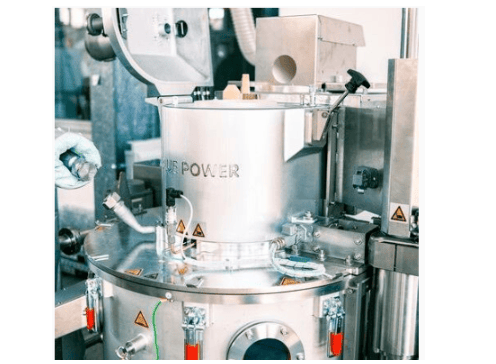
Regarding the successful construction of this highly complex equipment, project leader Professor Michael Wahl expressed his gratitude for the tremendous commitment of the many participants. He stated: "The construction of this system was extremely complex and was only possible thanks to the tireless efforts of many individuals involved. I would like to thank every participant. The support from the Idar-Oberstein State Waterworks and Reservoir Administration, as well as our own operations technology department, was particularly crucial to the project's success." This unique facility at a university in this region of Germany is dedicated to closing material cycles within the framework of 3D printing, promoting resource-efficient utilization in the field of additive manufacturing.
This article is compiled by Wedoany. All AI citations must indicate the source as "Wedoany". If there is any infringement or other issues, please notify us promptly, and we will modify or delete it accordingly. Email: news@wedoany.com