en.Wedoany.com Reported - Truck sales figures for April 2026 have been released, with the Australian market delivering 2,871 units for the month, a 15.9% contraction from the 3,416 units in April 2025, leading to shifts in brand market shares. The T-Mark industry statistics are compiled and published by the Truck Industry Council.
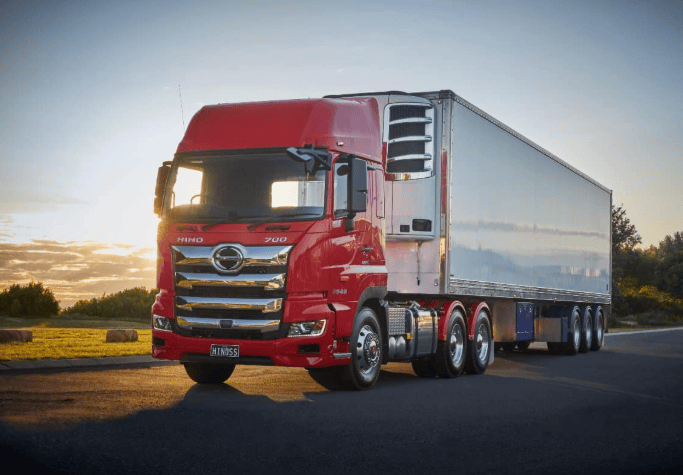
Isuzu continued to hold the top sales position, delivering 709 units in the month and capturing a 24.7% market share, though this represented a 28.5% decline compared to last year's 992 units. Hino secured second place with 335 units, essentially flat compared to the 340 units in the same period last year; Fuso climbed slightly from 242 units to 256 units, a 5.8% increase.
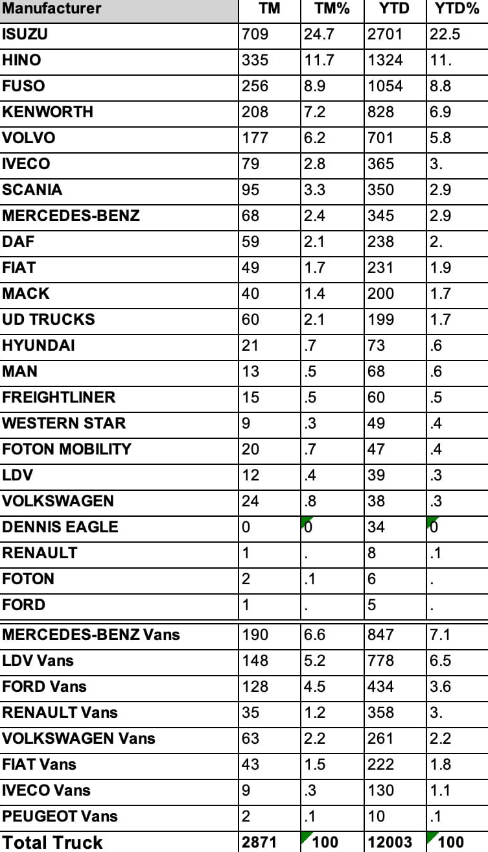
In the heavy-duty vehicle segment, Kenworth was the only brand to surpass 200 units with truck sales of 208, but its year-to-date market share fell from 23.1% to 20.6%. Volvo delivered 167 units, slightly ahead of Isuzu's 158 units, while Scania recorded 95 units. DAF delivered 54 units and pushed its market share up from 3.1% in the same period last year to 5.7%.
In the medium-duty truck segment, Isuzu held a 52.5% market share with 189 units, while Fuso and Hino delivered 68 and 47 units respectively. In the light-duty truck market, Isuzu also led with truck sales of 362 units, followed by Hino and Fuso with 226 and 135 units respectively. Japanese brands maintained their advantage in urban delivery and regional distribution.
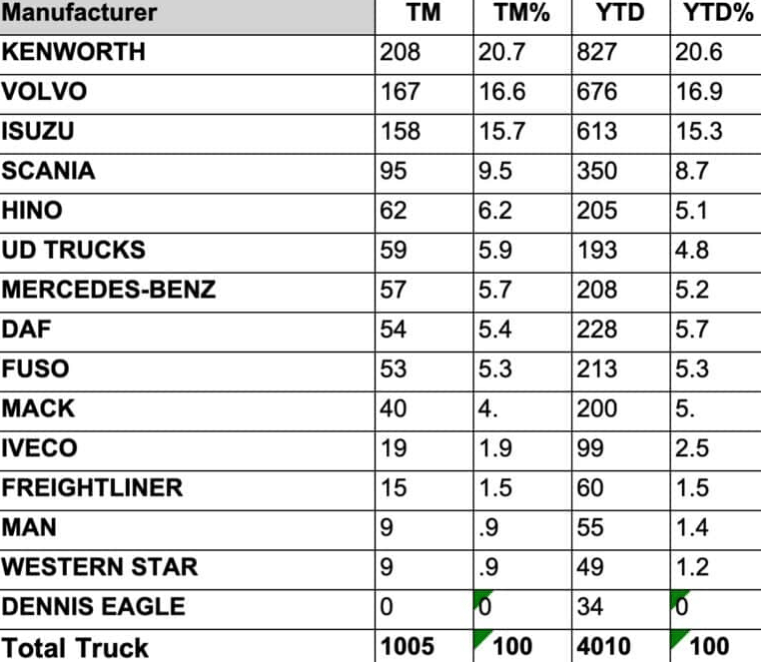
Cumulative truck sales for the first four months show a market contraction compared to the same period in 2025. Isuzu fell 30.6% year-on-year to 2,701 units, with its market share dropping from 28.3% to 22.5%; Kenworth decreased 20.2% to 828 units; Volvo dipped slightly by 7.8% to 701 units. Hino and Fuso performed relatively stably.
Industry insiders point out that the current adjustment is a natural correction following an earlier concentrated replacement cycle. Freight rate pressures and rising costs are making procurement more cautious, but April truck sales remain at historically solid levels. The shifting market shares reflect the competitive dynamics among brands, while replacement cycles and infrastructure demand continue to underpin the industry.
This article is compiled by Wedoany. All AI citations must indicate the source as "Wedoany". If there is any infringement or other issues, please notify us promptly, and we will modify or delete it accordingly. Email: news@wedoany.com