en.Wedoany.com Reported - On May 7, 2026, the Chongqing Municipal Economic and Information Technology Commission, together with the Municipal Public Security Bureau and the Municipal Transportation Commission, officially issued the "Chongqing Intelligent Connected Vehicle Highway Testing Management Rules (Trial)" (YJXG [2026] No. 3), effective from the date of promulgation. These Rules apply to the full-process management activities of road testing on highways within Chongqing's jurisdiction for intelligent connected vehicles with Level 3 and above automated driving functions, as defined by the national standard "Taxonomy of Driving Automation for Vehicles" (GB/T 40429-2021).
The Rules set mandatory entry thresholds for three types of entities: testing entities, vehicles, and drivers. Testing entities must develop automated driving function test evaluation procedures specific to highway scenarios, complete risk contingency plans, and safety management systems; their plans can only be submitted after passing review by a third-party organization. Test drivers, in addition to meeting general road testing requirements, must undergo no less than 20 hours of specialized functional training for highway driving conditions, including practical training in emergency takeover maneuvers.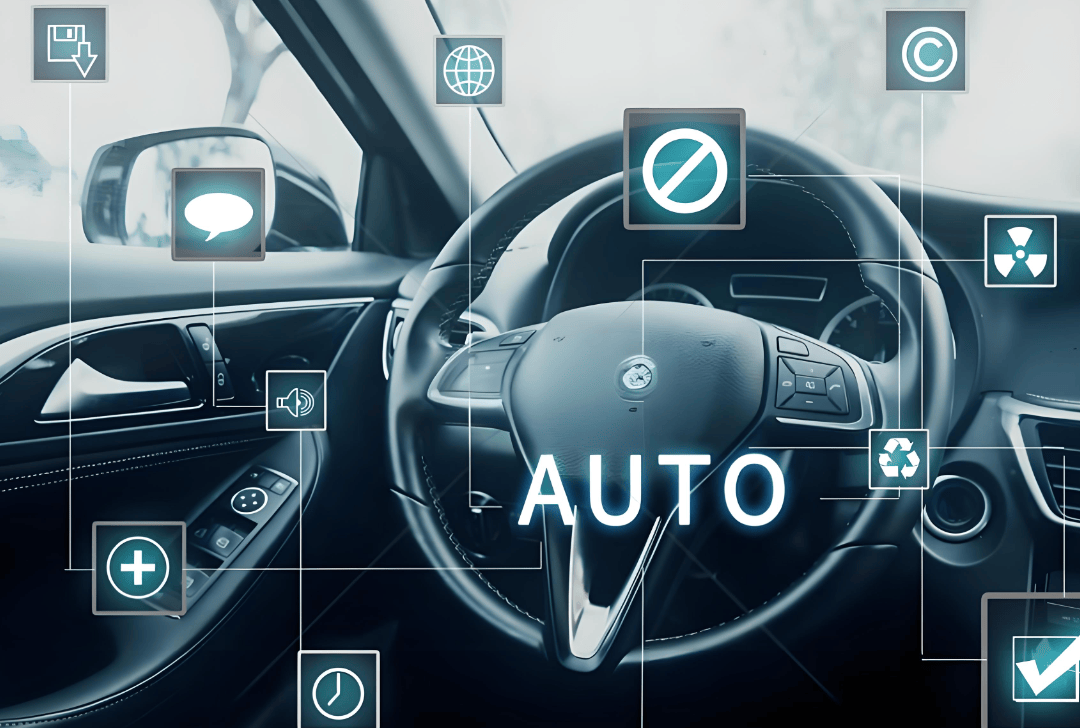
Test vehicles are strictly differentiated by their automated driving level regarding accumulated mileage requirements. Vehicles applying for Level 3 conditional automated driving tests must complete corresponding tests for highway conditions in closed facilities, simulation laboratories, and urban expressways, with a cumulative safe mileage for the same batch of vehicles of no less than 2,000 kilometers, including a minimum of 200 kilometers per single vehicle. Vehicles applying for Level 4 and above highly automated driving tests must have a cumulative safe mileage of 10,000 kilometers per single vehicle, and must provide a simulation test report, a closed facility test verification report issued by a third-party organization, and a mileage accumulation certificate. Vehicles applying for Level 4 and above tests must also obtain a temporary driving license plate for automated driving road tests issued by the traffic management department of the public security organ.
To address the operational risks of high-level automated driving, the Rules establish a unique three-stage progressive safety verification mechanism. For Level 4 and above test vehicles, two safety vehicles must be prepared in advance, each equipped with a driver: In the first stage, one safety vehicle must escort the test vehicle from the front and one from the rear; in the second stage, the front safety vehicle can be removed, retaining only the rear safety vehicle; only in the third stage can independent testing without safety vehicles commence. To enter the second stage, a single vehicle must have accumulated no less than 5,000 kilometers of testing in the first stage; to enter the third stage, it must have accumulated no less than 10,000 kilometers of testing in the second stage. These three stages progressively verify the automated driving reliability of the vehicle in highway scenarios.
Regarding on-site operational management, the Rules draw a strict red line: highway testing is only permitted for scientific research and type approval trials, strictly prohibiting activities such as demonstration operations and driverless testing. Test vehicles are not allowed to debug equipment on-site on the highway; malfunctioning vehicles are uniformly handled by professional rescue and clearance services. At the network and data security level, the Rules require enterprises to establish a full-lifecycle network protection system for complete vehicles and components, standardize the entire software upgrade process, strictly implement requirements for data classification and grading, domestic storage, and outbound transfer security assessments, and undergo regular municipal-level security capability evaluations.
The introduction of these Rules in Chongqing comes against the backdrop of an accelerating national regulatory system for autonomous driving. In early 2026, the Ministry of Industry and Information Technology publicly solicited opinions on the first mandatory national standard for Level 3 and Level 4 autonomous driving systems, "Intelligent Connected Vehicles — Safety Requirements for Automated Driving Systems," which applies to Category M and N vehicles and proposes unified requirements for core aspects such as dynamic driving task execution, human-machine interaction, and user notification. In March 2026, the Ministry of Transport issued the "Guiding Opinions on Promoting the Development and Application of Road Traffic Autonomous Driving Technology," explicitly proposing to "improve management specifications for autonomous driving road testing and encourage the exploration of passenger and cargo carrying tests and pilot demonstrations for autonomous vehicles." In April of the same year, four ministries including the Ministry of Industry and Information Technology further required that, starting in 2026, Level 3 autonomous driving be advanced through pilot implementation, with regulated takeovers in limited scenarios such as highways and urban expressways in approved cities.
Chongqing's launch of the Rules at this time is supported by a strong industrial foundation. In 2025, Chongqing returned to the top position among Chinese auto cities with an annual output of 2.788 million vehicles, hosting 19 complete vehicle enterprises and over 1,200 above-scale parts and components enterprises, with "Chongqing-made vehicles going global" covering 164 countries and regions worldwide. The three departments—the Municipal Economic and Information Technology Commission, the Municipal Public Security Bureau, and the Municipal Transportation Commission—stated upon release that the implementation of these Rules is a "key measure for Chongqing to perfect its full-scenario testing system for intelligent connected vehicles and polish its reputation as the 'Capital of Intelligent Connected Automotive Industry" target="_blank">New Energy Vehicles'," and that they will subsequently "persist in balancing the encouragement of innovation with strict safety adherence, continuously optimize the testing environment for high-level autonomous driving roads, and promote technological iteration, scenario expansion, and large-scale industrial implementation."
Looking at the national autonomous driving regulatory landscape, Chongqing's Rules, together with local regulations in cities like Beijing, Wuhan, and Shenzhen, collectively form a three-tier advancement framework for China's high-level autonomous driving: "Graded Testing — Access Pilots — Local Legislation." In early 2026, Beijing took the lead in publishing highway testing fee standards for autonomous driving, Wuhan promoted the regular operation of Level 3 autonomous driving on urban expressways, and Shenzhen paved the way for the commercialization of Level 4 driverless taxis through special economic zone legislation. Chongqing's Rules fill the institutional gap for testing in the critical scenario of highways. Concurrently, the China Society of Automotive Engineers is publicly soliciting opinions on nine CSAE standards, including "Safety Test and Assessment Methods for the Expected Functional Safety of Highway Cruise Functions," providing unified methodologies and assessment tools for highway autonomous driving testing at the industry level.
This article is compiled by Wedoany. All AI citations must indicate the source as "Wedoany". If there is any infringement or other issues, please notify us promptly, and we will modify or delete it accordingly. Email: news@wedoany.com