Milken Conference: Dutch ASML Says Chip Shortage Could Last Up to 5 Years, US Google Cloud Order Backlog Reaches $460 Billion
en.Wedoany.com Reported - On May 6, 2026 local time, at the 2026 Milken Institute Global Conference held in Beverly Hills, California, five executives and experts from various layers of the AI supply chain took the stage to discuss chip shortages, energy bottlenecks, and AI architecture. Participants included Christophe Fouquet, CEO of Dutch company ASML; Frances deSouza, COO of US Google Cloud; Qasar Younis, Co-founder of US company Applied Intuition; Dmitry Shevelenko, Chief Business Officer of US company Perplexity; and quantum physicist Eve Bodnia.
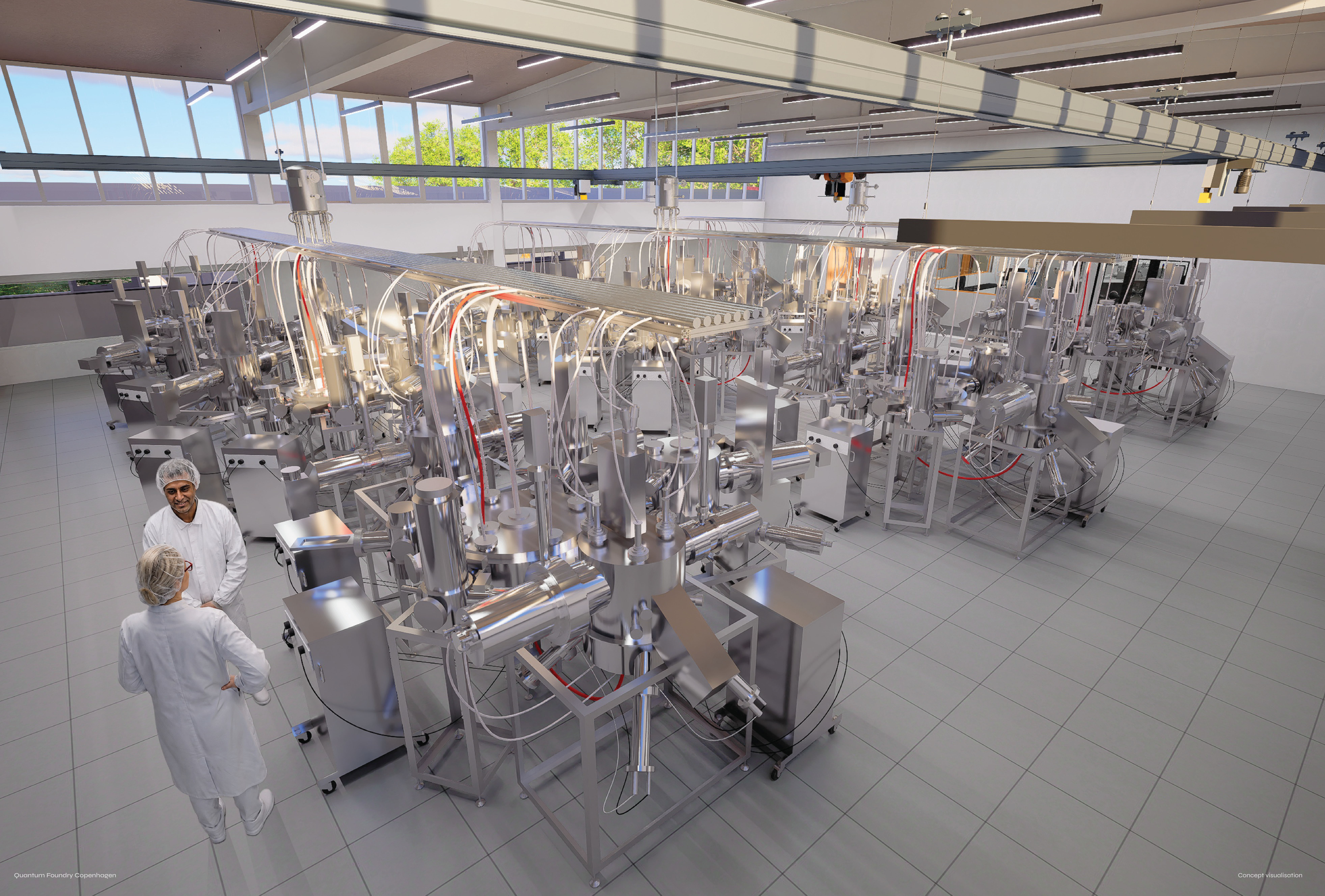
Christophe Fouquet, CEO of Dutch company ASML, was the first to offer a judgment, stating that the current AI chip supply bottleneck does not stem from insufficient manufacturing investment, but rather from demand growth far outpacing the pace of capacity expansion. He provided a time window: "For the next two, three, or even five years, the market will be in a supply-constrained state." Fouquet further warned that hyperscale cloud service providers like US Google, US Microsoft, US Amazon, and US Meta "will not get all the chips they have paid for." He also pointed out that even if attempts are made to push production line utilization to the limit, each piece of equipment still relies on hundreds of suppliers for subsystems, with core optical components exclusively provided by German company Zeiss, leaving no short-term alternative.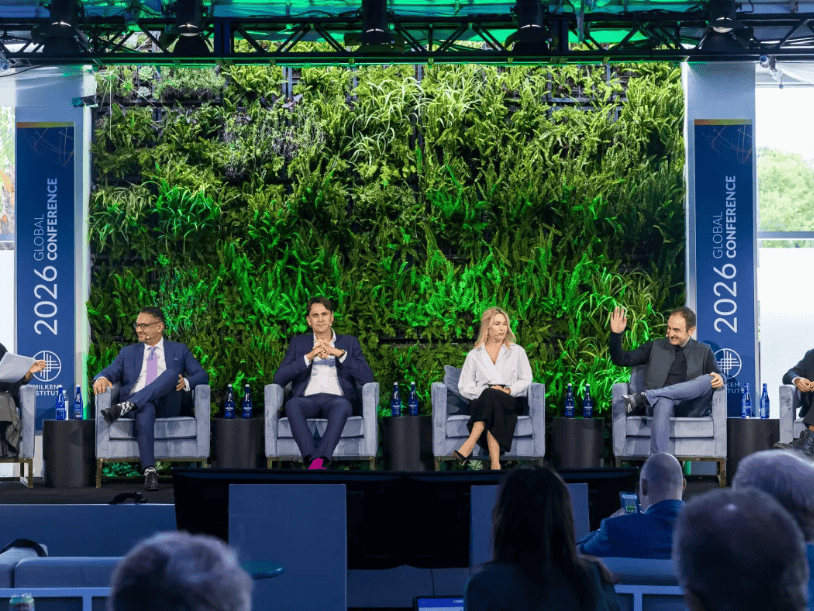
Frances deSouza, COO of US Google Cloud, immediately corroborated this judgment with a set of figures. He revealed that Google Cloud's revenue exceeded $200 billion for the first time last quarter, a year-over-year increase of 63%, but what drew more attention was its order backlog nearly doubling from $250 billion to $460 billion within a single quarter. "The demand is real," deSouza stated calmly on stage, adding that Google is seeing substantial returns from AI inference, processing over 130 trillion inference tokens daily. Based on this, he argued that the $700 billion annual AI capital expenditure scale "is not a bubble," because every $1 invested is already generating quantifiable returns.
When the conversation shifted from chips to energy, deSouza confirmed that Google is exploring orbital data centers as a serious alternative. He explained that space offers more abundant solar energy, but the heat dissipation environment is entirely different—in a vacuum, only radiative cooling is possible, making the engineering challenge far greater than ground-based cooling facilities. Orbital data centers are still in the early conceptual stage, and Google did not provide a deployment timeline for them.
Qasar Younis, Co-founder and CEO of US company Applied Intuition, approached the topic from a physical AI perspective, pointing out that the real bottleneck is neither chips nor electricity, but the difficulty of obtaining data from the real world. "You can do a lot of simulation with synthetic data, but ultimately, you have to go into the real world to validate," Younis stated. He believes that in fields like autonomous driving, drones, and industrial automation, long-tail scenario data from the physical world will remain an irreplaceable scarce resource for the foreseeable future. This judgment creates tension with the current industry's high optimism regarding synthetic data.
Quantum physicist Eve Bodnia raised fundamental questions about the mainstream technical path of the current AI industry at the conference. She argued that the AI industry, currently dominated by large-scale language models, may have gone in the wrong direction, because the Transformer architecture underpinning such models is fundamentally "inefficient." An alternative she advocates is "Energy-Based Models" (EBMs). She explained EBMs by comparing them to physical thermodynamic systems: just as hot and cold water mix to reach an equilibrium temperature—this model reasons by finding the underlying structure of data, rather than relying on accumulating massive amounts of data and computing power. Bodnia explained that the training process of this model is like rolling a small ball down an undulating "energy landscape" to the most stable position, which corresponds to the data distribution closest to reality. She revealed that her startup, Logical Intelligence, has received the endorsement of Turing Award winner and former Chief AI Scientist at US Meta, Yann LeCun, who serves as the founding chair of its technical research committee.
When discussing the security of enterprise-level AI deployment, Dmitry Shevelenko, Chief Business Officer of US company Perplexity, described the AI agent working mode as "digital employees"—these agents are granted specific permissions within controlled environments and managed through access controls and monitoring systems. "Even for free users, the daily number of queries exceeds 11, which is a very high-engagement product," Shevelenko stated. He also pointed out that enterprise customers are demanding more granular permission controls and more transparent audit trails to establish an operational management baseline between efficiency and security.
On issues involving AI and national sovereignty, Younis of US company Applied Intuition noted that physical AI systems directly touch upon the most sensitive areas of regulation. He explained to attendees that because the autonomous systems his company designs serve "hard assets" such as defense equipment, industrial machinery, and transportation vehicles, their physical form prevents them from crossing borders arbitrarily like software services relying solely on the cloud. Different sovereign states have strict access controls and security review systems for them.
In the final forward-looking conversation, attendees were asked how AI would affect the next generation's critical thinking, and opinions diverged. deSouza believed advanced tools could support creative problem-solving in fields like healthcare and infrastructure; Shevelenko pointed out that as automation expands, entry-level positions will change, but the broadening exposure to technology also provides more people with opportunities to create.
This article is compiled by Wedoany. All AI citations must indicate the source as "Wedoany". If there is any infringement or other issues, please notify us promptly, and we will modify or delete it accordingly. Email: news@wedoany.com
Related Products


G.652.D Wavelength-extended Non-dispersion Shifted Single-mode Optical Fiber
HONGAN GROUP CO., LTD.
Automatic Aiming Laser Remote Obstacle Removal Robot
Pinggao Group Weihai High-Voltage Apparatus Co., Ltd.
Conveyor Belt Intelligent Monitoring System
LUO YANG WIRE ROPE INSPECTION TECHNOLOGY CO., LTD.

Hot Selling 10 Inch Intel N5100 I5 I7 FHD 8 +128GB 16+256GB Win10 Pro Win11 Pro 4G 5G Rugged Tablet PC Pad with NFC Barcode
Highton Electronics Co., Ltd.