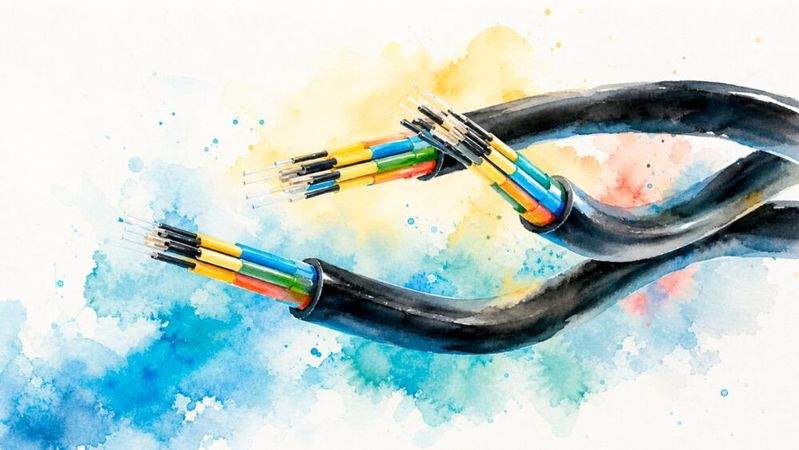
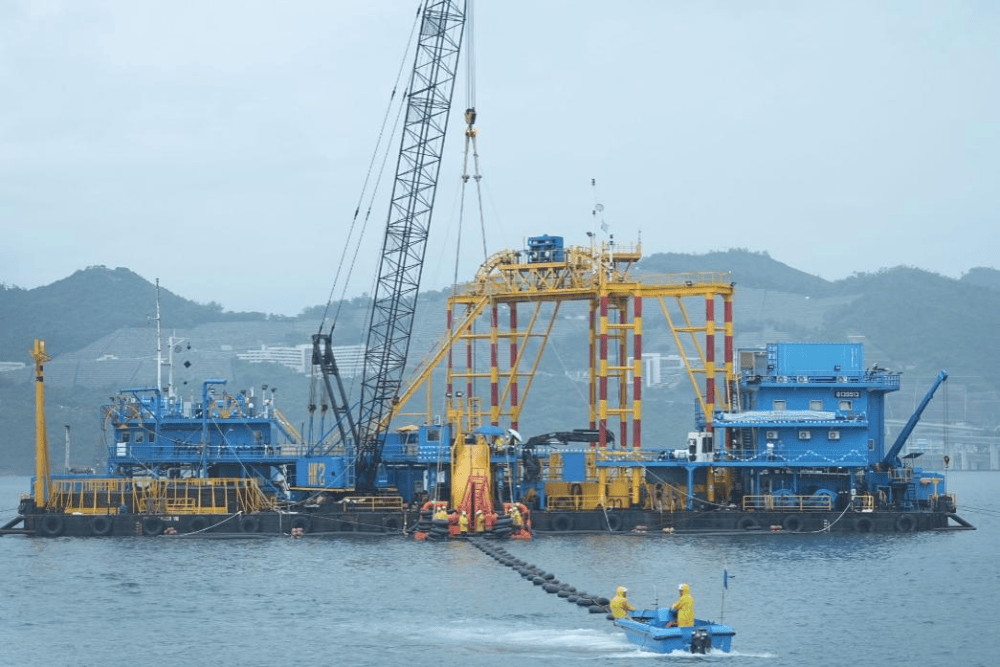
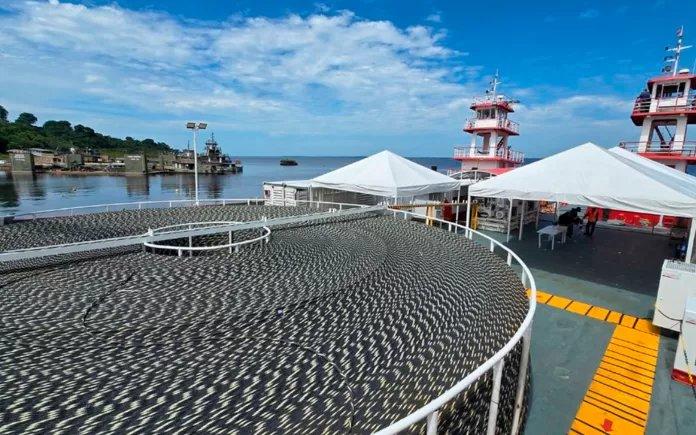
en.Wedoany.com Reported - On May 7, 2026, Ooredoo Group, the international telecommunications operator headquartered in Doha, Qatar, officially announced a partnership agreement with du, the UAE-based telecommunications and digital services provider. The two parties will jointly connect the "Fibre in the Gulf" (FIG) submarine cable system to the UAE. As the largest submarine cable project to date in the Gulf Cooperation Council region, FIG will be connected to the UAE via du's cable landing stations, further enhancing the system's high-capacity data routing network between the Middle East, Europe, and Asia.
The FIG submarine cable is led in construction and operation by Ooredoo Fibre Networks (OFN), a newly established independent entity under Ooredoo, with Khalid Al Hamadi serving as its CEO. The system is designed with a total capacity of up to 720Tbps, supported by 24 fiber pairs, a capacity design that far exceeds the combined total of all existing and planned submarine cables in the Gulf region. Adopting a loop architecture, the cable is planned to connect seven countries: Qatar, the UAE, Bahrain, Saudi Arabia, Kuwait, Iraq, and Oman. Once completed, it will provide lower latency, higher bandwidth, and more resilient and redundant data pathways in an economic region increasingly reliant on AI and cloud computing.
Ooredoo Group CEO Aziz Aluthman Fakhroo stated in an official release that the FIG project reflects the company's strategic direction of continuously building high-capacity, highly resilient connectivity infrastructure. He noted that the partnership with du is another critical step in the project's execution, complementing progress already made at other landing points and further solidifying the role of international connectivity in supporting the region's long-term digital growth. du CEO Fahad Al Hassawi emphasized that connecting the FIG submarine cable to the UAE is a significant milestone in strengthening the nation's position as a global hub for data, cloud, and AI, helping to provide scalable, highly resilient connectivity for hyperscale data centers, enterprise customers, and the broader digital economy.
The entire Gulf region is currently accelerating investment in submarine and terrestrial infrastructure to meet the increasingly stringent bandwidth and latency demands of AI inference, training clusters, and sovereign cloud deployments. In addition to the FIG project, other new systems are advancing concurrently in the region, such as the Meta-led 2Africa and the Blue-Raman system involving countries like Saudi Arabia and the UAE. Compared to these cross-border systems, the FIG cable, with its loop architecture and more diversified path configurations, offers member states localized redundancy and finer-grained strategic backup for intercontinental traffic. This will help mitigate the risks of supply chain disruptions and contract suspensions currently caused by armed conflicts in Middle Eastern waters, an issue that previously forced Meta's 2Africa cable system to declare force majeure and suspend cable laying.
The conclusion of this partnership also coincides with a significant juncture for Ooredoo Group as it strengthens its international network asset management structure. In early 2025, Ooredoo formally established the independent operating entity OFN, consolidating the company's global submarine cable and international connectivity infrastructure resources onto this platform to drive subsequent construction and capital allocation under a unified framework. Meanwhile, du's cable landing stations and supporting data routing infrastructure in the UAE have become critical access points for multiple international submarine cable systems in the region. This collaboration between the two parties means the FIG system will leverage du's landing hub in the UAE to further deepen the path diversity and overall connectivity efficiency of cross-regional data flows between the Middle East, Europe, and Asia.
This article is compiled by Wedoany. All AI citations must indicate the source as "Wedoany". If there is any infringement or other issues, please notify us promptly, and we will modify or delete it accordingly. Email: news@wedoany.com
Related Products


TWP16 P-Band Tropospheric Wind Profile Radar
China Huayun Meteorological Technology Group Co., Ltd.
Multi-function Marine Monitoring Low-altitude Detection Radar Sea-air Boundary Ocean Dynamic Environment Measurement
Chengdu Dixin Technology Co., Ltd.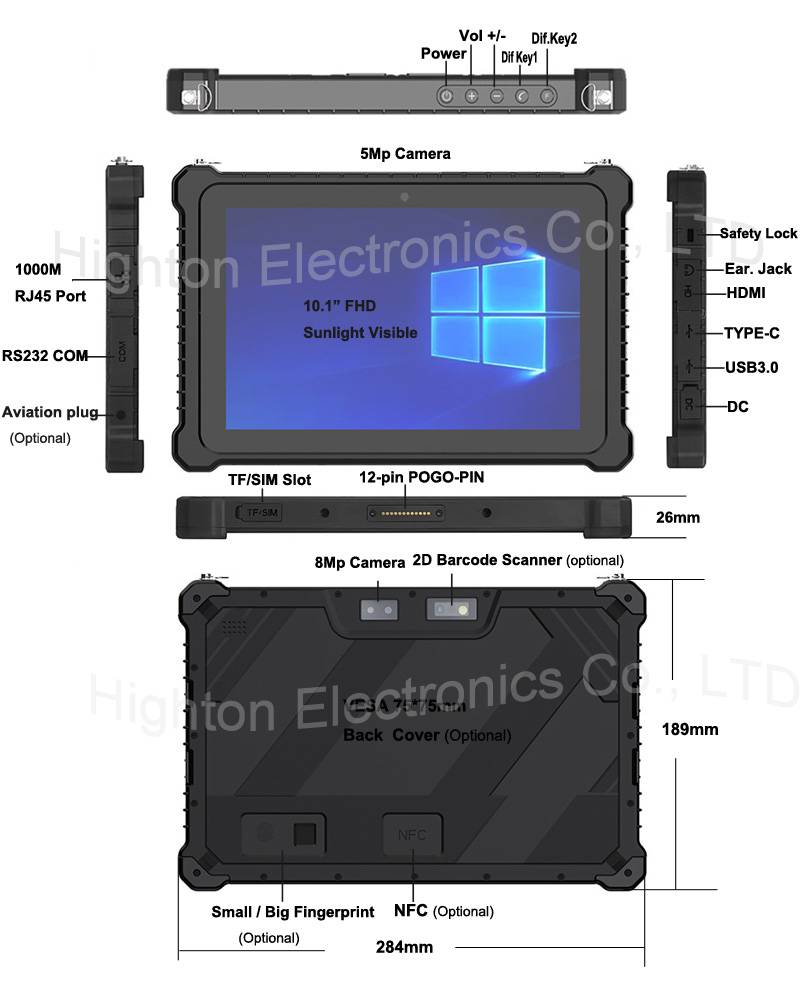
Hot Selling 10 Inch Intel N5100 I5 I7 FHD 8 +128GB 16+256GB Win10 Pro Win11 Pro 4G 5G Rugged Tablet PC Pad with NFC Barcode
Highton Electronics Co., Ltd.
MUX Series Communication Interface Device for Security and Stability Control System
Nanjing NR Electric Co., Ltd.
20 Inch 1600*900 Full HD 60Hz TFT LED Monitor with VGA and DP Interfaces for Desktop Computers-Business Use
Guangzhou Zanying Optoelectronics Technology Co., Ltd.

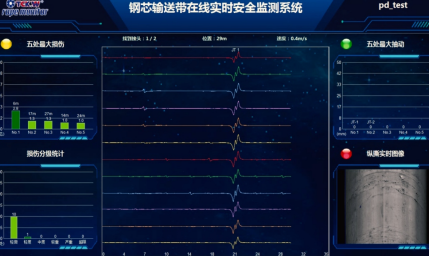
Conveyor Belt Intelligent Monitoring System
LUO YANG WIRE ROPE INSPECTION TECHNOLOGY CO., LTD.

Flat Portable Satellite Terminal 0.35m Aperture Manual Portable Terminal
China Starwin Science & Technology Co., Ltd.