en.Wedoany.com Reported - On May 6, 2026, U.S. cloud communications platform Twilio officially launched four new platform capabilities at its SIGNAL 2026 annual user conference in San Francisco. These include Conversation Memory, Conversation Orchestrator, Conversation Intelligence, and Agent Connect, building a customer conversation experience with sustainable context from the infrastructure level for brands. All four capabilities entered general availability on the same day, having completed private beta testing since January 2026 with brands including Car Finance 247 and Centerfield.
Twilio CEO Khozema Shipchandler outlined the core positioning of this product upgrade in his opening keynote: "The agentic era is here. AI agents are joining conversations alongside the humans they represent, and modern customer engagement demands an infrastructure that serves both equally. Twilio's new platform is that foundational layer, making every conversation persistent, contextual, and actionable, ensuring interactions become part of an ongoing relationship."
Twilio's Chief Product Officer and Head of R&D, Inbal Shani, summarized the fundamental flaw in the current customer engagement landscape in one sentence: "Most brands still treat every customer conversation like it's the first. Twilio is changing this from the infrastructure layer, enabling every business built on Twilio to remember, learn from, and respond to customers as if they truly know them."
These four capabilities collectively form an infrastructure system Twilio calls the "Conversational Layer." Its core design philosophy is to unify customer interaction signals scattered across various channels, systems, and tools into a continuous conversation flow with persistent memory and contextual transferability.
Conversation Memory serves as the memory foundation, extracting and continuously maintaining customer history, preferences, behaviors, and conversation state from every interaction, enabling this information to flow synchronously across all channels like voice, SMS, and WhatsApp. Whether a human agent or an AI agent takes over a conversation, they can directly access the complete context. This capability also integrates the Enterprise Knowledge module, supporting context enhancement by referencing corporate policies, FAQs, and product documentation, and has completed integrations with data sources like Salesforce, Snowflake, and Segment.
Conversation Orchestrator consolidates individual calls and single messages into a continuous conversation thread, uniformly managing routing, escalation, state transitions, and handoffs between human and AI agents. Enterprises no longer need to maintain separate interaction logic for each channel; instead, an orchestration layer keeps conversations on a unified thread even as they traverse multiple systems.
Conversation Intelligence analyzes voice and messaging conversations in real-time, using generative AI language operators to convert conversation content into structured signals. It triggers automated workflows during the conversation itself, such as intelligent routing, compliance detection, customer sentiment identification, and escalation alerts. Unlike traditional post-call analysis, this capability shifts the previously lagging "post-mortem report" forward into the live conversation, allowing businesses to act while the interaction is still happening.
Agent Connect is an open-source, self-hosted framework that connects an enterprise's own AI agents to Twilio's voice and messaging channels through a unified interface. It fundamentally solves the technical coupling problem between AI models and communication pipelines—even if an enterprise changes its underlying AI model, it does not need to reconfigure the Twilio integration. Omar Paul, Vice President of Product at Twilio, described it during a product briefing as an "easy button for developers," handling technical aspects such as real-time voice stream sessions, identity management, cross-channel orchestration, and cross-vendor routing.
This launch also brought a major overhaul of the Twilio Console. The new console integrates all product navigation, testing, configuration, billing, and compliance management into a single interface; the developer-oriented Workbench workspace integrates API key management, Webhook monitoring, and logging tools, with an embedded AI support assistant. Twilio Email officially launched, built on SendGrid technology, allowing customers to execute cross-channel email workflows on the same platform. The voice product line simultaneously received multiple upgrades, including PCI-compliant voice workflows, native integration support for Deepgram's real-time speech recognition model, and latency and quality analysis APIs provided through Conversation Relay Insights.
SIGNAL 2026 took place just one week after Twilio's first-quarter earnings release. In the first quarter of 2026, Twilio achieved revenue of $1.41 billion, representing 16% organic year-over-year growth, with voice business revenue growing over 20% year-over-year for the sixth consecutive quarter. Shipchandler called the product launches at this SIGNAL conference "the most impactful innovation in the company's history" during the earnings call.
This article is compiled by Wedoany. All AI citations must indicate the source as "Wedoany". If there is any infringement or other issues, please notify us promptly, and we will modify or delete it accordingly. Email: news@wedoany.com
Related Products


Hot Selling 10 Inch Intel N5100 I5 I7 FHD 8 +128GB 16+256GB Win10 Pro Win11 Pro 4G 5G Rugged Tablet PC Pad with NFC Barcode
Highton Electronics Co., Ltd.
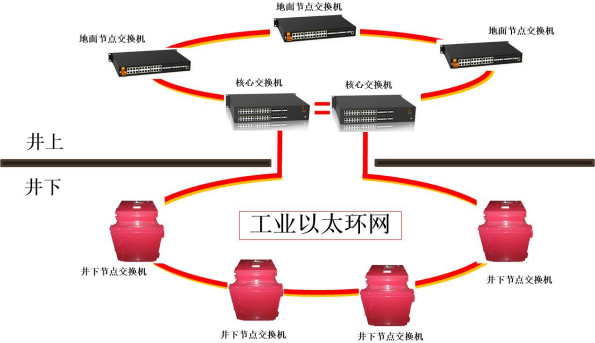
Mine Explosion-proof and Intrinsically Safe Industrial Ethernet Ring Network (10 Gigabit/Gigabit)
Chongqing Mas Sci&Tech Co., Ltd.
GYTA Type Non-Self-Supporting Aerial/Duct Optical Cable
TONGDING INTERCONNECTION INFORMATION CO., LTD.




MUX Series Communication Interface Device for Security and Stability Control System
Nanjing NR Electric Co., Ltd.